
With the increasing use of commode chairs in home care, elderly care, and post-operative rehabilitation, people have more and more questions about their use. One of the most common questions is: "Can a commode chair be placed on top of the toilet?"
This question seems simple, but it involves structural safety, design principles, applicability, and hygiene issues, therefore a clear answer from a professional perspective is necessary.
This article will provide a systematic analysis of this question, explaining in depth from multiple aspects such as the structural design, intended use, compatibility, and safety precautions of commode chairs, helping readers correctly understand whether a toilet commode chair can be placed on the toilet and how to choose the right device.
Can a commode chair be placed directly on the toilet?
Generally, a regular commode chair cannot be placed directly on the toilet.
Why?
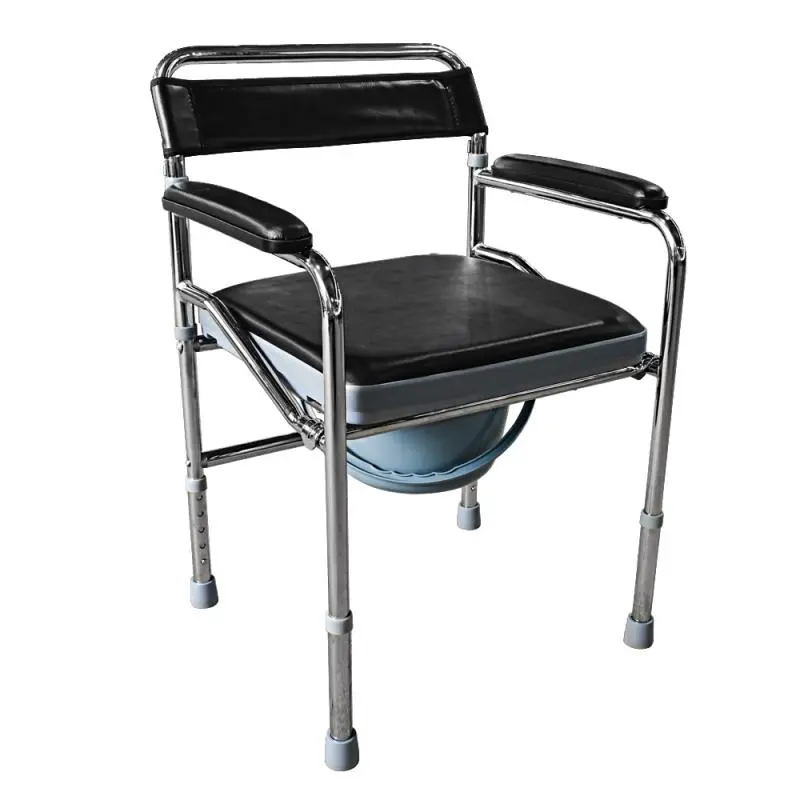
The common design of toilet chairs is as follows:
• Built-in potty (for collecting waste)
• Legs on the ground for stability
• Frame weight supported by the ground, not the toilet itself
• Seat size may not match the toilet bowl opening
• The load-bearing structure cannot be directly placed on a ceramic toilet bowl
If a regular toilet chair is forcibly placed on the toilet, the following risks may occur:
• Decreased balance, making it prone to tipping over
• The curvature of the toilet surface is unsuitable for placing the chair legs
• Uneven stress may cause the ceramic toilet bowl to crack
• The user may slip or fall when sitting down
Therefore, the professional conclusion is:
Regular toilet chairs are not designed to be "placed on the toilet."
But does this mean that similar functions are completely impossible?
See the detailed analysis below for the answer.
Why are most toilet chairs unsuitable for direct placement on the toilet?
To understand this, we need to start with the design logic of toilet chairs.
1. Commuter chairs are primarily for bedside use
Most toilet commode chairs, also known as bedpan chairs, were originally designed for:
• Bedridden patients with difficulty getting out of bed
• Elderly people with difficulty using the toilet at night
• People with limited mobility who cannot reach the bathroom
Therefore, the core function of a commode chair is "bedside use," not "using it over the toilet."
2. The leg structure of a commode chair dictates that it should not be placed on the toilet
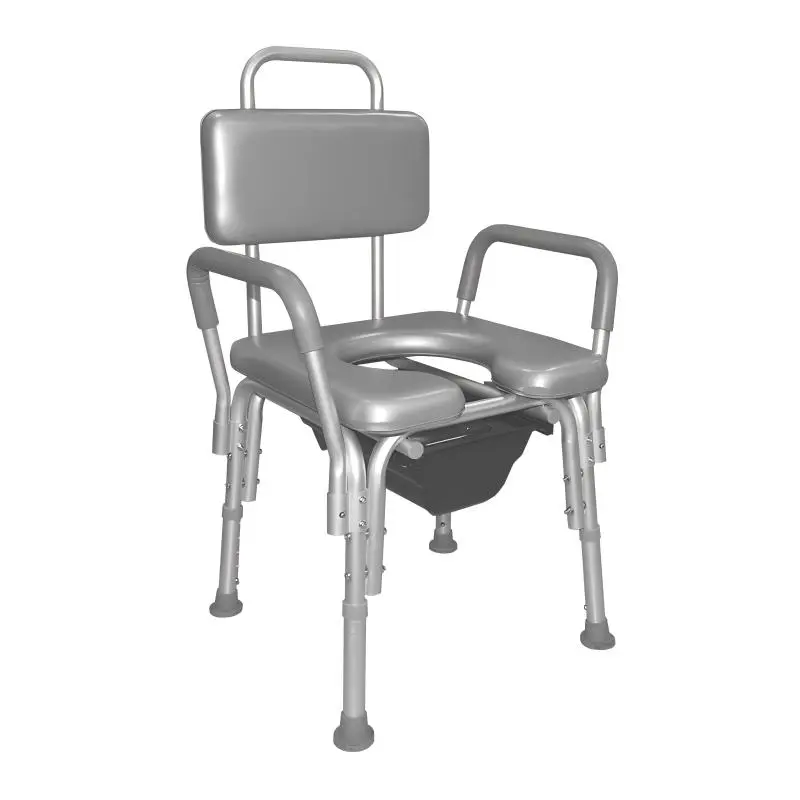
A typical toilet commode chair has four legs that are spread out and should be placed on a flat surface.
Once placed on the toilet:
• The point of stress becomes an unstable circular ceramic surface
• The legs may slip off.
The design and safety angles do not support this operation.
3. Commmode chair seat sizes differ from toilet seat sizes
Commode chairs are usually wider or narrower than toilet seats. This size difference leads to:
• The seat cannot be aligned with the waste outlet
• Waste cannot fall into the toilet
• An unnatural and extremely unsafe posture for the user
From a hygiene perspective, this method of use is also not recommended.
4. The commode chair itself has a potty and does not rely on the toilet
The potty of a commode chair is designed for use without a toilet. Therefore, placing a toilet commode chair on the toilet is a "reverse use" of its design purpose.
Summary:
Commode chairs were not designed for use above the toilet, so it's important to correctly distinguish their intended use.
Are there any special types of commode chairs that can be placed on the toilet?
Many families are concerned about this.
The answer is: yes, but these are not ordinary commode chairs, but rather specialized "toilet riser chairs" or "positionable toilet chairs."
To avoid misunderstanding, here are some detailed explanations of several types of products that can be placed on the toilet:
Type 1: Toilet Riser
• No legs
• Placed over the toilet
• Used to raise the toilet height
This is not a toilet commode chair, but simply an auxiliary accessory for the toilet.
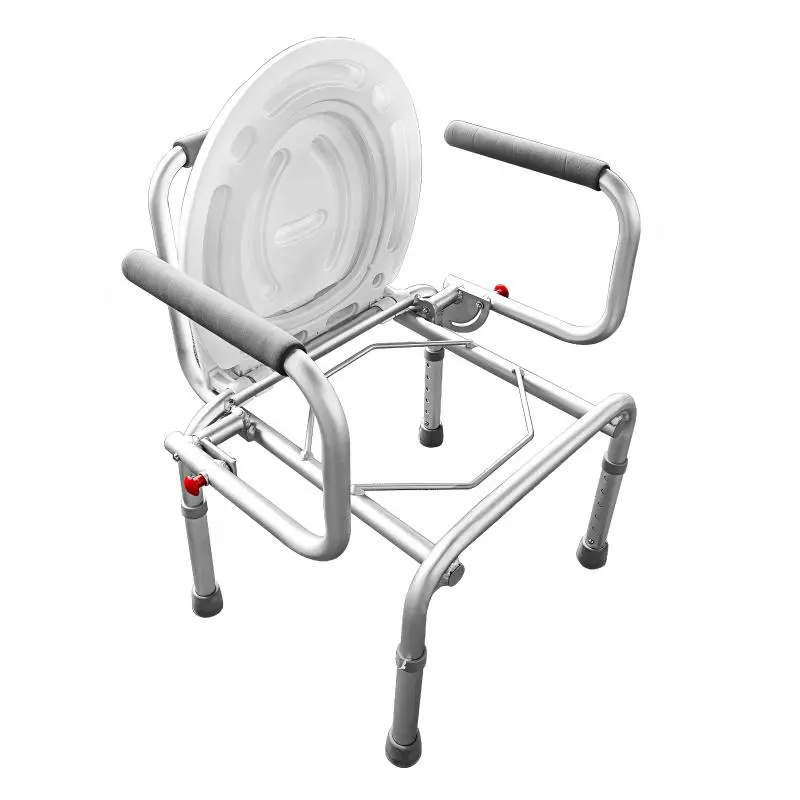
Type 2: "Potty-less Commode Chair" that can be placed on the toilet
This is the only type of commode chair that can be placed on the toilet.
Features include:
• No potty
• Bottom opening matches the toilet bowl opening
• Widened, stable structure
• Seat part fits directly into the toilet
This type of toilet seat is designed specifically to "fit with the toilet," therefore:
• It won't slide on the toilet
• The seat size matches the toilet
• The height is adjustable
However, not all toilet seats have this feature.
Type 3: Wheeled Toilet Seat (Mobile Toilet Seat) It can be pushed near the toilet, but cannot be "placed on the toilet."
Many people mistakenly believe that wheeled toilet seats can be placed on the toilet.
In fact, they can only:
• Be pushed in front of the toilet
• The user sits on the toilet seat facing the toilet
• Excrement falls directly into the toilet
But the toilet seat itself is not "placed" on the toilet.
If the toilet seat cannot be placed on the toilet, how should it be used?
If you have purchased a standard commode chair, the correct usage is as follows:
1. Assemble the bedpan according to the instructions
The toilet commode chair comes with a bedpan, allowing you to defecate even without using the toilet.
2. Place the toilet commode chair in a safe location
For example:
• Beside the bed
• In a corner of the room
• In a well-lit area
Ensure the floor is level.
3. Empty the bedpan after use
Simply empty it into the toilet bowl; the commode chair itself does not need to be moved to the toilet.
4. Clean and disinfect the bedpan
Maintain long-term hygiene.
In summary: The commode chair is an independent toilet device and does not need to be directly connected to the toilet.
Why do many people prefer to use the commode chair on the toilet?
The main reasons are as follows:
1. To avoid the step of emptying the bedpan
Using the toilet commode chair on the toilet avoids frequent bedpan emptying.
2. Concern about dealing with bedpan odor
Indeed, some elderly people or post-operative patients use bedpans frequently and require timely cleaning.
3. Hygiene Concerns
Some families believe that flushing waste directly down the toilet is more hygienic.
These concerns are understandable, but their feasibility depends on the type of toilet seat.
How to determine if your toilet seat is suitable for use on the toilet?
You can check the following 5 points:
1. Check if the toilet seat comes with a potty
• If it comes with a potty, it's 99% unlikely to fit on the toilet.
• Only potty-free models may be compatible.
2. Measure if the seat opening matches the toilet bowl opening
If the dimensions don't match, it cannot be used.
3. Check if the instruction manual supports toilet use
Reputable products will clearly indicate compatibility.
4. Check if the base is a stable flat surface
If it has four legs, it's not suitable.
5. Check for a dedicated fixing structure
Only toilet seats that can "lock" or "lock" into the toilet can be used.
If any of the above conditions are not met, it cannot be used on the toilet.
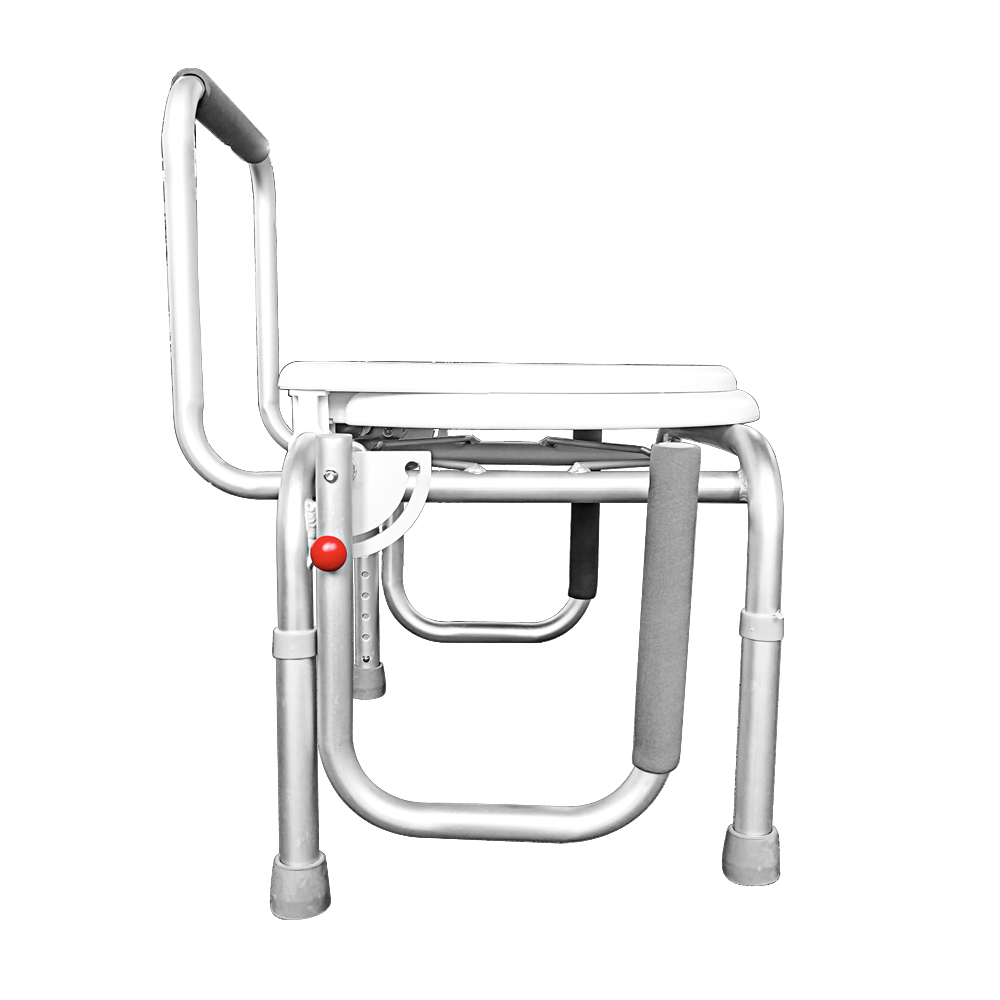
What are the safety hazards of using a commode chair on the toilet?
Even if it's slightly possible to place it, it's not recommended due to the following serious risks:
1. The toilet commode chair may tip over
The large curvature of the toilet surface causes uneven weight distribution on the chair legs, leading to instability.
2. Increased risk of the user slipping
Elderly people, with their unstable center of gravity and slow movements, are at even higher risk.
3. Risk of the toilet's ceramic breaking
Ceramic itself cannot withstand point pressure; once broken, the consequences can be severe.
4. Damage to the toilet commode chair structure
This affects the chair's lifespan.
5. Difficulty for caregivers to assist
The confined space hinders caregiving.
These safety hazards demonstrate that there are very valid reasons not to place a regular commode chair on the toilet.
If you must use a commode chair on the toilet, what are some safer alternatives?
If your requirement is to flush directly into the toilet, consider the following alternatives:
Option 1: Purchase a toilet-compatible commode chair (without a potty)
This type of toilet commode chair is designed to:
• Slip directly onto the toilet.
• Height adjustable.
• High stability.
This is the safest method.
Option 2: Move the commode chair to align with the toilet
A toilet commode chair with wheels can:
• Push it in front of the toilet.
• The user sits on the chair.
• Excrement falls directly into the toilet.
This method is safer than simply placing it on the toilet.
Option 3: Use a toilet riser + armrest combination
This combination can:
• Raise the toilet height.
• Provide armrest support.
• Retain the original function of the toilet.
No commode chair is required.
Option 4: Install armrests on both sides of the toilet
This makes it easier for elderly people to use the toilet directly.
What is the difference in purpose between a commode chair and a toilet riser?
Here's another common misconception that needs clarification:
The primary purpose of a toilet commode chair: bedside toilet use.
A toilet commode chair is a stand-alone device, independent of the toilet.
The purpose of a toilet riser: to assist in using the toilet.
A riser raises the toilet height and is considered a toilet accessory.
The two have different purposes and therefore cannot substitute for each other.
How to choose the right commode chair for your home?
If you need a commode chair for your room or bedside use, a standard model is sufficient.
If you want a commode chair that works with the toilet, you should choose:
• A model without a potty.
• A model that covers the toilet bowl.
• Or purchase a dedicated toilet seat.
The choice should be based on:
• User's body type
• Mobility
• Whether nighttime use is needed
• Bathroom layout
• Whether nursing assistance is required.
Why choose Yikang Medical for purchasing hospital equipment?
Yikang Medical is a professional manufacturer and supplier in China with over a decade of experience producing hospital and rehabilitation equipment. Our products include hospital beds, nursing beds, electric and manual wheelchairs, bath chairs, toilet chairs, walkers, and canes. We provide OEM services, customization of design, configuration, and color, and ensure timely delivery within 30-45 working days.