
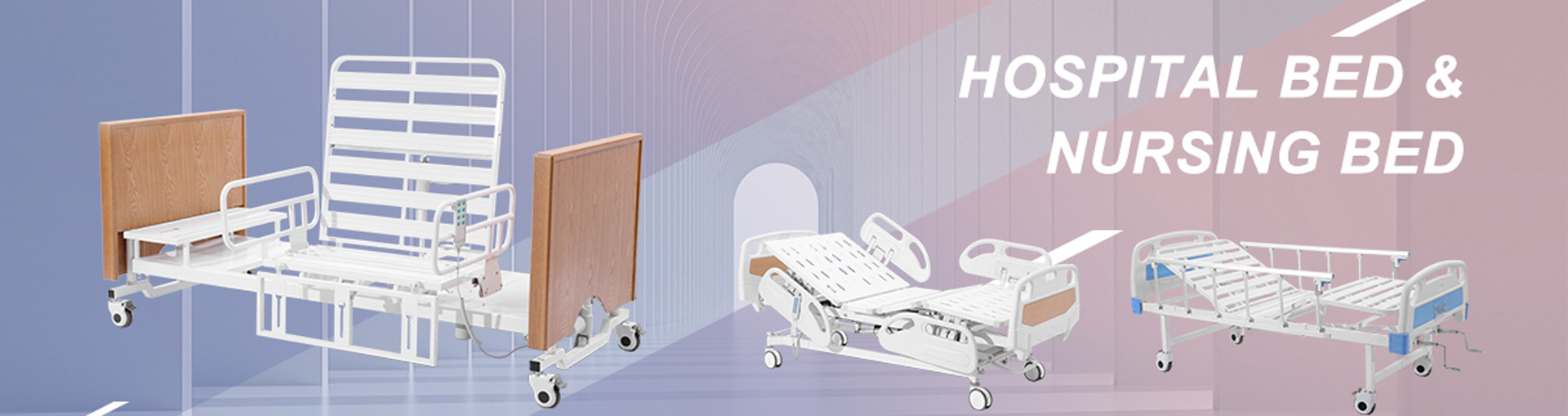
In home and hospital care environments, adjustable hospital beds have become an indispensable piece of equipment in modern medical care. They not only improve patient comfort but also significantly reduce the workload of caregivers.
Many people often overlook a crucial question when purchasing or using adjustable hospital beds: are there weight restrictions?
In fact, every adjustable hospital bed undergoes rigorous load-bearing testing during its design. Different structural materials, manufacturing processes, and bed design directly affect its maximum load-bearing capacity. Ignoring weight restrictions can, at best, shorten the bed's lifespan, and at worst, create safety hazards.
This article will systematically answer the core question of "weight restrictions on adjustable hospital beds," detailing their construction principles, load-bearing standards, influencing factors, selection recommendations, and safe usage points to help you make a more scientific and worry-free choice when purchasing and using them.
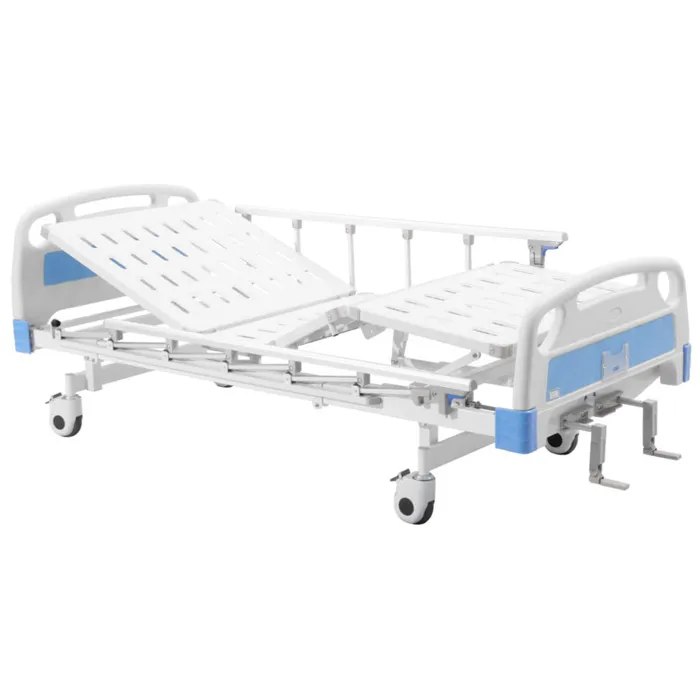
Why should you pay attention to the weight restrictions of adjustable hospital beds?
Many people focus solely on features when purchasing adjustable hospital beds, such as backrest angle, electric height adjustment, and guardrail design, neglecting the crucial parameter of "weight-bearing capacity." In fact, weight limitation is a core safety indicator in the design of adjustable hospital beds.
1. Weight-bearing capacity directly affects user safety
If the patient's weight exceeds the bed's maximum weight-bearing capacity, the bed board, support rods, or motor system may experience excessive pressure, leading to structural deformation or even breakage, resulting in the risk of accidental falls or injuries.
2. Weight-bearing capacity determines bed stability
When adjusting the backrest or footrest angle, the bed will experience forces in different directions. Overloading will cause uneven stress on the support points, causing the bed to wobble or tilt, affecting the patient's sense of security and comfort.
3. Weight-bearing capacity affects bed lifespan
The mechanical structure, height adjustment system, and welding points of adjustable hospital beds all have fixed durability standards. Overloading accelerates structural fatigue and shortens the bed's lifespan.
4. Weight Capacity Affects Nursing Efficiency
Excessive weight can limit adjustment functions, overload the motor, slow down or jam the lifting mechanism, and affect daily nursing procedures.
Therefore, correctly understanding and adhering to the weight limits of adjustable hospital beds is a prerequisite for safe use and extending the lifespan of the equipment.

What is the standard weight capacity of an adjustable hospital bed?
Most standard adjustable hospital beds have a maximum weight capacity of 175 kg (approximately 385 lbs), a safe value verified by medical device manufacturing standards.
Specifically, the weight capacity range of adjustable hospital beds of different models or structures is generally as follows:
Types | Maximum load capacity | Suitable for |
| Standard adjustable hospital bed | 150–175kg | General adults or elderly people |
| Reinforced nursing bed | 180–220kg | Patients with larger body size |
| Heavy-duty electric hospital bed | 250–300kg | Patients who are overweight or bedridden for a long time |
In typical home care scenarios, an adjustable hospital bed with a standard weight capacity of 175 kg can meet the needs of most patients.
How does the structure of an adjustable hospital bed determine its weight capacity?
The weight limit of an adjustable hospital bed is not randomly set, but is determined by its structural materials and mechanical design. Key influencing factors include:
1. Bed Frame Structure and Materials
Standard adjustable hospital beds typically use:
• Powder-coated steel frame: sturdy, corrosion-resistant, and structurally stable;
• Steel bed board: provides support and prevents sagging;
• Aluminum alloy guardrails: lightweight and durable;
• ABS headboard and footrest: removable, easy to clean, and ensures bed rigidity.
Powder-coated steel is cured at high temperatures, making its surface wear-resistant and rust-proof. This structure ensures high overall load-bearing strength while maintaining lightweight construction.
2. Mechanical Distribution Design
Adjustable hospital beds change force distribution when raised, folded, or adjusted in angle. Designers incorporate support rods and connecting hinges into the structure to distribute weight evenly across the main bed frame.
For example:
• When the backrest is raised, the backrest fulcrum bears the main pressure;
• When the footrest is raised, the footrest structure bears the supporting load;
• When the bed is laid flat, the weight is evenly distributed between the four casters. 3. Casters and Locking System
The standard configuration includes four locking casters with pedals, facilitating movement and providing overall stability when stationary. High-strength casters distribute pressure across the bed under load, preventing sagging or tipping.
4. Connecting Components and Welding Process
High-quality adjustable hospital beds utilize multi-point welding technology for stronger connections; bolts and hinges are made of wear-resistant alloy steel, ensuring they do not loosen or deform during repeated lifting and lowering.
In conclusion, a robust and stable adjustable hospital bed is the fundamental guarantee of load-bearing safety.
Specific Specifications of Adjustable Hospital Beds
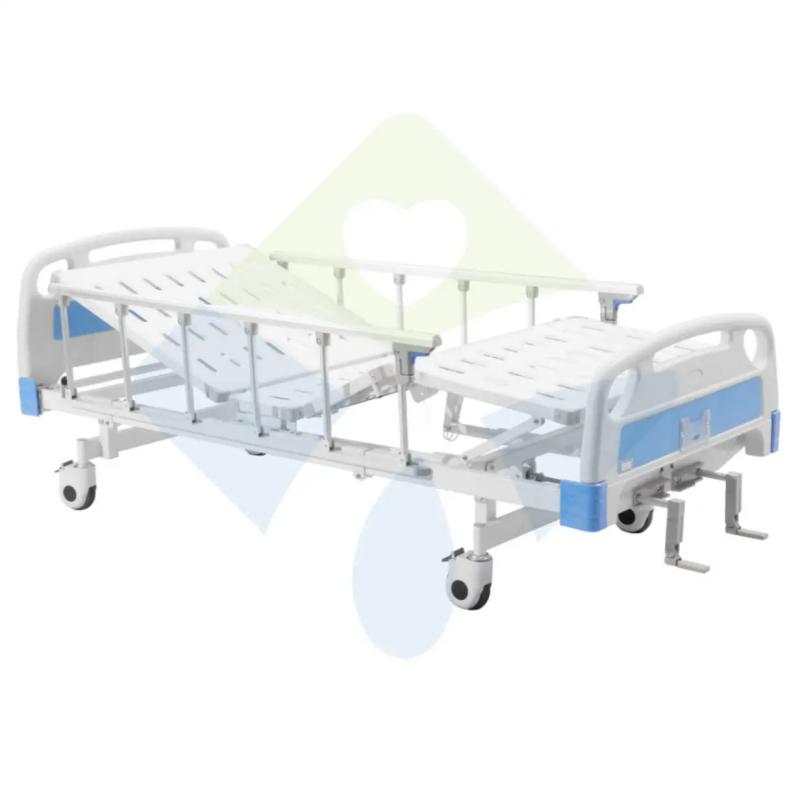
Standard adjustable hospital beds typically have the following specifications (using a general home care model as an example):
• Material: Powder-coated steel bed board, powder-coated steel frame
• Headboard and footrest: Removable ABS material
• Guardrails: Foldable, removable aluminum alloy guardrails
• Backrest adjustment angle: 0–70°
• Footrest adjustment angle: 0–30°
• Bed height: Approximately 45cm
• Standard configuration: Four casters with footrest locking, two guardrails, two-hand knobs
• Maximum load capacity: 175kg
This combination of specifications ensures the bed can meet daily care needs while possessing sufficient structural strength and load-bearing capacity.
What factors affect the actual load-bearing capacity of an adjustable hospital bed?
Although manufacturers provide a specific maximum load-bearing value, the following factors may cause changes in the effective load-bearing capacity during actual use:
1. Service life and wear
Over time, loose bolts, weld fatigue, or metal oxidation can all reduce structural strength. The actual load-bearing capacity of an older hospital bed may be lower than its nominal value.
2. Usage Methods
• Sudden impacts (such as excessive force when sitting down) can cause instantaneous overload.
• Uneven force distribution (such as multiple people leaning against one side simultaneously) can cause an imbalance in the bed's load.
• Incorrect angle adjustments (beyond the instruction manual's limits) may overload the mechanism.
3. Load Limitations of Installed Accessories
Improper installation of accessories such as bedside tables and IV stands can alter the load distribution and reduce overall load-bearing stability.
4. Floor Conditions
If the hospital bed is placed on an uneven or soft surface (such as a carpet), some bed legs will bear more weight, leading to uneven structural stress.
5. Weight Distribution
When heavier individuals turn over or adjust their position, the shift in their center of gravity can cause excessive localized pressure, which is the most common "hidden overload" phenomenon in actual use.
Therefore, even if the labeled load-bearing capacity is 175kg, users should still allow for a safety margin. It is recommended that the actual user's weight be kept below 160kg for safety.
Weight-bearing Capacity Differences Between Different Types of Adjustable Hospital Beds
Not all adjustable hospital beds have the same weight-bearing capacity. The following types show significant differences in their weight-bearing performance:
1. Manual Adjustable Hospital Bed
• Backrest and footrest controlled by a mechanical lever;
• Relatively simple structure;
• Weight-bearing capacity is generally 150–175 kg;
• Suitable for daily care of most adults and the elderly.
2. Electric Adjustable Hospital Bed
• Heating and lowering driven by a motor;
• Bed frame made of thickened steel;
• Weight-bearing range 175–220 kg;
• Suitable for patients who are bedridden for extended periods or require frequent repositioning.
3. Widened or Reinforced Hospital Beds
• Widened bed board and reinforced main beam;
• Weight-bearing capacity up to 250 kg;
• Suitable for heavier patients or those requiring bilateral care.
4. Lightweight Foldable Adjustable Hospital Bed
• Slim and lightweight structure, easy to move;
• Load capacity generally not exceeding 150kg;
• Suitable for short-term use or temporary care.
Therefore, it is essential to determine the patient's actual weight and care needs before purchasing to avoid selecting a model with an incompatible load capacity.
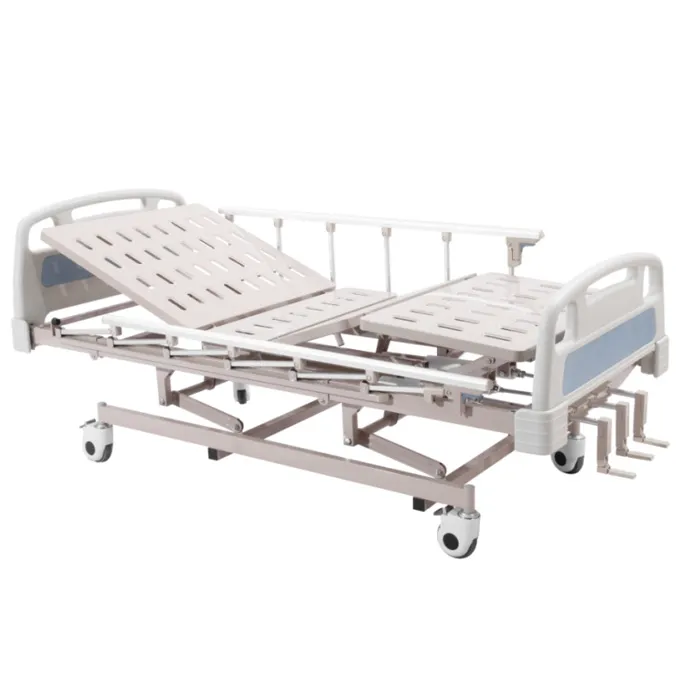
How to determine if an adjustable hospital bed meets safe load-bearing standards?
To ensure safety, users should verify the bed's compliance with the following requirements:
1. Check the product manual
Every qualified adjustable hospital bed will indicate its "maximum load capacity" parameter on the manual or nameplate, usually in the form of "Max Load: 175kg".
2. Check welding and structural stability
Observe whether the welds are flat and firm, and whether the frame is deformed or cracked. Uneven weld marks, peeling paint, etc., may indicate impaired load-bearing capacity.
3. Test Adjustment Stability
If wobbling, unusual noises, or jamming occurs during backrest or footrest adjustment, it indicates potential uneven stress on the structure and should be checked immediately.
4. Confirm Caster Locking System
The four casters with pedal locking should be able to stably support the entire weight of the bed, and there should be no slippage after locking.
5. Check Bolt Tightness
After prolonged use, regularly check the bolts with a wrench to prevent structural displacement from affecting the load-bearing capacity.
What are the Risks of Overloading an Adjustable Hospital Bed?
Failure to adhere to the weight limits of an adjustable hospital bed may lead to the following serious consequences:
• Structural Damage: Bed board sagging, weld breakage;
• Functional Failure: Motor overload burnout, angle adjustment malfunction;
• Difficulty in Nursing Care: Bed deformation causing support jamming or guardrail misalignment;
• Personal Injury: Patient slipping, falling, or even being trapped.
Therefore, the basic principle for safe use of an adjustable hospital bed is: Do not exceed the maximum load-bearing limit.
How to use an adjustable hospital bed safely to extend its lifespan?
Proper use can effectively prevent structural fatigue and maintain load-bearing stability.
1. Distribute weight appropriately
Try to keep the patient lying in a neutral position, avoiding prolonged periods of leaning to one side.
2. Avoid sudden exertion
Get on and off the bed slowly, especially avoiding "sitting-down impacts."
3. Regular maintenance and inspection
Check structural bolts, motor operation, and caster locks every three months.
4. Cleaning and corrosion prevention
Although the powder-coated steel frame is rust-resistant, it should still be kept in a dry environment to prevent liquid from seeping into the joints.
5. Do not place heavy objects
Do not place heavy objects at the foot, head, or guardrails of the bed to avoid excessive localized stress.
The Load-Bearing Capacity of an Adjustable Hospital Bed is Related to Safety and Reliability
In summary, adjustable hospital beds do have weight limitations, and this is a key indicator to ensure safe use.
• The maximum load-bearing capacity of a standard adjustable hospital bed is 175kg;
• The structure consists of a powder-coated steel frame, ABS headboard, and aluminum alloy guardrails;
• The backrest is adjustable from 0–70°, the footrest from 0–30°, and the height is approximately 45cm;
• Equipped with four locking casters and a two-hand knob to ensure stability and flexibility.
Whether for home care or hospital use, users should strictly adhere to the load-bearing parameters provided by the manufacturer to avoid overloading.
Choosing an adjustable hospital bed with the appropriate load-bearing capacity is crucial for patient comfort and safety, and for extending the lifespan of the equipment.
What After-Sales Support Does Yikang Provide?
We offer full after-sales service including technical support, spare parts supply, and warranty coverage. Our team is responsive and ready to assist with any issues that may arise after delivery. We aim to build long-term relationships through reliability, not just a single transaction.