
Among assistive mobile devices, manual assist wheelchairs are the most common and longest-used type. They are widely used in homes, hospitals, schools, and public places.
However, many people have a question before even trying them: Are manual wheelchairs difficult to use?
This question seems simple, but it actually involves multiple aspects, including physical exertion, operating methods, usage environment, physical condition, and psychological adaptation. The "difficulty" of using a manual wheelchair varies from person to person.
This article will analyze from a professional perspective whether manual assist wheelchairs are difficult to use, where the difficulties lie, why they are perceived as difficult, and in what situations they are not difficult to use, helping readers gain a clear understanding.
What is a Manual Wheelchair? How Does It Work?
A manual wheelchair is a wheelchair that relies entirely on human power for propulsion, primarily moving in the following two ways:
1. User Self-Propulsion
The user holds the large wheel rims at the back of the wheelchair with both hands and pushes repeatedly to move forward, turn, and stop.
2. Pushed from behind by another person
Caregivers or family members push the wheelchair forward using pushers.
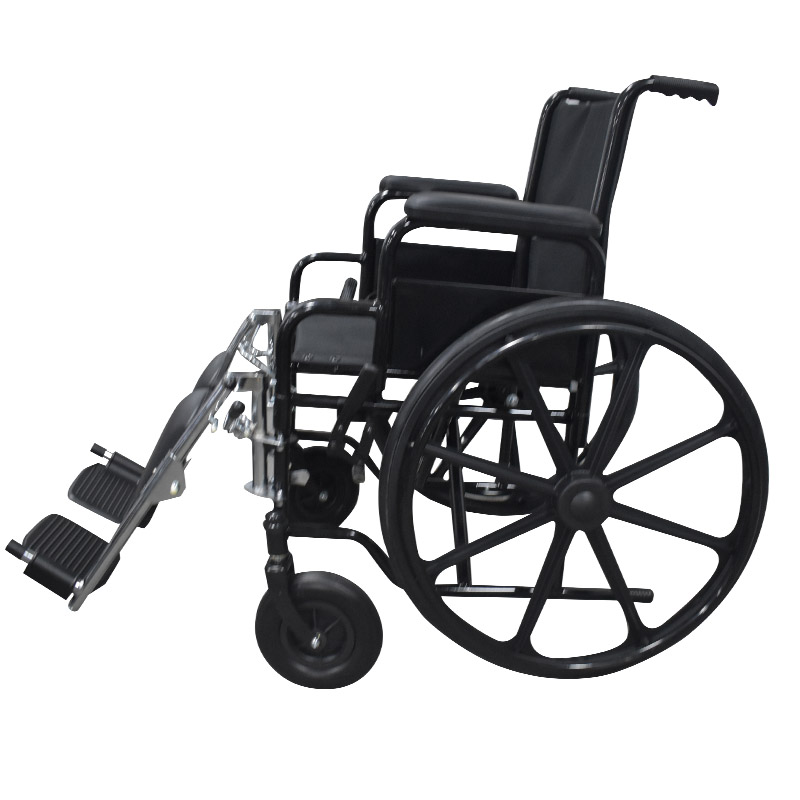
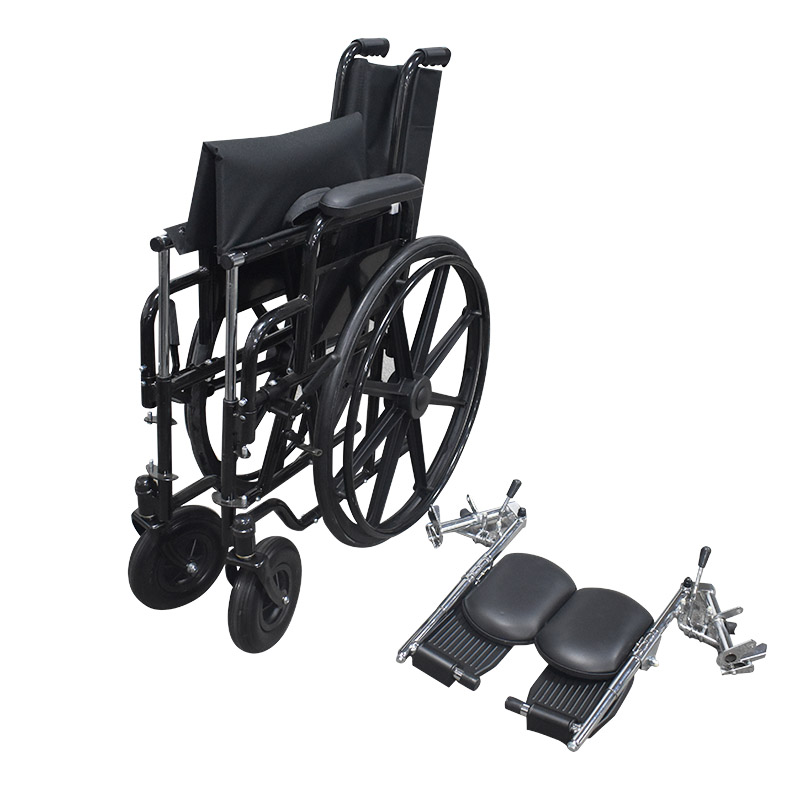
Manual wheelchairs do not rely on an electric system, do not contain a motor, and have a relatively simple structure, typically including:
• Frame
• Large wheels (drive wheels)
• Front small wheels (swivel wheels)
• Wheel rims
• Brakes
• Seat and backrest
Because they rely entirely on human power, using a manual self propelled wheelchair requires a certain level of physical strength and operational skill.
Are manual wheelchairs really that strenuous?
This is one of the most common and realistic questions about manual wheelchairs.
Yes, manual wheelchairs do require considerable physical exertion.
Especially in the following situations:
• Long distances need to be traveled
• Encountering slopes or inclines
• Uneven ground
• Weak upper limb strength of the user
• The wheelchair itself is relatively heavy
One of the core challenges of manual assist wheelchairs is that:
Users must be prepared to push the wheelchair themselves.
Pushing a wheelchair is not as simple as "pushing it forward once," but requires continuous and repetitive use of the shoulder, arm, wrist, and back muscles. This repetitive movement may be tolerable in the short term, but prolonged or high-intensity use can easily lead to fatigue.
Therefore, from a physical exertion perspective, a manual self propelled wheelchair cannot truly be considered a "labor-saving" device.
Why is using a manual wheelchair particularly strenuous on a ramp?
Using a manual wheelchair on flat ground already requires a certain level of physical exertion, but on a ramp, this difficulty is significantly amplified.
Reasons why using a manual wheelchair on a ramp is strenuous:
1. Significantly increased gravitational resistance
When going uphill, the user needs to overcome the gravitational force generated by both the wheelchair's weight and their own.
2. Increased pushing frequency and force intensity
To prevent the wheelchair from sliding backward, the user must push the wheels more frequently and forcefully.
3. Increased burden on the shoulders and wrists
When pushing uphill, the force is concentrated on the upper limbs, especially the shoulder and wrist joints, easily leading to fatigue.
4. Increased psychological stress
While going uphill, the user often needs to concentrate on controlling direction and speed, which also increases mental stress.
Therefore, ramps are arguably one of the most challenging use cases for manual self propelled wheelchairs.
Are manual wheelchairs complicated to operate?
Structurally, manual assist wheelchairs are not complex, but the real challenge lies in operational coordination.
Basic operations for manual assist wheelchairs include:
• Pushing with both hands simultaneously to maintain a straight line
• Pushing with one side to turn
• Controlling the pushing rhythm to avoid veering
• Using the brakes to stop safely
• Turning flexibly in confined spaces
These movements require an adaptation period for first-time users.
If coordination or upper limb control is lacking, the following may occur when using a manual wheelchair:
• Walking along an uneven path
• Difficulty turning
• Difficulty in precisely controlling speed
• Frequent collisions with obstacles
Therefore, from an operational perspective, manual self propelled wheelchairs are not "easy to use," but rather devices that require learning and adaptation.
What are the physical requirements for manual wheelchairs?
The difficulty of using a manual self propelled wheelchair is closely related to the user's physical condition.
Basic requirements for users of manual wheelchairs include:
• Sufficient upper limb strength
• Normal range of motion in the shoulder, elbow, and wrist
• Ability to maintain a stable sitting posture
• Basic directional judgment ability
Users will find using a manual wheelchair significantly difficult if they experience:
• Insufficient upper limb muscle strength
• Shoulder pain or limited range of motion
• Weak hand grip ability
• Easily fatigued
Therefore, manual wheelchairs are not a universal solution suitable for everyone; they have certain physical requirements.
What discomforts may occur from prolonged use of a manual wheelchair?
Even with good physical condition, prolonged use of a manual wheelchair may lead to some common discomforts:
1. Shoulder fatigue
Continuously pushing the wheelchair keeps the shoulder muscles in a state of tension for a long time.
2. Wrist and palm pain
Wheel friction and repetitive force put significant pressure on the wrists.
3. Back and neck tension
Prolonged sitting and pushing movements can lead to back tension.
4. Significant Overall Physical Exhaustion
Compared to being pushed or using electric devices, manual wheelchairs are more likely to cause a decline in physical strength.
These issues do not mean that manual wheelchairs are "bad," but rather reflect their inherent characteristics as human-powered devices.
Why do some people find manual wheelchairs easy to use?
While manual self propelled wheelchairs present physical and operational challenges, many users find them easy to use for reasons including:
1. More User-Friendly Environment
If primarily used indoors or on flat surfaces, the difficulty of using a manual self propelled wheelchair is significantly reduced.
2. Shorter Usage Time
Short distance travel does not cause significant fatigue.
3. Sufficient Upper Limb Strength
Users with better physical condition adapt more easily.
4. Reasonable Wheelchair Design
Lightweight, smooth wheelchairs are easier to push.
5. Assistance from Others
Having assistance from others when needed can significantly reduce the difficulty of use.
Therefore, whether a manual self propelled wheelchair is "difficult to use" highly depends on the usage conditions and individual circumstances.
What are some typical challenges of using a manual wheelchair in daily life?
From a practical usage perspective, common challenges of manual assist wheelchairs include:
• Difficulty going up and down slopes
• Fatigue during long-distance travel
• Limited maneuverability in complex terrain
• Inconvenient turning in narrow spaces
• Frequent rest breaks required
These challenges are not design flaws, but rather a natural consequence of manual self propelled wheelchairs being "human-powered devices."
How difficult is a manual wheelchair to use compared to other wheelchairs?
Compared to electric wheelchairs:
• More strenuous operation
• Relies on user's physical strength
• Requires more active participation
Compared to passively propelled devices:
• Greater autonomy
• Greater operational difficulty
Therefore, from the perspective of "effortlessness," manual assist wheelchairs are indeed more challenging; however, from the perspective of "controllability and flexibility," they still have irreplaceable advantages.
When is a manual assist wheelchair unsuitable for use?
A manual wheelchair may be very difficult to use in the following situations:
• The user cannot push it independently
• Severe upper limb pain
• Frequent long-distance travel required
• Frequent encounters with slopes or complex terrain
• Inability to obtain assistance from others
In these situations, using a manual self propelled wheelchair alone may increase the burden.
How to correctly understand the question, "Are manual wheelchairs difficult to use?"
From a professional perspective, this question shouldn't be answered simply with "yes" or "no."
Manual wheelchairs aren't inherently "difficult to use," but rather "have a learning curve."
The main challenges lie in:
• Physical exertion
• Operational coordination
• Environmental limitations
As long as the user's physical condition, the usage scenario, and the wheelchair configuration are well-matched, a manual assist wheelchair can still be a reliable means of mobility.
How does Yikang Medical ensure product quality?
Foshan Yikang Medical Technology Co., Ltd. ensures product quality through strict adherence to ISO13485, ISO9001, CE, and FDA standards. As a professional Chinese manufacturer and supplier of hospital and rehabilitation equipment, we produce hospital beds, nursing beds, electric and manual assist wheelchairs, bath chairs, toilet chairs, walkers, and canes.
Our factory supports customization for OEM clients and bulk buyers, adjusting product designs, colors, and configurations.