
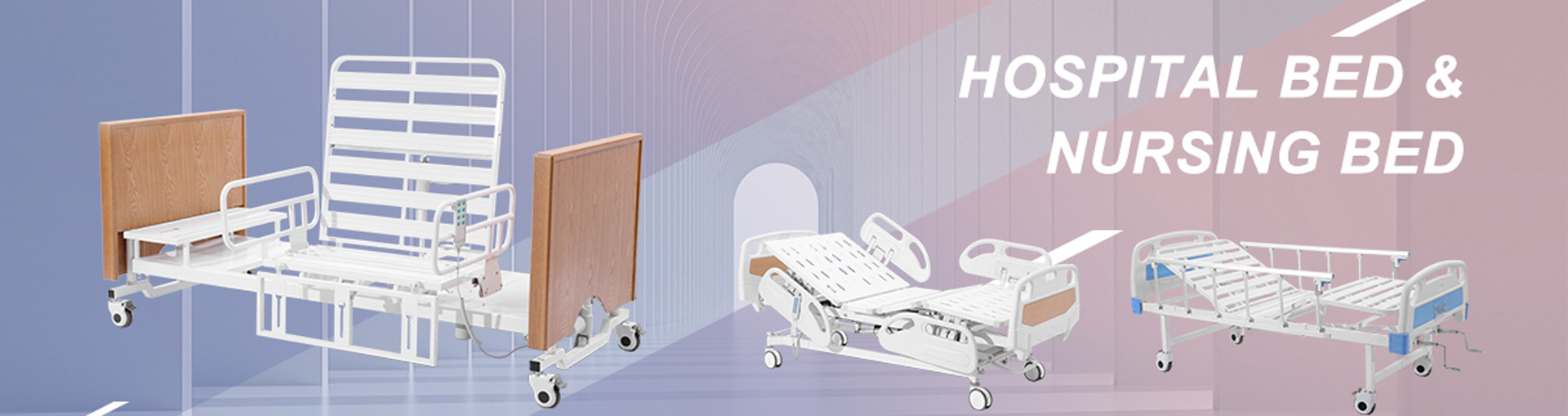
Among mobility aids, 4-wheel rollator walkers and wheelchairs are two of the most frequently mentioned products by families, care facilities, and rehabilitation patients. Although both are mobility aids, their uses, design concepts, target audiences, mobility methods, and safety requirements are completely different.
Many users have questions when choosing a device:
• What exactly is the difference between a 4-wheel rollator and a wheelchair?
• Should a 4-wheel rollator walker or a wheelchair be chosen for the elderly or those with mobility impairments?
• Can a 4-wheel rollator replace a wheelchair?
To help more users correctly understand the functions and usage scenarios of these devices, this article will provide a comprehensive comparative analysis of 4-wheel rollator walkers and wheelchairs, explaining the essential differences between them from a professional perspective to help you make the right choice.
This article is well-structured and logically clear, focusing entirely on the topic. It does not discuss future trends or provide case studies; it only offers clear and practical knowledge guidance.
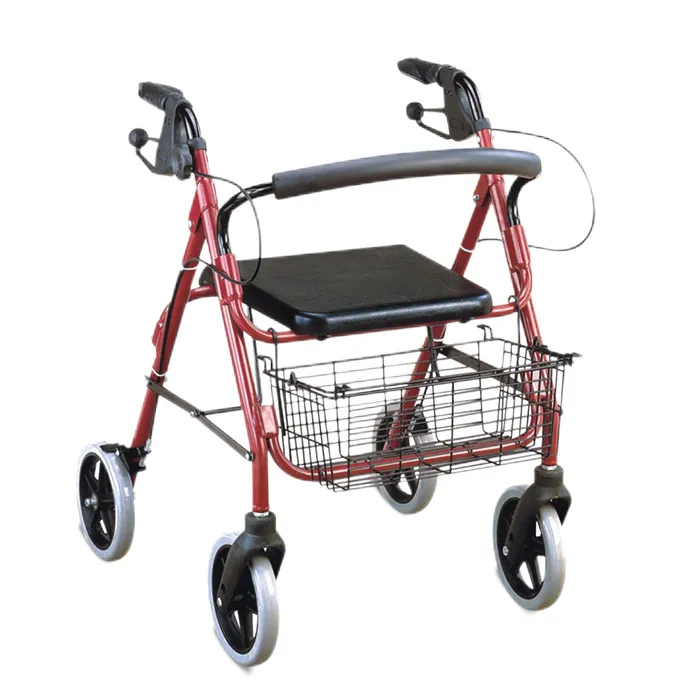
What is the essential difference between a 4-wheel rollator and a wheelchair?
Although both 4-wheel rollators and wheelchairs are mobility aids, their core purposes differ:
• A 4-wheel rollator is an assistive device that allows users to "stand and walk."
• A wheelchair is a mobility aid that allows users to "sit and be pushed or self-propelled."
In other words, a 4-wheel rollator walker requires the user to have a certain level of standing and walking ability, while a wheelchair is suitable for people who cannot walk or are not suitable for standing for extended periods.
This is the most fundamental difference between the two and the primary factor influencing the choice.
Why can't a 4-wheel rollator replace a wheelchair?
Many people hope to use a 4-wheel rollator to reduce wheelchair use, but this is a misconception. Reasons include:
• A 4-wheel rollator cannot support the entire body weight.
• It cannot be used for long-distance travel.
• It is not suitable for people with weaker physical abilities to continue walking.
• The seat is only for short rests, not for prolonged sitting.
• It cannot provide mobility when walking is impossible.
In other words, a 4-wheel rollator walker is a tool for "assisting walking," while a wheelchair is a tool for "replacing walking."
Their purposes are completely different.
What are the functional characteristics of a 4-wheel rollator? Why is it commonly used in rehabilitation?
What is the design purpose of a 4-wheel rollator walker?
A 4-wheel rollator is designed for people who:
• Can walk
• Need additional balance support
• Need temporary rest
• Need a safer walking experience
It is commonly used in rehabilitation training, for people with mild mobility impairments, and for elderly people's daily mobility.
Its main functions include:
• Helping maintain balance
• Reducing the risk of falls
• Distributing some of the weight's pressure
• Providing a temporary resting seat
• Allowing users to move independently
These designs all align with the core purpose of "assisting walking."
What are the typical structural features of a 4-wheel rollator?
It generally includes:
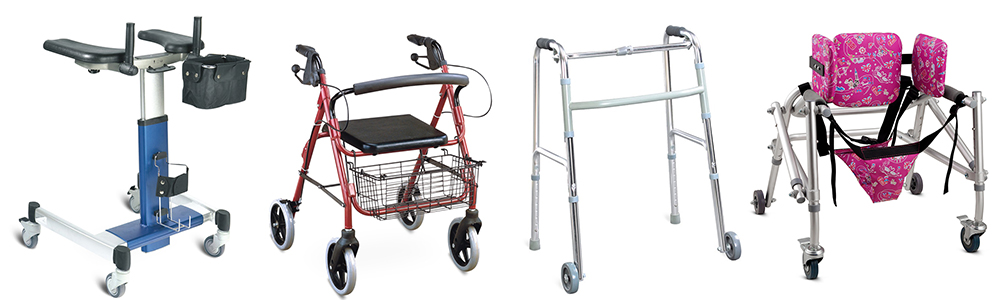
• Four large wheels (the front wheels can rotate)
• A braking system
• Height-adjustable armrests
• Built-in or external shopping basket
• Folding structure
• A central seat (for short rests)
Its structure emphasizes lightness, flexibility, safety, and balance support.
What are the functional characteristics of a wheelchair? Why is it completely different from a 4-wheel rollator?
What is the purpose of a wheelchair?
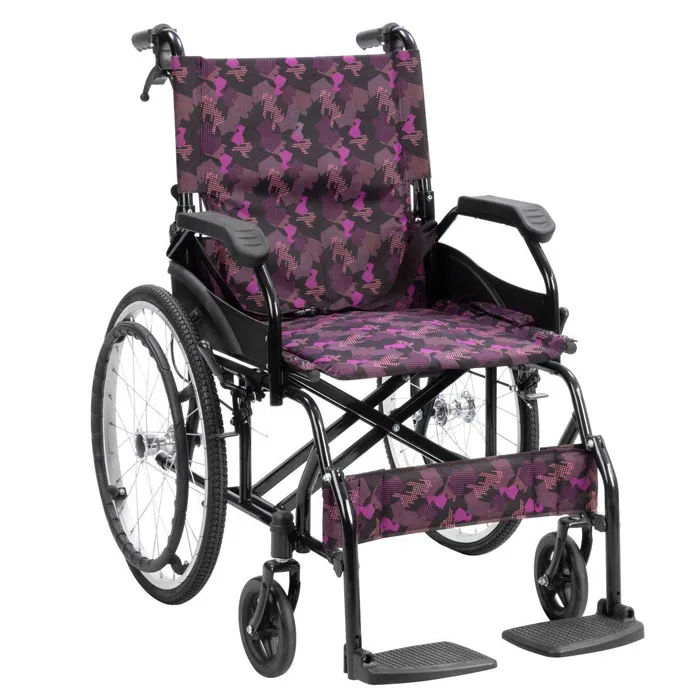
Wheelchairs serve people who cannot walk or have very limited walking ability.
Their main purposes include:
• Alternating from walking
• Providing stable support for prolonged sitting
• Ensuring safety during long-distance travel
• Reducing the burden on caregivers during transport
Suitable for:
• People with disabilities
• Those with lower limb weakness
• Those with severe balance problems
• People who are bedridden for extended periods but need to go out
What are the typical structural features of a wheelchair?
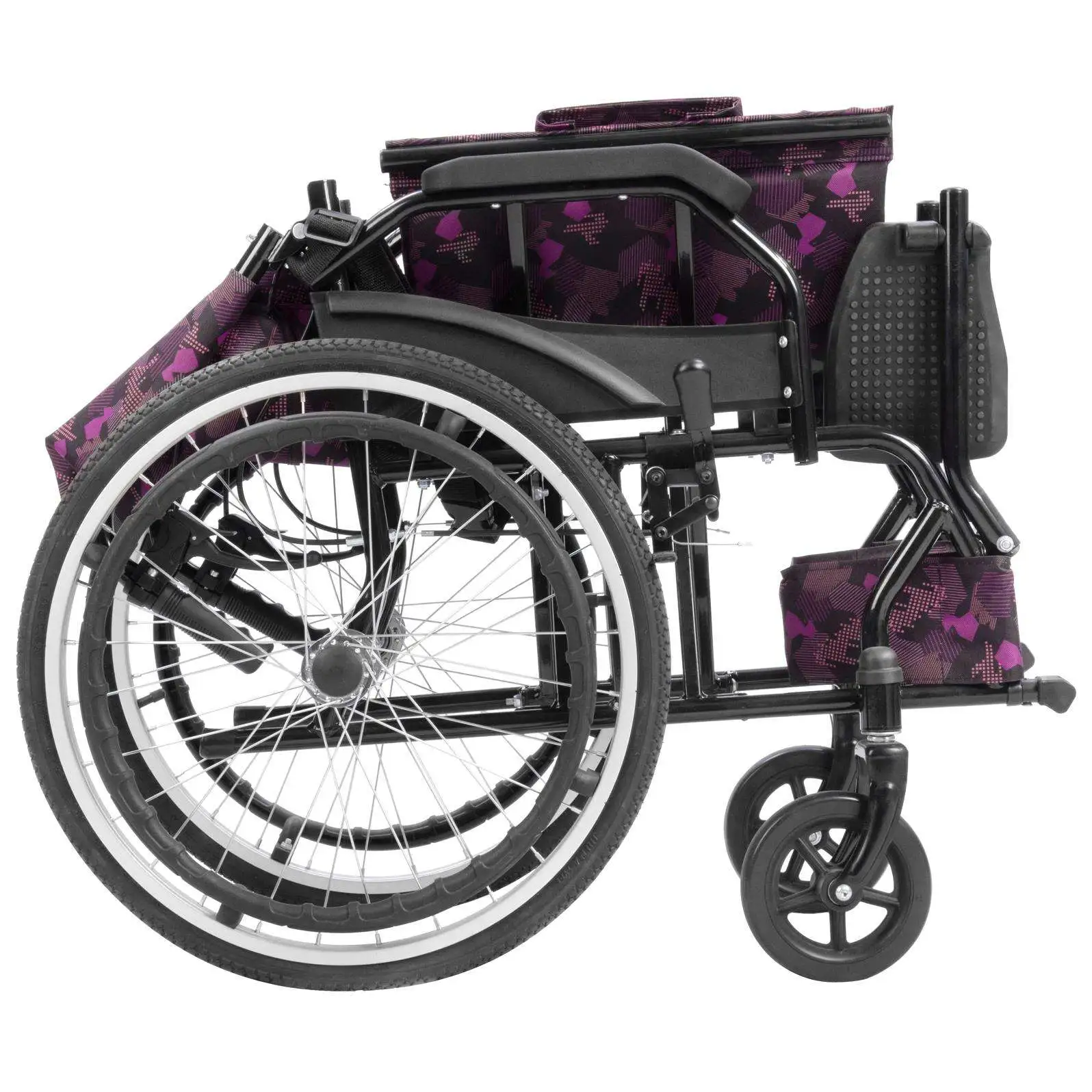
Wheelchairs typically include:
• Large, self-propelled rear wheels
• A stable, supportive seat and backrest
• Brakes and anti-tipping design
• Footrests
• Foldable or fixed frame
• A structural design suitable for prolonged sitting
Wheelchairs emphasize stability, weight-bearing capacity, and long-term comfort.
What is the most important difference between a 4-wheel rollator and a wheelchair? —Comprehensive Comparative Analysis
The table below compares the differences between a 4-wheel rollator walker and a wheelchair from multiple perspectives:
Comparison Items | 4-wheel rollator | Wheelchair |
| Main Use | Assisted walking | Alternative to walking |
| User Posture | Standing walking | Seated mobility |
| Will Walking Ability Be Required | ✔ Must be able to walk | ✘ Not required |
| Does It Provide Full Body Weight Support? | ✘ Not provided | ✔ Provided |
| Is it Suitable for Long-Distance Use? | ✘ Not suitable | ✔ Suitable |
| Is it Suitable for Long-Distance Travel? | ✘ Not suitable | ✔ Suitable for |
| Seating Purpose | Short rest | Prolonged sitting |
| Mobility Method | User pushes it themselves | Self-propelled or nursing support |
| Stability | Higher difficulty, but requires walking ability | Very high |
| Target Audience | For elderly people who can walk but are unsteady | For people who cannot or are not suitable to walk |
As the table shows, the 4-wheel rollator walker and wheelchair are not competitors, but rather complementary.
Who is a 4-wheel rollator suitable for?
Is a 4-wheel rollator suitable for people with unsteady gait?
Yes, it is very suitable for the following groups:
• Those who easily lose their balance while walking
• Those with insufficient muscle strength but still able to walk
• Those who tire easily and need to sit down frequently
• Those with dexterity but slow movement
They can use a 4-wheel rollator walker to complete daily commutes more safely.
Is a 4-wheel rollator suitable for people who are completely unable to walk?
No.
If the user cannot walk, cannot stand, or is unsteady while standing, the 4-wheel rollator walker cannot provide sufficient support, and a wheelchair should be chosen.
Who is a wheelchair more suitable for?
To help users accurately identify their target groups, wheelchairs are often needed in the following situations:
• Disability or complete weakness in the lower limbs
• Severe balance disorders
• Post-operative recovery but unable to withstand the pressure of standing
• Chronic fatigue preventing independent walking
• Intellectual disability leading to insufficient walking safety
Whenever safe walking is impossible, a wheelchair, not a 4-wheel rollator walker, is needed.
How safe is a 4-wheel rollator?
Can a 4-wheel rollator be used on a ramp?
A slight ramp is possible, but the following must be done:
• Hands on the brakes
• Maintain a constant speed
• Avoid excessively steep ramps
Will a 4-wheel rollator walker tip over?
No, under normal use, it will not tip over, but situations that may cause it to tip over include:
• The user gliding while seated on the vehicle
• Accelerating on a steep ramp
• The user's center of gravity leaning excessively forward
Therefore, it must be used according to regulations.
Can a 4-wheel rollator be used as a means of transportation?
No.
A 4-wheel rollator walker is not a wheelchair and should not be used by someone else pushing the user while seated.
How safe is a wheelchair? How does a 4-wheel rollator differ from a 4-wheel rollator?
Wheelchairs offer greater stability due to design features including:
• Wide wheelbase to prevent tipping
• Low center of gravity
• Fixed seating position
• More powerful brakes
• Greater adaptability for outdoor activities
This makes wheelchairs significantly safer than 4-wheel rollator walkers, especially during movement.
Why can't a 4-wheel rollator replace a wheelchair?
Reasons include:
• Lack of long-term seating support
• Lack of mobility aid functionality
• Lack of overall weight-bearing capacity
• Lack of specialized stabilizing structure
• The seat is not designed for movement
• The user must be able to walk.
Attempting to replace a wheelchair with a 4-wheel rollator can lead to:
• Risk of falls
• Equipment damage
• Increased user fatigue
• Increased difficulty in care
Therefore, the two cannot be substituted for each other.
How should one choose between a 4-wheel rollator and a wheelchair?
Choose according to the user's capabilities.
Situations where a 4-wheel rollator walker is chosen:
• Can walk but is unstable
• Easily fatigued
• Need to sit down temporarily
• Want to maintain walking ability
• Need a shopping basket for outings
Situations where a wheelchair is chosen:
• Cannot walk
• Walking poses significant danger
• Must be able to get around when going out
• Need for prolonged sitting
• Lower limbs cannot bear weight
Choosing the right wheelchair can significantly improve user safety and quality of life.
4-Wheel Rollators and Wheelchairs are Fundamentally Different and Cannot Replace Each Other
A comprehensive comparison leads to the following conclusions:
• A 4-wheel rollator walker is a device to assist "walking".
• A wheelchair is a device to replace "walking".
• The requirements for user ability are completely different.
• The usage scenarios are completely different.
• The structural designs are completely different.
Therefore, the choice of product must be based on the user's mobility, balance, physical condition, and care needs.
A 4-wheel rollator walker is suitable for people who can walk.
A wheelchair is suitable for people who cannot walk.
The two are not substitutes for each other, but rather two assistive tools designed for different users.
How are Yikang Medical’s electric wheelchairs designed?
Yikang Medical manufactures electric wheelchairs designed for comfort, safety, and ease of operation. Founded in 2010 in Foshan, China, we evolved from hardware production to OEM manufacturing of hospital beds and wheelchairs in 2014. Our electric wheelchairs are suitable for hospitals, clinics, nursing homes, and personal use. Customers can customize speed, battery capacity, seat style, and color.