
Among various wheelchair materials, carbon fiber is widely used in the manufacture of high-end manual wheelchairs due to its lightweight, high strength, and excellent durability. Compared to aluminum alloy and titanium alloy wheelchairs, carbon fiber manual wheelchairs are lighter, achieving a more ideal balance between lightness and strength.
Therefore, consumers, caregivers, and even professional rehabilitation institutions have always been very concerned about: How heavy are carbon fiber manual wheelchairs? Is their standard weight really around 10KG?
This article will provide a systematic, in-depth, and professional explanation of this core question, comprehensively answering the precise pricing theme of "Why do carbon fiber manual wheelchairs typically weigh around 10KG?" from multiple aspects such as structure, material properties, design logic, weight composition, and influencing factors.
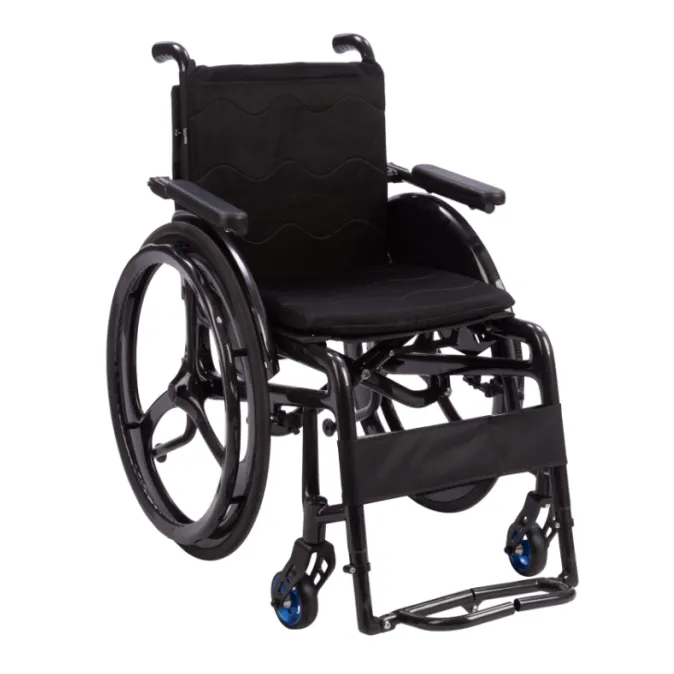
Why are carbon fiber manual wheelchairs generally around 10KG?
Most high-end carbon fiber manual wheelchairs have a total weight ranging from 8.5KG to 12KG, while the most common, standard, and marketable average weight is around 10KG. This weight range is achieved due to the following properties of carbon fiber:
• Low density: Approximately 1/5 that of steel and 2/3 that of aluminum.
• High strength: Tensile strength can be 4 to 10 times that of high-grade steel.
• Thinner structure: High unit performance allows for reduced material thickness.
• High overall rigidity: The frame has high load-bearing capacity and significantly better resistance to deformation than other metal materials.
Therefore, manufacturers can leverage the structural advantages of carbon fiber to create lighter frames while maintaining good durability.
In other words, around 10 kg is the optimal balance between lightweight design and structural safety for carbon fiber manual wheelchairs.
If the weight is significantly lower than 8 kg, structural stability may be compromised; if it exceeds 12 kg, the advantage of a lightweight wheelchair is lost.
Therefore, around 10 kg has become the industry-recognized, user-accepted, and widely adopted golden weight value for manufacturers.
What are the components that make up the weight of a carbon fiber manual wheelchair?
To understand why carbon fiber manual wheelchairs ultimately fall within the 10kg weight range, it's essential to analyze each structural component. While carbon fiber significantly reduces frame weight, the overall weight of a wheelchair isn't solely determined by the frame; it also includes several crucial components.
Below is a professional breakdown of its weight composition:
1. Frame – The Largest Share of Weight
Carbon fiber frames typically account for 45%–65% of the total weight.
Traditional aluminum alloy frames generally weigh between 6kg and 9kg, but carbon fiber frames can be as light as 3kg–5kg, reducing the weight by nearly half.
The frame is the most critical source of lightweight design in a carbon fiber manual wheelchair.
2. Wheel System (Front and Rear Wheels)
Even if the frame is made of carbon fiber, the wheels typically still use:
• Aluminum alloy rims
• Magnesium alloy structure
• Silicone tires, rubber tires, or TPU tires
• Bearings and wheel locks
A pair of rear wheels typically weighs approximately 2-3 kg, and the front wheels approximately 0.5-1 kg.
This is an unavoidable fixed component of the wheelchair's weight, as the rims and tires must meet structural strength requirements and cannot be infinitely lightweight.
3. Seat and Backrest System
Carbon fiber manual wheelchairs often feature:
• High-density foam seat cushion
• Breathable fabric
• Removable backrest or carbon fiber backrest panel
Weight approximately 0.5-1.2 kg.
This part offers a high degree of lightweighting, but it cannot be too thin, otherwise it will affect seating stability and comfort.
4. Braking System, Foot Pedals, and Armrests
These components typically use:
• Aluminum
• Titanium
• Carbon fiber panels
• High-hardness plastics
Total weight approximately 1KG~2KG.
5. Other Components (Optional)
For example:
• Seat belts
• Anti-roll wheels
• Incliners
• Lumbar support belts
• Side panels
This part varies considerably, from 0.2KG to 1KG.
In summary, each component of a carbon fiber manual wheelchair has its necessary weight, therefore the total is around 10KG, which is a reasonable and structurally safe design range.
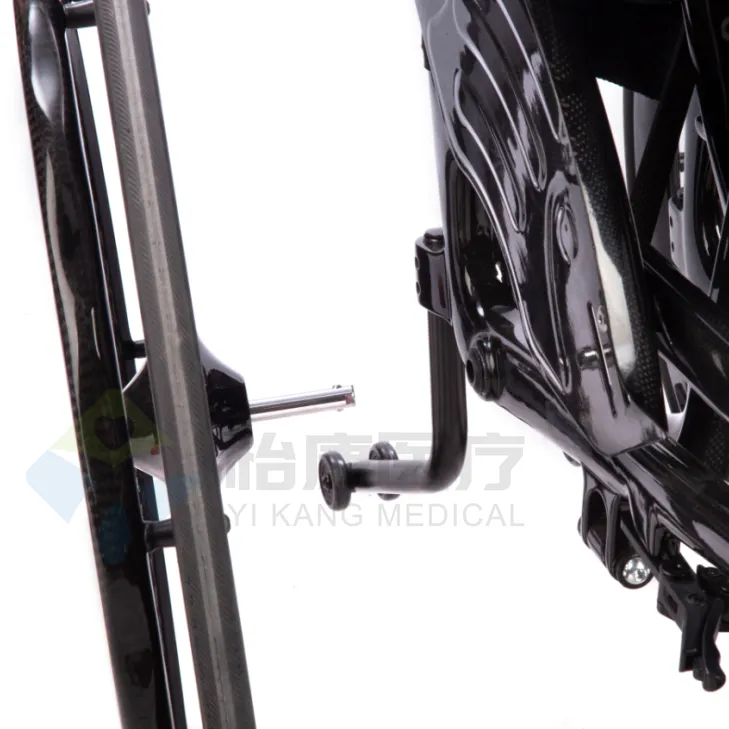
Why does a carbon fiber frame make the wheelchair lighter?
Many people wonder: why does switching to a carbon fiber rear frame reduce weight so much? This is the core factor in the lightweight design of carbon fiber manual wheelchairs.
1. Significant Density Advantage of Carbon Fiber
• Carbon fiber density: approximately 1.6 g/cm³
• Aluminum alloy density: approximately 2.7 g/cm³
• Steel density: approximately 7.8 g/cm³
That is to say, for the same size material, carbon fiber is about 40% lighter than aluminum and 80% lighter than steel.
2. Structural Strength Allows for Thinner Wall Thickness
Carbon fiber has extremely high tensile strength, allowing for the following when manufacturing frames:
• Thinner
• Lighter
• Higher toughness
This directly reduces the material weight of carbon fiber manual wheelchairs significantly.
3. Carbon Fiber Structure Enables Monolithic Design
Unlike aluminum alloys, which require welding, carbon fiber frames can be manufactured using a monolithic molding process, thus reducing:
• Weld points
• Additional metal connectors
• Metal reinforcement structures
Making the entire frame lighter and more robust.
Does the weight of a carbon fiber manual wheelchair vary depending on the design?
While carbon fiber manual wheelchairs typically weigh around 10kg, the weight can vary depending on the structural design.
Here are the main factors affecting weight:
1. Fixed vs. Folding Frame
• Fixed Frame: Lightest, typically 8.5kg–10kg
• Folding Frame: Includes cross-bracing, typically 10kg–12kg
Therefore, a simpler structure results in a lighter weight.
2. Rear Wheel Size and Material
Larger, thicker, and more bearing-rich rear wheels increase overall weight.
Commonly used in carbon fiber manual wheelchairs:
• 24-inch or 25-inch rear wheels
• Titanium alloy or lightweight aluminum rims
• Wide or narrow tire configuration
Choosing different wheels can affect weight variation by 0.3kg–1kg.
3. Seat Cushion Thickness and Material
Breathable foam is lighter than high-density support cushions, thus affecting weight by approximately 0.3kg.
4. Are anti-roll wheels installed?
Adding anti-roll wheels may increase the weight by 0.2KG to 0.5KG.
5. Are detachable accessories installed?
For example:
• Adjustable armrests
• Footrests
• Storage bags
• Side support panels
These accessories can cause a weight difference of 0.5KG to 1KG.
In summary, although carbon fiber manual wheelchairs are known for their lightweight design, the actual weight can vary slightly depending on the configuration.
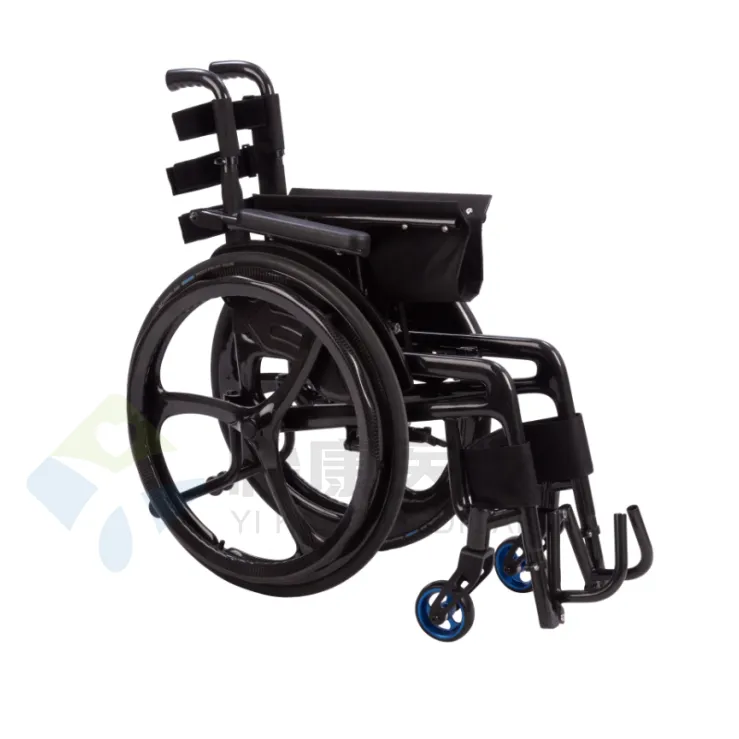
What are the advantages of using a carbon fiber manual wheelchair weighing around 10KG?
Weight is not just a number; it also affects the user's operating experience.
1. Easier self-mobility
A weight of around 10KG is ideal for:
• Uphill
• Downhill
• Turning
• Straight-line propulsion
Users can reduce the daily effort required for propulsion.
2. Easier to Fold and Portable
Lightweight wheelchairs are better suited for:
• Carrying
• Public Transportation
• Traveling
• Moving and transporting
Caregivers especially appreciate the convenience of lightweight design.
3. Reduced Joint Burden
The wrist, elbow, and shoulder joints are the main points of force application when using a manual wheelchair.
The lighter the carbon fiber manual wheelchair, the less joint stress it causes from repeated use over a long period.
4. High Frame Rigidity and More Sensitive Push-Force Feedback
Carbon fiber has extremely high structural rigidity, resulting in:
• Faster movement with a push
• More stable turning
• More responsive braking
These are important parameters affecting the user experience.
Can I choose a carbon fiber manual wheelchair of different weights to suit my individual needs?
While the overall average weight is 10KG, users still have different options:
For users who want a lighter wheelchair (8KG-9KG):
• High mobility
• Maximum portability
• Frequent folding and packing
For users who need stability (10KG-12KG):
• High daily usage frequency
• Greater emphasis on comfort and durability
• More accessories and support structures
Therefore, lighter isn't always better; it's about balancing your usage needs.
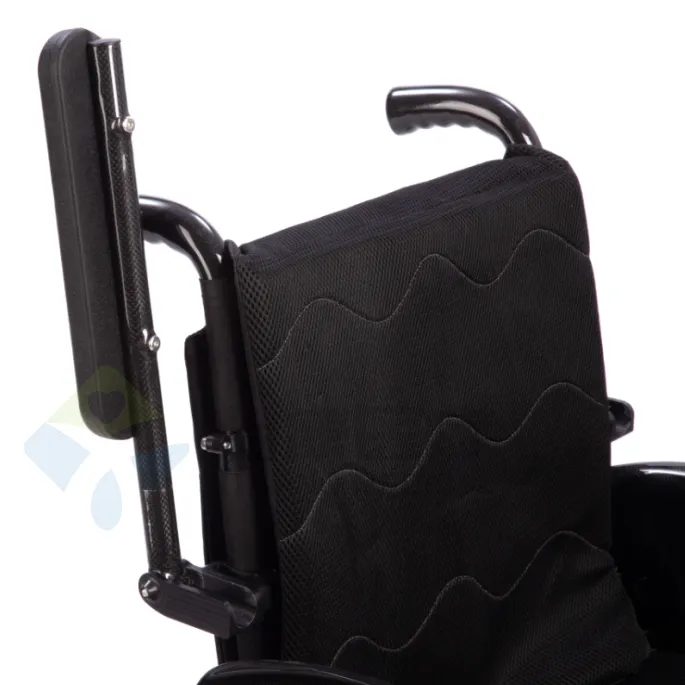
How heavy is a carbon fiber manual wheelchair?
The standard weight of a carbon fiber manual wheelchair is typically around 10KG.
This is because:
• Carbon fiber material is extremely lightweight and high-strength
• Optimal frame design
• Component weight kept within a healthy range
• Stable, durable, and safe overall structure
This ultimately forms an industry-recognized golden weight standard: Lightweight, stable, safe, and portable.
How fast can Yikang Medical deliver hospital beds?
Yikang Medical provides efficient delivery of hospital beds and related nursing equipment within 30-45 working days. Established in Foshan, China, in 2010 and expanded to hospital equipment in 2014, we are an OEM manufacturer and supplier for major brands. Our hospital beds are customizable in size, design, and color, ensuring they meet client needs. With ISO13485, ISO9001, CE, and FDA certifications, Yikang Medical ensures high-quality and reliable products. Customers worldwide purchase from us for wholesale supply, OEM collaboration, and direct access to professional Chinese manufacturing.