
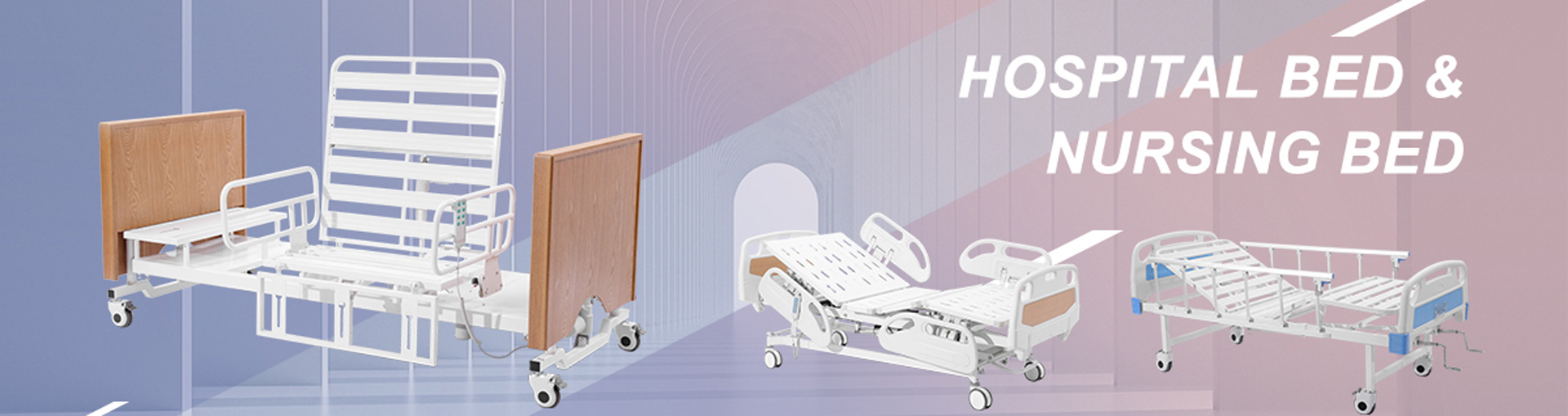
The accelerated global population aging trend and the growing demand for home care and rehabilitation care cause hospital beds to be changed from a medical device for medical institutions mainly to a home hospital bed equipment. particularly since the advent of adjustable hospital beds with features like backrest and legs adjustment and overall height adjustment, more and more people are turning to such beds.
Naturally, such a product is of great importance for a bedridden elderly person or postoperative patient who needs to be kept in the bed, but it is equally useful for physically disabled persons or for professional care needs. With adjustable hospital medical bed, not only does the comfort of sleeping or resting improve, but the task of the caregiver becomes simpler too and the overall caregiving process is more efficient.
But in reality, whenever people buy or just start to get familiar with adjustable hospital medical beds, one question frequently comes to their mind, which may actually confuse them: “Do adjustable hospital beds wear out the mattress?”, and if yes, “Does a regular mattress still be suitable for a long-time use together with adjustable hospital bed?”. If they decide they will use the hospital bed all the time they live on, will they need a special mattress made of another material than those of regular ones that only stay in one place for hours or even days?
This is an important challenge in the medical devices field. Many customers pay attention to adjustable hospital beds' features like the number of motors, load capability, the height adjustments, and the type of side rail, etc., but at the same time they may ignore the mattress-bed fit. As a matter of fact, adjustable hospital medical beds are totally different from home beds. Hospital bed is not just a bed with added height adjustments by electric way, but it is the medical support whole system that is built around the concepts of patient positioning changes, nursing work requirements, and long-term hospital bed use.
If a mattress is not well-choosen, even a top-of-the-line hospital bed may be affected in terms of difficulty in bending, localized sagging, edge-wear, patient discomfort, etc. For instance, according to a certain healthcare industry survey, long-term bedridden patients require changing their position 5 to 15 times daily, whereas some critically ill patients have even higher requirements. So in a whole year, a mattress may have undergone over a thousand mechanical changes. In other words, the question of whether adjustable hospital beds prolong the life of the mattress or destroy it entirely is not just a binary yes/no question but a function of the bed design, mattress composition, the usage, and method of maintenance.
From the professional standpoint, a high-quality adjustable hospital medical bed rarely, if never, will lead to a rapid degeneration of the mating mattress because they are usually built for extended adjustable applications. Rather the fact is, incorrect mating, inappropriate usage, or poor material performance are more frequently the culprits in mattress aging.
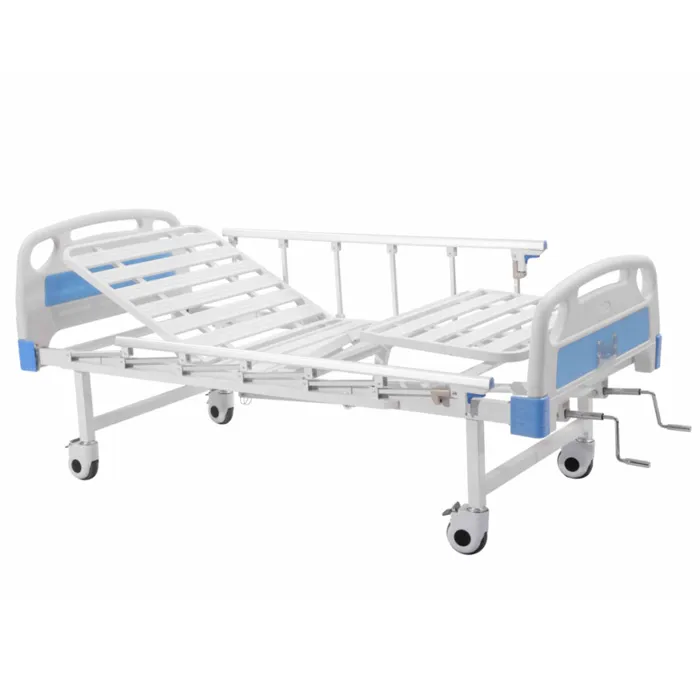
Why are adjustable hospital beds matched with exclusive mattresses?
One needs to know the difference between adjustable hospital bed and home-use bed regarding the structure first, in order to tell whether adjustable hospital beds make the mattress wear out or not.
Home bed is a bed in which surface is fixed so that mattress remains flat without being folded or turned for a long time. The mattress of home bed is mainly a body weight carrier and is made of the internal springs foam or latex layers. The adjustable hospital beds in contrast usually have a segmented surface design that generally covers the areas like the waist back, thigh, and小腿, so that by the help of the motor, the bed sections can make an independent angle change, thus helping the patient to reach a semi-recumbent, sitting, or leg-elevating position.
For instance, the adjustable hospital medical bed will raise the back area, allowing the patient to shift from lying to sitting position when the patient wants to have a meal, reading, or doing rehabilitation training, etc. At this stage, the mattress will be bend together with the bed frame at that very time. So if a mattress does not bend at the same time as the bed frame, that would cause pressure to the patient.
Hence it is quite a common feature of the adjustable hospital medical beds to demand a medical mattress having the flexibility and recovery property. There are a variety of mattresses that are available on the market for such purposes among which the high-density foam mattresses, memory foam mattresses, pressure-relieving mattresses, and air mattresses are the most popular. The primary distinction of these mattresses compared to the standard type that only offers support to the body is also that these types of mattresses have to be very capable of changing their shape to the new angle of the bed while it is being changed step by step.
For example, high-density foam mattresses are known for outstanding resilience and able to naturally bend together with the bed surface; memory foam mattresses will gradually change its shape to conform with the body weight distribution thus leading to more comfort; and finally, the air pressure mattress is capable of reducing the area-of-pain pressure through the movement of the air cells.
In other words, adjustable hospital medical bed in its design does not serve as an instrument that wears out the mattress, but, in fact, is a care system in conjunction with the right type of mattress which can be used effectively.
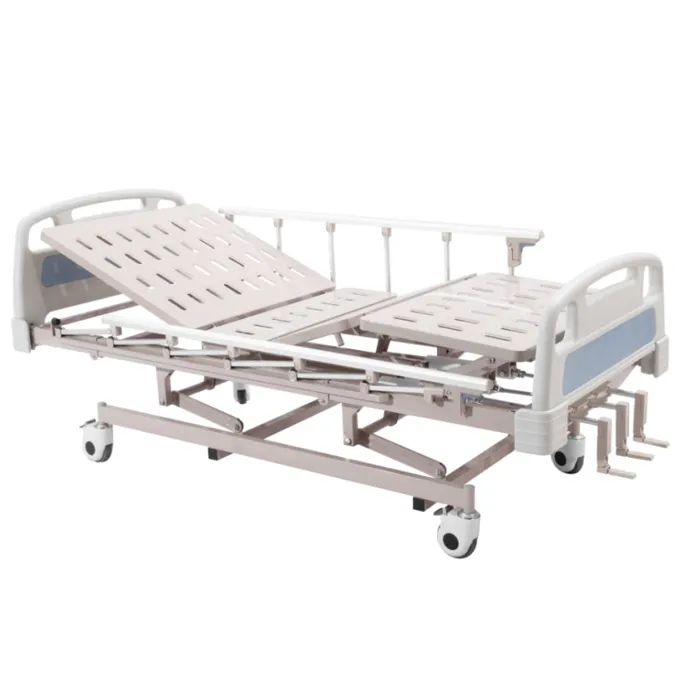
What situations can cause adjustable hospital beds to wear down the mattress?
While adjustable hospital beds do not normally significantly shorten the lifespan of a mattress, the following situations can indeed accelerate mattress wear during actual use:
1. The mattress material is not suitable for frequent bending
This is one of the most common problems.
Some users, in order to save costs, will directly purchase ordinary home mattresses and install them on adjustable hospital medical beds. However, ordinary mattresses are designed to maintain a horizontal position for a long time, not to undergo repeated angle changes.
For example, traditional spring mattresses rely primarily on springs for support. With prolonged bending, the direction of force on the springs changes, potentially leading to localized deformation. Thicker mattresses, due to their firmer internal materials, cannot naturally bend when the back is raised, and are prone to creases after long-term use.
In contrast, medical-grade mattresses typically use a combination of multiple flexible materials, allowing the mattress to adapt to the movement of the adjustable hospital medical bed while maintaining sufficient support.
2. Mattress Size Mismatch with Bed Specifications
Size matching is also a crucial factor affecting mattress lifespan.
Adjustable hospital medical beds usually have standard sizes, such as 80cm, 90cm, or 100cm in width. If the mattress is too large, it may be squeezed by the bed frame after installation; if it is too small, it may shift during adjustment.
In the long term, size mismatch can cause continuous stress on the mattress edges, damaging the edging and potentially affecting the patient's lying stability.
Professional medical equipment manufacturers typically recommend mattress specifications based on bed dimensions to ensure the mattress fully conforms to the bed surface structure.
3. Inappropriate Bed Adjustment Methods
Many people believe that electric hospital beds can be adjusted at will, thus maintaining extreme angles for extended periods.
In reality, although modern adjustable hospital medical beds have strong mechanical performance, maintaining certain specific angles for a long time can still increase localized pressure on the mattress. For example, if a patient maintains a fully seated position for a long time, the pressure on the buttocks area increases significantly, making that area of the mattress more prone to fatigue.
Therefore, in long-term care, properly adjusting the patient's posture not only helps protect the mattress but also reduces the risk of pressure sores.
How can you tell if adjustable hospital bed and a mattress form a good match?
You can make a number of practical observations to see if they suit each other.
One of them is to check mattress conformity. When the adjustable hospital medical bed lifts the back section, the mattress must bend with the surface and smoothly, whereas the mattress shouldn't have folds, folds and creases, suspension, or bulges. Failure to follow the contours of the mattress means improper matching has been made.
In the second observation, recovery time is taken into account. A high-quality mattress will return to the flat state quickly upon the hospital bed leveling down. If a deep, long-lasted indentation is evident, then a change in mattress support structure would be needed.
Next, it's about patient comfort. It is possible that a mattress support system is not the right one for a particular bed if the patient slides down while seated or notices the pressure is mainly on the lower back and hips.
The last item of the assessment is the ease of using the adjustable hospital bed. If the bed is stiff or makes unusual sounds in friction during adjustment, it might result from the mattress' thickness, weight, or size.
How may a bed-bound individual take good care of a mattress on a movable hospital bed for a longer period of time?
A good way of doing this for the home care user is proper care of the mattress leading to an extended duration of its life.
At the first step, it is recommended to choose a mattress specially made for a movable hospital bed as opposed to just getting the cheapest ordinary mattress. Although medical beds have a price tag a bit heavier, their operating cost is significantly lower, the reason is that the materials used and mattress structures have been designed for extended use in a medical environment.
Caregiver second is advised to inspect the mattress frequently, at least monthly, to find out surface damages as well as areas of localized sagging and edge wearing. Prompt repair of abnormalities is advised.
Besides, the mattress must be kept clean and dry. In a long-term institutional care environment, sweat, medications, and other liquids might penetrate the mattress materials. Using a waterproof cover, therefore, improves hygiene in addition to reducing damage and wear on the mattress surface.
In the interim, patient positioning and post should be changed from time to time. For people who are bedridden for a very long time, the right kind of physical posture changes helps not only in reducing the burden on the body tissues but also in avoiding the fact that a single section of a mattress has a concentrated weight on it for an extended period of time, which can damage the mattress prematurely.
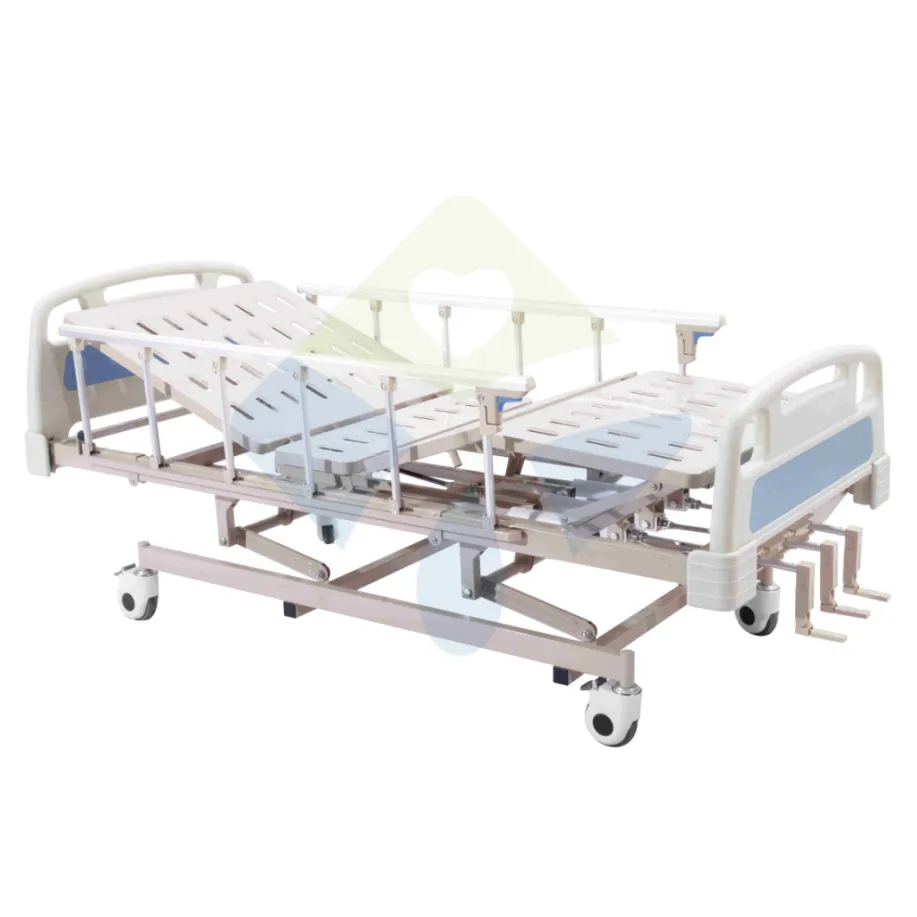
How do modern adjustable hospital beds reduce mattress wear?
The use of a medical device is more coordinated with the patient’s anatomical structure, and a smooth movement is more emphasized than whether or not adjustment is possible. A classic hospital bed may just focus on "can you raise/lower" whereas a present one is more about "the smoothness" with which you can raise and lower. For instance, some modern adjustable hospital medical beds that are capable of multi-segment movement, the movement of back and leg parts are made to be consistent with the natural changes in human joints, consequently, it will lead to the patient not sliding on the surface as much as before and the mattress being stretched just a little.
Also, the mattress life is affected by the stability of a motor system. If the motor runs up quickly and then stops very abruptly, it causes mechanical stress on the bed and the mattress both. That is the reason high quality hospital beds that are adjustable, usually, make use of controls for smooth acceleration and deceleration so that the user is less jolted when the bed is being adjusted.
As an example, Yikang Medical® mainly concentrates on the scenario for long-term medical device usage while developing hospital bed products like the stability of bed structure, smoothness of electric adjustment, nursing ease, and patient satisfaction. As far as adjustable hospital medical beds are concerned, product design is no longer simply adding functions but ensuring that every part of the product - bed frame, motor, guardrail, mattress, and nursing steps work together effortlessly. The combination of a proper structural design and a stable adjustment system minimizes the possibility of abnormal wear during the lifetime of a product so that overall reliability is significantly improved.
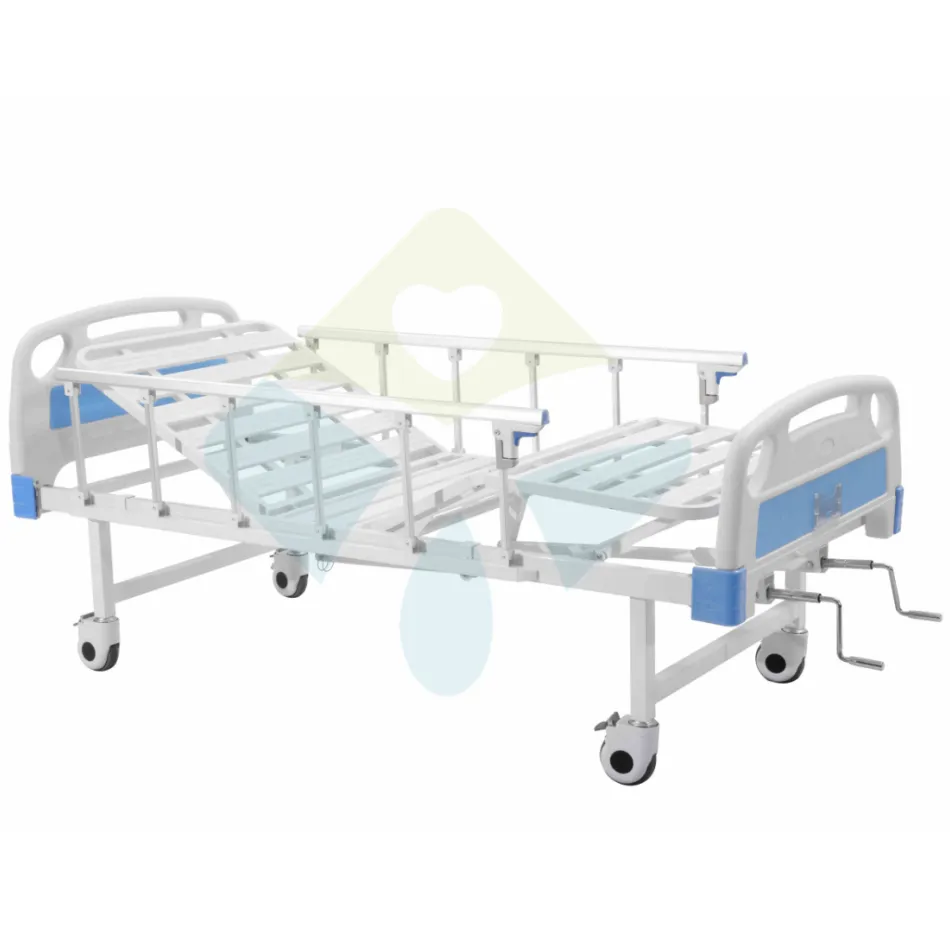
FAQ: Common Questions about Adjustable Hospital Beds and Mattresses
Q1: Can a regular home mattress be installed on an adjustable hospital bed?
Generally, it is not recommended. Regular mattresses are designed for fixed bed surfaces and cannot adapt to the repeated raising, lowering, and bending changes of a medical bed over a long period, which may lead to deformation or affect the user experience.
Q2: Will adjusting an adjustable hospital medical bed many times a day damage the mattress?
Under normal circumstances, no. Qualified medical mattresses have undergone extensive bending tests and can meet daily adjustment needs. However, if the mattress material is unsuitable or the size is mismatched, it may accelerate wear and tear.
Q3: Are adjustable hospital medical beds suitable for long-term home care?
Suitable for: Adjustable hospital medical beds can help improve nursing efficiency and patient comfort for elderly people who are bedridden for extended periods, rehabilitation patients, and those with limited mobility.
Q4: What are the most important parameters when choosing an adjustable hospital medical bed?
Besides the number of motors and load-bearing capacity, it's also important to consider bed stability, adjustment range, safety design, mattress compatibility, and ease of long-term maintenance.
Q5: What are the advantages of Yikang Medical® in adjustable hospital medical beds?
Yikang Medical® emphasizes the practicality and reliability of rehabilitation and nursing equipment. In product design, it focuses on the stability of electric adjustments, structural durability, and the needs of different nursing scenarios, helping users achieve a safer and more comfortable experience through thoughtful design.