
For the elderly, bathing can become a high-risk activity due to reduced balance, weakened leg strength, and a limited ability to stand for extended periods. Transitions—such as moving from a standing to a seated position or rising from a seat—require significant leg strength, core stability, and physical coordination, especially in the wet, slippery environment of a bathroom; a loss of balance during these movements can easily lead to serious falls.
Consequently, shower chairs have become essential assistive devices for home care, elderly care facilities, and rehabilitation centers. However, consumers often face difficulties when making a purchase: Can an ordinary plastic stool serve as a substitute? Is a fixed shower chair suitable for everyone? What is the difference between models with armrests and those with backrests? Does a chair with more features necessarily make it the best choice for a senior?
These questions highlight a key issue in the shower chair market: many users focus solely on appearance and price rather than selecting a model based on the senior's physical condition, the bathroom environment, and actual usage needs. While the market offers a wide variety of options—including fixed, folding, height-adjustable, and wheeled models, as well as those with armrests or backrests—each type addresses different needs. An incorrect choice may fail to improve safety and could even increase the risk of accidents.
For instance, a senior in relatively good health who simply tires easily during long showers might only need a basic fixed shower chair. In contrast, a model with armrests is more suitable for someone with reduced knee strength, poor balance, or difficulty standing up. Meanwhile, a chair with a backrest offers better support for seniors who lack sufficient lower back strength to maintain a seated posture for extended periods.
Selecting the right shower chair requires a comprehensive assessment based on factors such as ergonomics, safety design, weight capacity, and the intended usage environment. Care guidelines emphasize that when choosing a shower chair, seniors and their caregivers should prioritize stability, anti-slip features, seat height, and the support provided by backrests and armrests, rather than making a decision based solely on price. Therefore, there is no single answer to the question, "Which shower chair is best for the elderly?" that applies to everyone. The ideal shower chair should be selected based on the individual's physical capabilities. The following section provides a detailed analysis of the features, target users, and selection criteria for various types of shower chairs.
Why do the elderly need specialized shower chairs?
While many young people view bathing as a simple daily routine, the bathroom environment presents significant challenges for the elderly. Bathroom floors are frequently wet and prone to becoming slippery; furthermore, factors such as fluctuations in skin temperature, exposure to hot water, and the need to stand for extended periods can lead to physical fatigue and impaired balance.
As people age, muscle strength—particularly in the legs and core—typically declines. Even seniors who are otherwise mobile may struggle to remain standing for the duration of a shower. Statistics on fall risks among the elderly show that many falls do not occur while walking, but rather during moments requiring a change in body position, such as bending, turning, stepping, or rising from a seated position.
Another issue in the bathroom is the lack of stable support. To maintain balance, many seniors habitually grab onto walls, towel racks, or glass partitions; however, these fixtures are not designed to bear human weight and cannot provide reliable support. Consequently, the value of a specialized shower chair lies not merely in allowing the senior to sit while bathing, but in reducing physical strain through a stable seat, thereby making the bathing process safer.
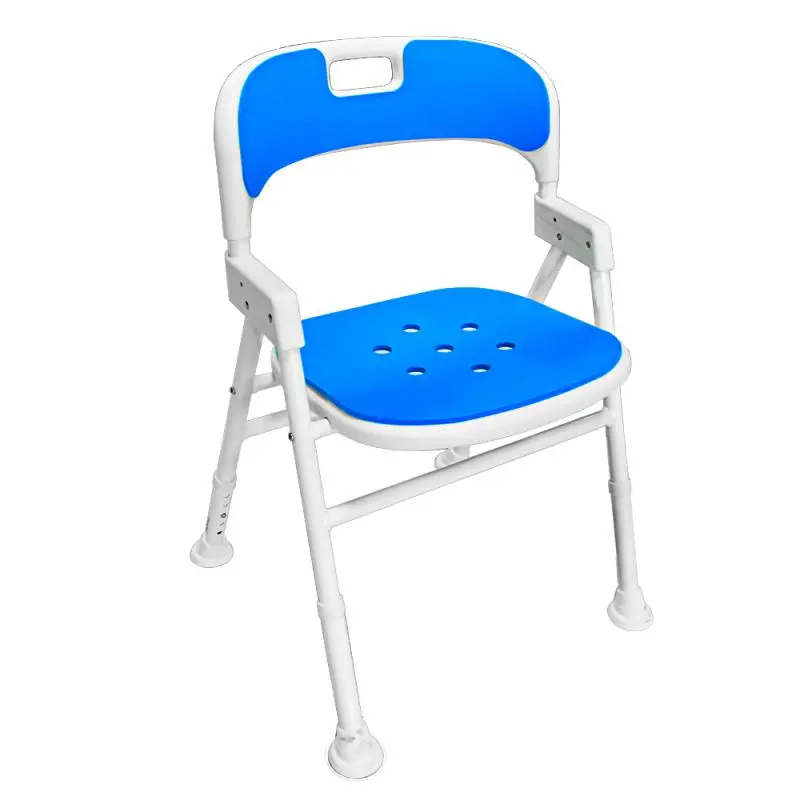
Compared to standard stools, shower chairs typically feature waterproof materials, non-slip feet, drainage-friendly seats, and ergonomic designs. A common configuration, for instance, pairs an aluminum alloy frame with a plastic seat; aluminum is lightweight and rust-resistant, while the plastic seat is easy to clean and maintain. High-quality shower chairs often include drainage holes to allow water to flow away quickly, preventing pooling that could create a slipping hazard.
Thus, for seniors experiencing reduced leg strength, impaired balance, or fatigue while bathing, choosing the right shower chair is not a sign of diminished capability, but rather a vital step toward enhancing their quality of life and independence.
For which seniors are fixed shower chairs suitable?
Fixed shower chairs represent the most basic and widely used category of products on the market. It typically features a four-legged design with a fixed seat, relying on non-slip foot pads to maintain stable contact with the bathroom floor.
The primary advantages of fixed shower chairs are their simple structure, high stability, and ease of maintenance. Lacking complex adjustment mechanisms, their frames are generally more robust, making them an excellent choice for seniors seeking basic bathing assistance.
Fixed shower chairs are suitable for seniors who are in relatively good physical condition:
Those who can walk independently;
Those with good balance;
Those who simply tire easily when standing to bathe;
Those wishing to minimize the risk of slipping in the bathroom;
For these individuals, a fixed shower chair usually meets their needs.
Generally, the seat height of fixed shower chairs ranges from approximately 40 to 55 cm; some models offer height adjustability to suit the user's stature. An appropriate height allows the senior to sit with their feet resting naturally on the floor and their knees bent at roughly a 90-degree angle, ensuring greater stability when standing up.
However, fixed shower chairs do have limitations. Some models lack backrests and armrests, meaning seniors with weaker body control may lack sufficient support during prolonged sitting. Additionally, the absence of armrests means there is no upward leverage to assist in standing, which can place increased strain on the legs.
Therefore, fixed shower chairs are best viewed as basic assistive devices rather than the optimal choice for every senior.
Why are shower chairs with armrests better suited for most seniors?
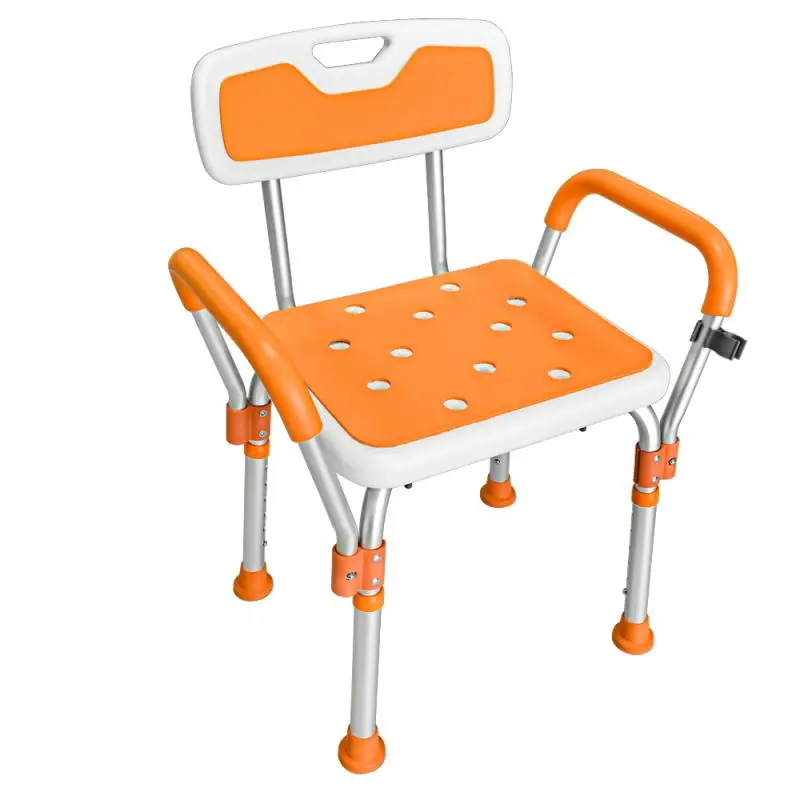
Among the various types of shower chairs, those equipped with armrests are a popular choice among elderly users.
The reason is simple: one of the greatest risks for seniors during bathing is not the act of sitting itself, but the transition between sitting and standing.
When transitioning from a standing position to the shower chair, seniors must control their descent; conversely, after bathing, they must rise from a seated position. Both movements require leg strength and balance. Without armrests, seniors must rely solely on leg strength to perform these actions, whereas armrests provide essential additional support.
Armrests serve three main functions:
First, they enhance safety when sitting down and standing up. Seniors can grip the armrests with both hands, using upper-body strength to assist their movement and reduce pressure on the knee and hip joints.
Second, they improve stability while seated. During bathing, elderly individuals may sway due to fatigue or the effects of the water temperature; grab bars provide necessary lateral support.
Thirdly, they enhance the convenience of caregiving. If family members need to assist the elderly with bathing, a shower chair with armrests makes the process of transferring the person onto the seat much easier.
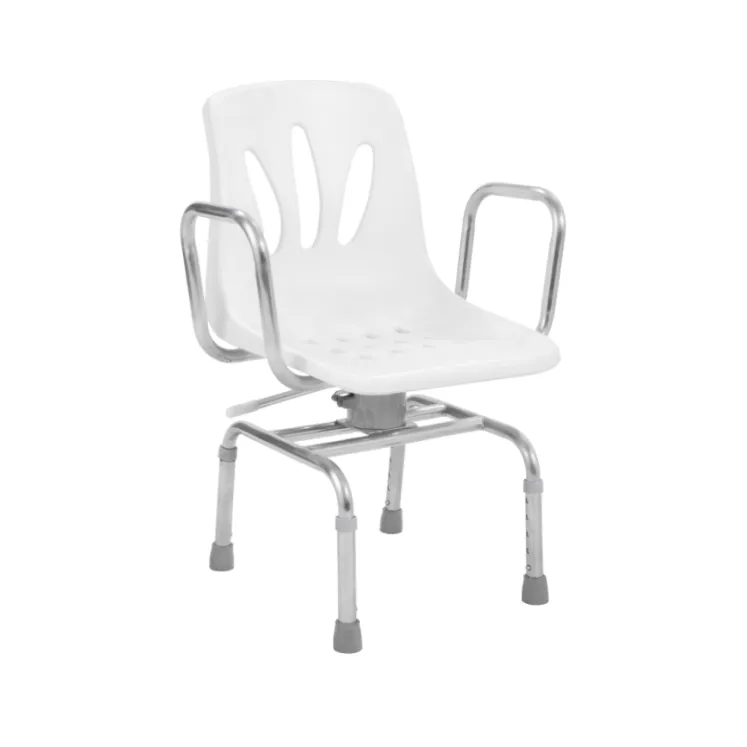
Some specialized care products feature flip-up armrests, offering users both support and the flexibility to transfer from the side. For instance, movable armrests remove obstacles for seniors who use walkers or wheelchairs.
In practical terms, if one is unsure which type of shower chair to choose, a model with armrests is generally a safer option than a standard fixed shower chair.
For which seniors is a shower chair with a backrest suitable?
A shower chair with a backrest offers enhanced stability and comfort.
Many seniors experience fatigue while bathing not because they are physically unable to stand, but because they struggle to maintain a stable seated posture for an extended period. This is particularly true for those with reduced lower back strength, spinal issues, or those recovering from surgery; without back support, sitting on a shower chair requires constant use of core muscles to maintain balance.
A shower chair with a backrest provides the necessary support, allowing seniors to bathe in a more relaxed manner.
Shower chairs with backrests are particularly suitable for:
Older seniors;
Individuals who fatigue easily;
Those with impaired balance;
Patients in rehabilitation;
Individuals requiring caregiver assistance during bathing.
Compared to models without backrests, a backrest design helps prevent leaning forward and improves overall stability. When combined with armrests, it creates a comprehensive support system for the body.
From an ergonomic perspective, a high-quality shower chair with a backrest should allow the back to rest naturally against it, rather than simply featuring a vertical panel. A well-designed backrest reduces strain on the lower back and enhances comfort during prolonged seated bathing.
However, shower chairs with backrests typically take up more space. Therefore, it is important to measure the bathroom before purchasing to ensure the chair fits properly without hindering the caregiver's movements.
Fixed shower chairs, shower chairs with armrests, and shower chairs with backrests: How do you choose?
When selecting a shower chair for an elderly person, one should not rely solely on the product name but rather assess the individual's physical condition.
If the senior is in good health but simply tires easily during long showers, a standard fixed shower chair will suffice. These are relatively affordable and compact, making them ideal for bathrooms with limited space.
If the senior experiences reduced leg strength, difficulty standing up, or mild balance issues, a shower chair with armrests is more suitable. Armrests assist with sitting down and standing up, thereby enhancing safety during daily use.
If the senior tires easily, lacks sufficient lower back strength, or needs to remain seated for extended periods while bathing, a shower chair with a backrest is usually the better choice. A backrest significantly improves physical stability, especially for the very elderly.
If the senior has significantly reduced mobility—requiring wheelchair transfers or assistance from a caregiver—one might need to consider specialized transfer shower chairs or wheeled shower chairs.
In summary:
Good physical ability: Fixed shower chair;
Need assistance standing up: Shower chair with armrests;
Need full body support: Shower chair with a backrest;
Need caregiver-assisted transfer: Specialized care-oriented shower chair.
What specifications should be considered when choosing a shower chair for the elderly?
When purchasing a shower chair, one should look beyond aesthetics and consider several key specifications.
First is weight capacity.
Standard shower chairs typically support 100–150 kg, while high-capacity models can handle 180 kg or more. It is advisable not to choose a chair that merely matches the senior's current weight; instead, allow for a safety margin.
For example, for an 80 kg senior, one should not choose a product with a maximum capacity of 80 kg, but rather one capable of supporting at least 120 kg.
Second is seat height.
A seat that is too low makes it difficult to stand up, while one that is too high may prevent the feet from resting firmly on the ground. Height-adjustable designs offer greater flexibility.
Third is the anti-slip design.
A high-quality shower chair should feature non-slip rubber feet and ensure all four contact points rest firmly on the floor. In a bathroom environment, slip resistance is far more important than visual design.
Fourth is material durability.
Since shower chairs are constantly exposed to moisture, the materials used must be corrosion-resistant. Common materials include aluminum alloy, stainless steel, and high-strength engineering plastics.
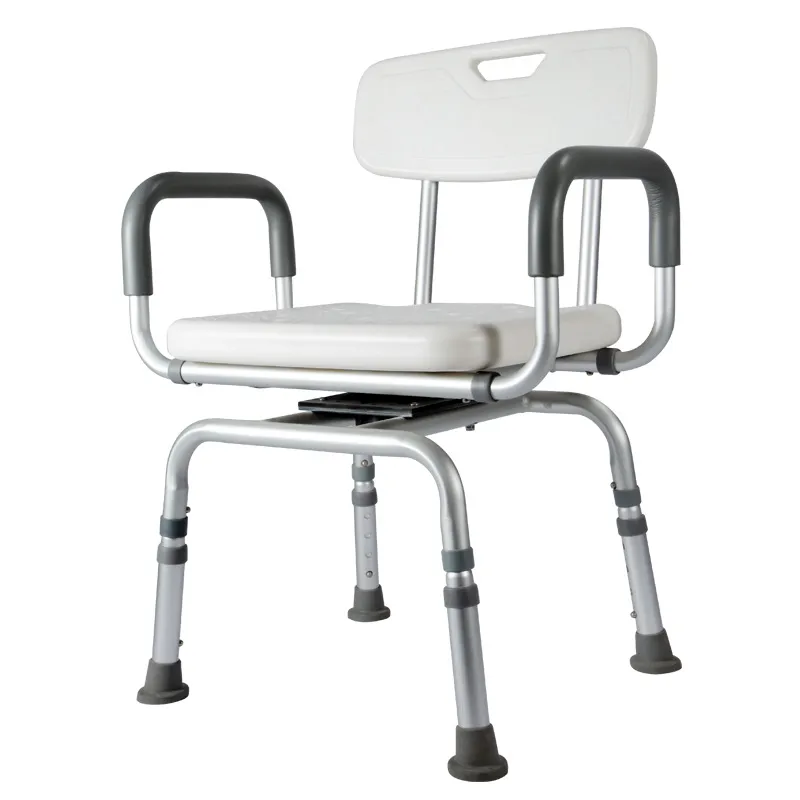
FAQ: Common Questions About Choosing Shower Chairs for Seniors
Q1: Do seniors necessarily need to use a shower chair?
Not every senior requires one; however, for those with limited standing endurance, reduced leg strength, poor balance, or a history of falls, a shower chair can significantly improve bathing safety.
Q2: Which is better: a standard shower chair or one with armrests?
They suit different needs. Standard shower chairs are suitable for seniors with good physical mobility, whereas models with armrests are better for those who need assistance standing up or maintaining stability.
Q3: Is a shower chair with a backrest better for all seniors?
Not necessarily. While a backrest provides better support, such chairs are usually bulkier. If bathroom space is limited, you need to weigh the pros and cons.
Q4: What is a safe weight capacity for a shower chair?
It is recommended to choose a product with a weight capacity that exceeds the senior's actual body weight. For example, a user weighing 80 kg should choose a chair with a capacity of at least 120 kg to ensure an adequate safety margin.
Q5: What are the most important factors when buying a shower chair for seniors?
Stability, safety, and suitability are paramount—including features like non-slip feet, appropriate height, weight capacity, armrest design, and backrest support—rather than focusing solely on price.