Due to the constant advancement of medical technology and nursing concepts, hospital beds have stopped being just the place for patient's rest and sleep. They have gradually turned into important medical equipment that combines treatment, rehabilitation, nursing and safety.
Multipurpose hospital beds, characterized by the wide range of adjustable functions, ability to change the position of the patient quickly and flexibility of the nursing work, have become one of the most popular medical devices not only in hospitals but also in rehabilitation centers, homes for the elderly and home care markets.
Multi-functional hospital beds have been the subject of a lot of curiosity among new users, which has resulted in a lot of questions, such as, "What positions can a multi-functional hospital bed be positioned," "If these positions are only for comfort," "Which patients are suited for which positions," and, at a deeper level, "Is a multi-functional hospital bed always the best, just because it is the one with the most functions." Truth is, different positions of multi-functional hospital medical beds are not only designed for a more comfortable feel but also to suit clinical treatment, rehabilitation and also patients on a long term.
For instance, different bed positions serve the purposes like helping the patients take in air more easily, circulation of blood, minimizing pressure sores, aiding to feed, assisting with nursing procedures and postoperative recovery.
So, having knowledge of the different positions a multi-functional hospital bed can be in and when these kinds of positions are useful are really significant to hospital personnel, caregivers' staff at nursing homes, people in the family and also the patients themselves.
From studies, the percentage of multi-purpose hospital beds in the most advanced hospitals and in long-term care facilities has been on a constant rise recently.
Especially electronic multi-purpose hospital beds are popular in many countries for newly built hospitals' inpatient wards because of the easiness of their operation and higher precision of the posture adjustment.
In future, with the development of smart health care, multifunctional hospital beds will be integrating more smart adjustment and automatic nursing features, so that patient-positioning will become highly scientific, efficient and patient oriented.
This piece is centered on the topic of "What positions can a multifunctional hospital bed be in?" and it gives an in-depth analysis from different angles including the mechanics of multifunctional hospital beds, the variety of adjustment positions, the therapeutic benefits of different positions, practical uses, as well as the trends that are expected in multifunctional hospital beds so as to help everyone fully understand the core value of the multifunctional hospital beds.
What is a multipurpose hospital bed?
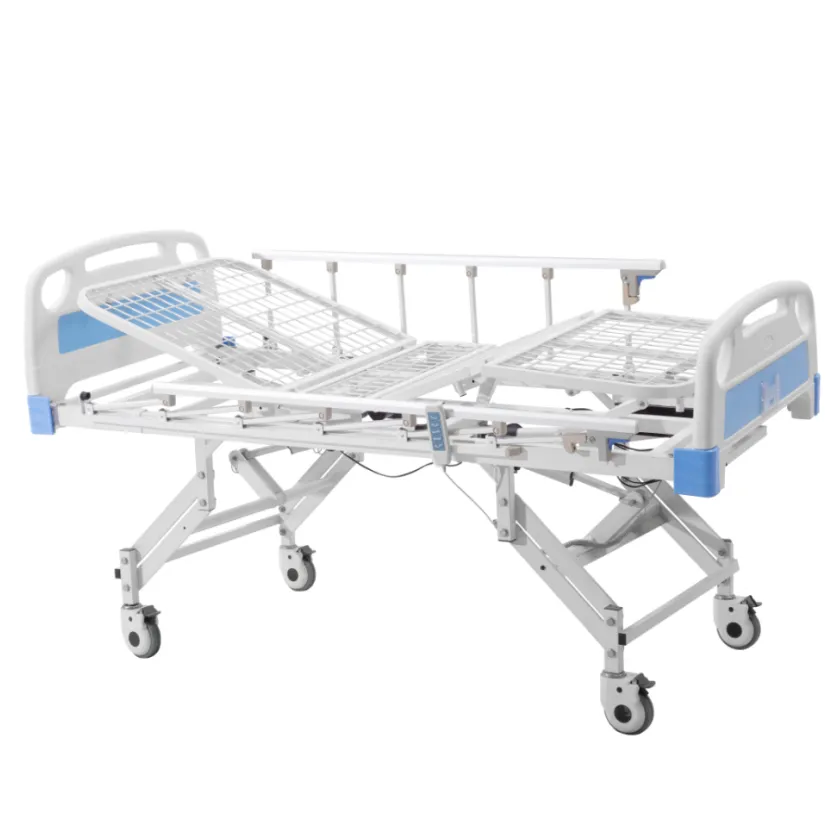
By making use of mechanical or electric drive systems, a multifunctional hospital bed enables patients to change their positions from one to another without any difficulties.
It has become evident that a segment bed structure has become the norm in designing and manufacturing of a multifunctional hospital medical bed.
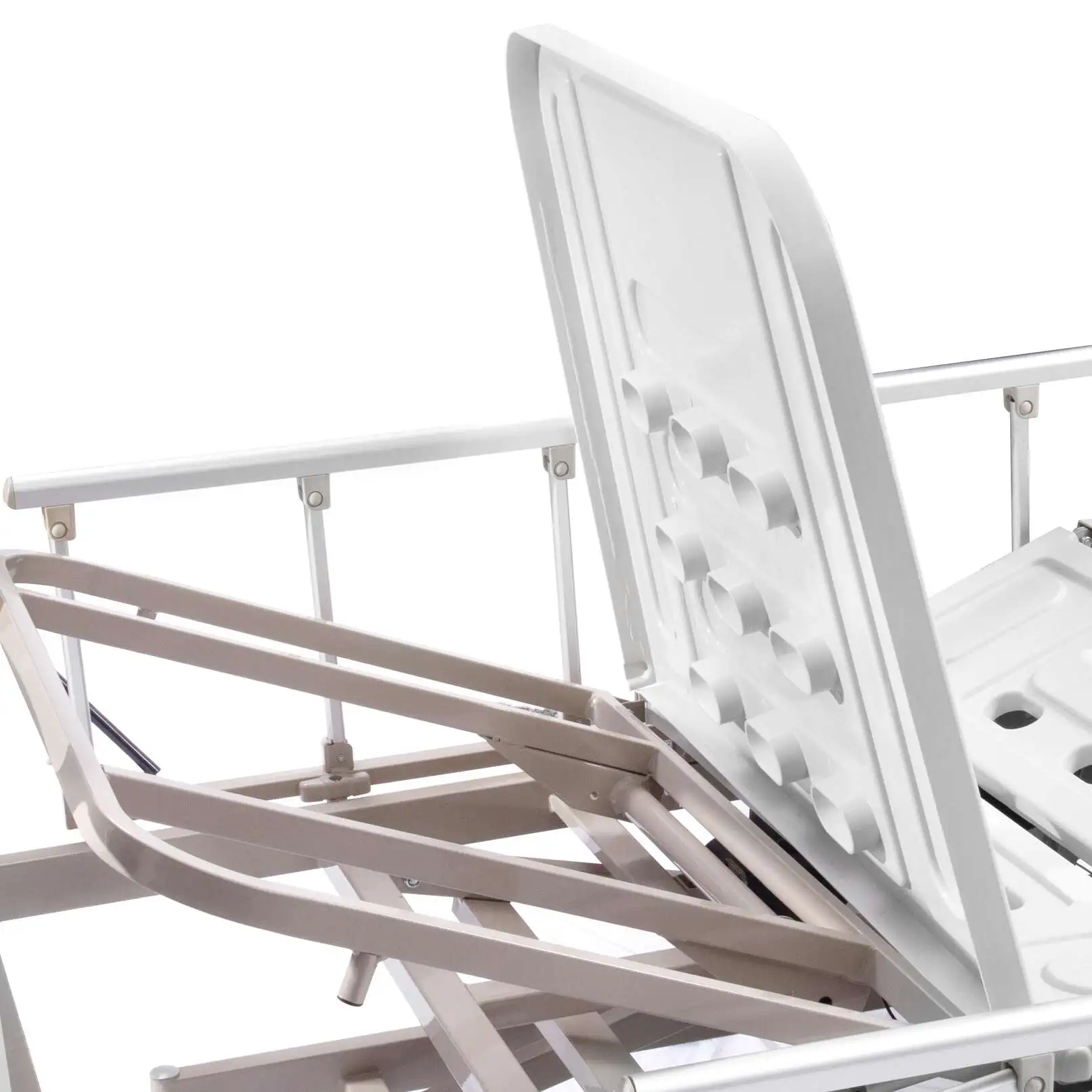
It involves several articulation points and mechanisms which are controlled in such a way that the headrest, the legrest, and the entire mattress surface (as well as the whole frame) can be raised or lowered separately to suit the patient's medical condition and the requirement of the nursing staff.
The features that can be found on modern multi-functional hospital beds, depending on their model, includes adjustment and elevation of the back, adjustment and elevation of the legs and overall height adjustment.
Apart from the basic ones, there are even more complex ones that you can use such as head-up / foot-down adjustment, head-down / foot-up adjustment, a transition from sitting in bed to lying flat that may take quite a while, one-touch return to the neutral state of flat lying, etc.
Some of the high-end products may also feature things like weight scale, a bed exit alarm, bedside control panel, nursing call button, and memory for the position of the patient. Basically, the multipurpose hospital beds don't look like a plain hospital bed from today's standards and they have the role of a smart unit within the hospital room to some extent.
During the stages of acute treatment, rehabilitation, or long-term care, multifunctional hospital beds can adapt the patient's posture very quickly based on his/her medical condition thereby delivering better medical, nursing or both care.
This piece will provide an introduction to multifunctional Hospital Beds Positions along with an explanation of everything you need to know in general terms about the subject through various sections like introduction of bed functions, description of typical adjusting and lying-down positions, the therapeutic value of different bed positions, application scenarios in practice, future development trends to fully disclose the multi-functional hospital beds' true value.
Multifunctional Hospital Bed Positioning - What Do You Need to Know?
1. Upright back position: one of the most common and important positions
It is, without a doubt, one of the most used parts of the beds.
The way multifunctional hospital chairs work is by allowing the angle of the headrest to be changed so that the patient can go from lying down completely flat (also known as the supine position) to being at a semi or even almost fully upright position depending on the patient's requirement.
These bed frames have the capability to adjust head rest up to about 30 degrees, 45 degrees, or over 60 degrees as needed.
This kind of position is quite commonly used in hospitals for nurses.
Firstly, it aids in the intake of food and drink, helps in reading, communication, and watching movies making patient's daily life more comfortable.
On the other hand, it is especially helpful in the care of patients with conditions of the respiratory system. Elevating the back just a little bit can result in a better expansion of lungs and decrease shortness of breath which is ideal for patients with chronic obstructive pulmonary disease, heart failure to mention a few.
In addition, a number of surgical patients like gastrointestinal surgery, chest surgery patients or those undergoing brain surgery may get the help of a certain angle of lying post surgery to cut off the risk of aspiration and speed recovery which makes this head elevated position an essential characteristic of modern multi-functional hospital medical beds.
2. Leg Elevation Position: Increasing circulation & reducing swelling
Other than head rest control, a feature that is important is leg elevation in multi-functional hospital medical bed.
Raising the leg part slowly will provide appropriate knee and lower leg support.
This position can be very comfortable as well as have some medical benefits.
In bedridden cases where the lower limbs' venous return becomes sluggish easily leading to leg edema and soreness as well as circulatory disorders, leg elevation may be the solution that helps get veins' return going and thereby, lessens the lower limb swelling, and takes away prolonged sitting/down resting fatigue caused leg discomfort.
In addition to that, for certain types of postoperative orthopedic surgery, the adjustment of leg height through multi-functional hospital bed can be beneficial in terms of rehabilitating patients.
3. Seating position: Assisting patients in the gradual regaining of mobility
It goes without saying that, a multipurpose hospital bed's major selling points include a semirecumbent position as well. And it can be further adjusted to a quasi seating position.
The seating mode is typically achieved by elevating and simultaneously flexing the head and legs so that gradually the patient would assume a posture which will be virtually identical to that of an ordinary person in a chair.
This mode that allows one to sit is a major component of rehabilitation medicine. Patients who have been resting in bed for prolonged periods will usually experience discomfort if they get up directly, like dizziness, blood pressure drop as even have risks of falling.
Multi-functional hospital beds support gradual transition to seated position to allow the patients prepare body and brain for standing and walking training.
Some rehab centers make use of sitting functions of multifunctional hospital beds for early rehab training so that they can lower the muscle degradation, and decrease the cardiopulmonary deterioration which bed-bound causes for too long periods.
4. Supine Position: It Is a Basic Position, However, It Cannot Be Replaced
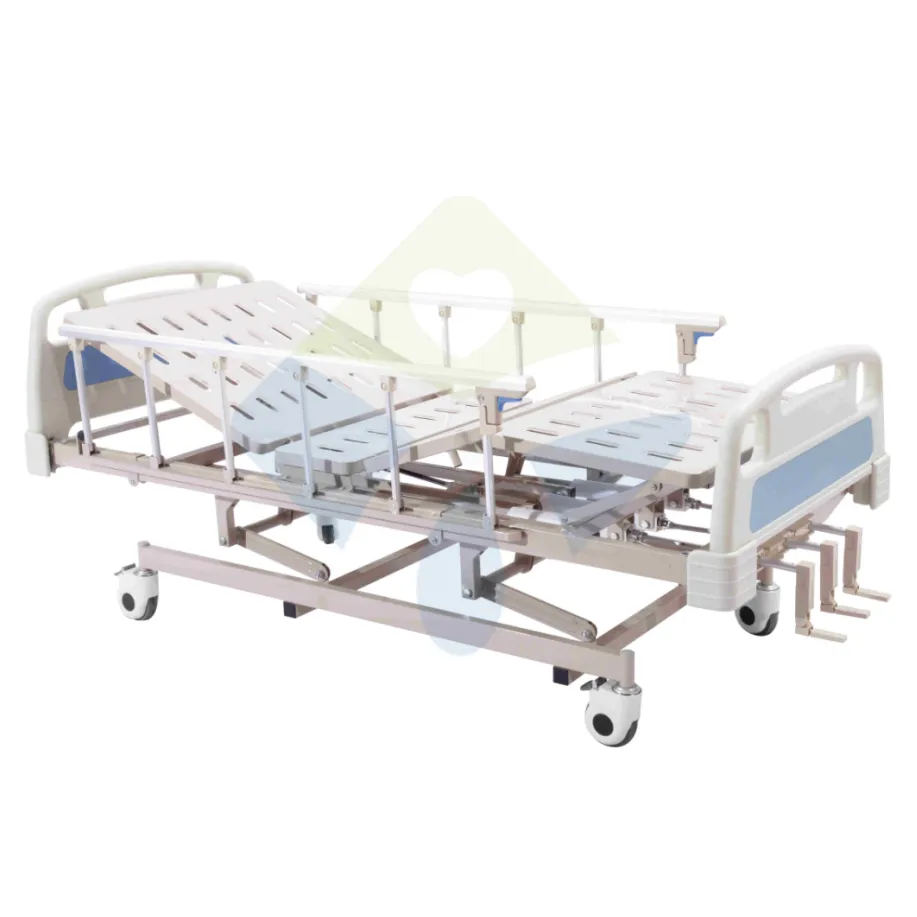
Although modern multifunctional hospital beds provide a wide variety of adjustment options, the supine position remains one of the most fundamental and frequently used postures.
A patient sleeping, resting and recovering after a surgery, etc., will be well served with an Even- Support supine position, thereby they are able to relax their bodies completely.
It is of great importance that modern multifunctional hospital beds with such beds are usually designed in a way that takes into account human factors to greatly reduce the pressure on local points and even in the supine position by means of an improved body design and mattress support, and therefore increase the convenience of using hospital beds and comfort of lying.
5. Head Higher thanFeet position
There is another advanced feature head up feet down is provided in some multifunctional hospital medical beds.
This position involves moving the whole bed towards the head of it and thereby, the head is getting raised above the legs, and the position of the patient is being kept straight relatively.
Head up feet down is usually prescribed, after, say, patients have had surgery or for patients who need to have a gastroesophageal reflux problem or their ventilation to be improved. For patients requiring prolonged bed rest and at risk of aspiration, this position reduces the likelihood of stomach contents refluxing into the airway. On the other hand it is also a position that has a good application for example in neurological ICU or some ICU units for certain patient status determination only that they require it.
6. Down head up foot position (Trendelenburg position)
The down head up foot position is yet another position that is very special one.
The whole bed is inclined, so the patient’s head goes below the level of his lower extremities. Such a situation is the multi-functional hospital bed easily adjusting the corresponding position.
Purpose of this position is the administration of specific medical treatments like emergency treatment of patients with blood pressure very low, venous return boosting, and surgical positioning.
It should be highlighted that, down head up feet position which has to be carried out under medical personnel supervision usually in the case of patients' condition determination is not advisable to be done for long by the patients.
7. Overall height adjustment: the function that benefits both patients and caregivers
Many people believe that adjusting the bed height only involves physically changing it up or down, but that is one of the highly valuable features of the MultiFunctional hospital medical bed which allows the adjustment of the whole mattress level up or down to any desired height so that it gets adapted to a patient's condition and requirements.
This kind of functionality helps patients to easily get in and out of the bed and reduces the necessity for caregivers to bend forward.
In instances when the caregiver is performing dressing change, rolling over the patient, or cleaning him/her, the bed can be lifted to a suitable working height, which lowers the risk of a back injury. For the ones in a partial mobilization phase, the bed height is lowered to a lesser extend which makes the risk of falling when entering or leaving quite low.
Hence, overall height adjustment brings two aspects: better nursing efficiency and at the same time a better safety for the patient.
8. Automatically Turnover Position: An Essential Support for Bedridden Patients
Some high-end multi-functional hospital beds are fitted with this feature of turning the patient automatically.
Long term bed ridden patients when in one fixed posture get the areas in contact under great pressure and if they are not changed regularly, it might very well result in pressure sores. Usually, the traditional care method involves turning patients every two hours. However, this kind of turning at night not only increases work load of the nursing staff but also affects patients resting quality.
The patient turning program can be controlled to vary the angle and direction of turning the patient, so that the turning can be done without disturbing the patient.
This feature can be very well used in a long term care facility like a nursing home or a long stay patient ward.
9. Emergency CPR Rescuing Position: A Vital Function Designed For Medical Emergency
In addition, nowadays multi-functional hospital beds usually come with a CPR reset button which is the key point.
In cases where emergency resuscitation is needed by the patient who has undergone cardiopulmonary resuscitation and then the corresponding control button is pressed, by the caregiver, the mattress is quickly changed to a fully horizontal position, giving an extra little time for the heart to beat.
Compared with the conventional manual changing method this quick changing design greatly improves emergency response efficiency, and it is among the key points of today’s high quality multifunctional hospital beds!
How do different postures on a multi-functional hospital bed help patients recover?
Many people believe that the ability to adjust posture on a multi-functional hospital medical bed is merely for comfort; however, each posture corresponds to a different rehabilitation goal.
E.g., back support can increase the patient’s lung volume so he/she would be in a better shape to be breathing, legs up helps improve blood return, the chair seat position aids patients in doing their rehab early, automatic turning reduces the incidence of pressure sores,and height adjusting makes nursing easier.
Clinical studies have demonstrated that, positioning the patients in proper positions is a major way for the medical staff to reduce the occurrences of complications due prolonged bedrest like lung infections, deep vein thrombosis, pressure sores and muscular contractures (joint). Besides the nursing quality, multifunctional hospital medical beds also directly contribute to patients’ recovery process.
Frequently Asked Questions (FAQs) about Multi-functional Hospital Beds
Are the patients able to sit up entirely in a multi-functional hospital bed?
Generally, through the adjustment mechanism, a patient can achieve a position that is very close to completely sitting upright on a multi-functional hospital medical bed. Nevertheless, the final back rest height angle is determined by the model of the machine and is typically approximately 70 to 75 degrees.
What is the purpose of having leg elevation in multi-functional hospital medical beds?
Leg lifting contributes to venous return, lowers lower leg swelling, lessens fatigue, and helps with orthopedic and vascular treatment needs.
Is a feature of automatic turning really vital?
It is highly recommended for long-term bedridden conditions as patients with these issues will experience continuous pressure on a specific part of their body, pressure sore, which could be prevented. This reduces the caregivers' efforts as well.
Are multi-functional hospital beds practical for home use as well?
To provide the required help for the elderly, post-surgery rehabilitation or disabilities in the family, multi-functional hospital medical beds can be highly effective by enhancing nursing efficiency as well as patient's comfort. Therefore, they are also very suitable for the use of home caregivers in the long run for family members at home.
Are hospital multi-functional electric beds more preferable compared to the manual types?
Closer investigation proves that when it comes to features like operational simplicity, precision of adjustment, effectiveness of care, and overall capacity, electric hospital medical beds are usually the winner over their manual counterparts and in particular the latter is recommended where the volume of nurses is very high.