

"How much does a lightweight wheelchair actually weigh?" This is one of the most frequently asked questions by consumers when purchasing a wheelchair. Especially for those who frequently need to go up and down stairs, fit in a car trunk, travel by plane or high-speed rail, are carried by family members, or need to drive themselves, weight directly impacts the daily user experience.
However, the problem is that there isn't a globally unified, simple definition of "lightweight" in kilograms. Common lightweight manual wheelchairs on the market may weigh only about 7-12 kg, or even 15-18 kg; lightweight electric wheelchairs can range from around 15 kg to 30 kg or even higher. More importantly, the "weight" of manual and electric wheelchairs cannot be measured using the same standard: lightweight manual wheelchairs need to consider the frame, rear wheels, seat, and folding structure, while lightweight electric wheelchairs must also include the motor, controller, battery, and power system.
Therefore, if consumers simply ask "How many kilograms should a lightweight wheelchair weigh?", it's difficult to get an accurate answer. A more professional question would be: What weight range qualifies as a lightweight manual wheelchair? What weight range qualifies as a lightweight electric wheelchair? Will weight reduction sacrifice load-bearing capacity, safety, battery life, and stability? What is the truly suitable weight for different users?
This article will focus on the keywords "lightweight manual wheelchair" and "lightweight electric wheelchair," providing a systematic analysis from industry definitions, weight ranges, and material structures to help consumers understand a frequently misunderstood issue in marketing: a wheelchair is not necessarily better the lighter it is. A truly good lightweight wheelchair should strike a balance between weight, strength, portability, comfort, and safety.
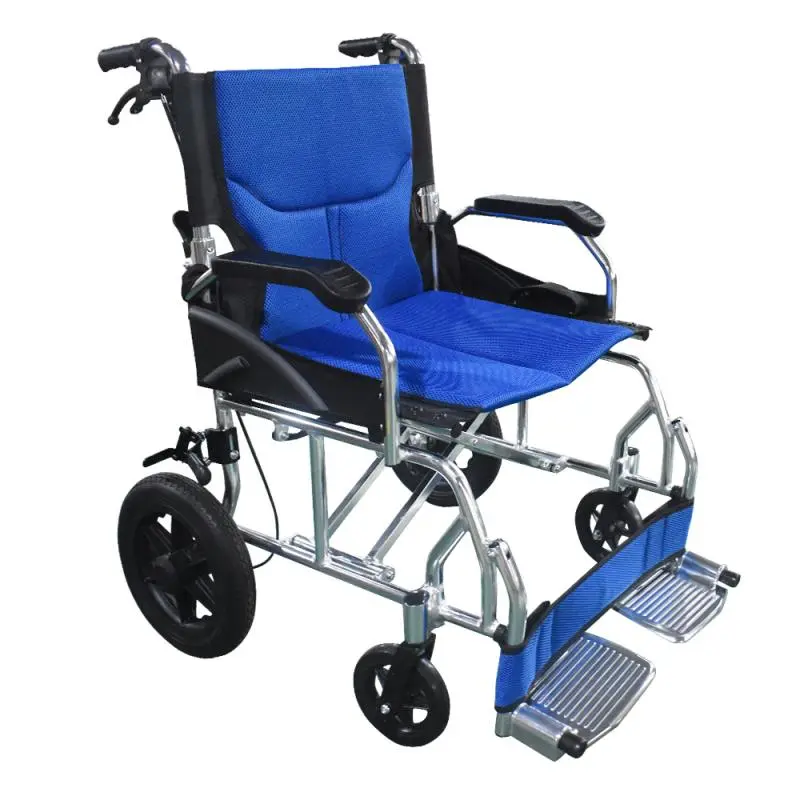
How many kilograms is a lightweight wheelchair?
First, it's important to clarify that there is currently no single, universally accepted international standard that can be simply stated as "less than X kilograms is a lightweight wheelchair."
International standards focus more on measuring wheelchair mass, dimensions, steering space, stability, braking capacity, and structural strength, rather than simply specifying "lightweight wheelchairs must be less than a certain weight." For example, ISO/TR 13570-2 specifically discusses the typical dimensions, mass, and steering space of wheelchairs, and its basic measurement system is related to ISO 7176-5, applicable to both manual and electric wheelchairs.
The US FDA classifies mechanical and powered wheelchairs separately as medical devices, but similarly does not use a single weight to define "lightweight." The FDA currently classifies mechanical wheelchairs as Class I medical devices and powered wheelchairs as Class II, referencing the ISO 7176 series of standards for testing requirements related to dimensions, weight, stability, braking, strength, power systems, and batteries.
Therefore, the industry's concept of a "lightweight wheelchair" is more of a product positioning and market classification than a strict legal weight class.
Based on current market products and practical user experience, a more practical reference range can be established:
For lightweight manual wheelchairs, approximately 7-12 kg can generally be considered ultralight or high-end lightweight products, while approximately 12-18 kg can be considered a more common lightweight product. Above 20 kg, although it may still be considered a portable or foldable product, its competitiveness will significantly decrease if "lightweight" is emphasized.
For lightweight electric wheelchairs, the motor, battery, and control system themselves add weight, and a weight of approximately 15-20 kg is generally considered a lightweight design that emphasizes portability; approximately 20-30 kg is currently a more realistic range for lightweight electric wheelchairs; if the entire unit exceeds 30 kg, further assessment is needed to determine whether it qualifies as a "lightweight electric wheelchair" or a regular portable electric wheelchair.
It is important to note that these ranges are industry purchasing references, not legal or international standard classifications. Some industry sources also use 15-30 kg as a common market range for lightweight electric wheelchairs, but explicitly state that this is market practice, not a legal standard.
Why can lightweight manual wheelchairs weigh only a dozen kilograms, while lightweight electric wheelchairs are usually heavier?
Many consumers have a question: since lightweight materials such as carbon fiber and aluminum alloy are now very mature, why do lightweight electric wheelchairs often weigh over 20 kilograms?
The reason is simple: the power system itself is a source of weight.
A traditional manual wheelchair mainly consists of a frame, seat, backrest, armrests, footrests, front wheels, rear wheels, and braking system. Lightweighting can reduce frame weight using materials like aluminum alloy, magnesium alloy, carbon fiber, and titanium alloy, while optimizing wheel rims, wheelbase, and folding mechanisms to reduce structural redundancy.
However, lightweight electric wheelchairs, in addition to these structural components, require a motor, battery, controller, wiring, and reduction gear. Even with lithium batteries and lightweight motors, the power system cannot be eliminated like in a purely manual wheelchair.
Therefore, the weight competition in lightweight manual wheelchairs is primarily a competition of frame and structural design, while the weight competition in lightweight electric wheelchairs is a competition of overall system engineering.
This also explains why some "lightweight electric wheelchairs" look similar to ordinary folding wheelchairs, but their weight is difficult to truly reduce to below 10 kg.
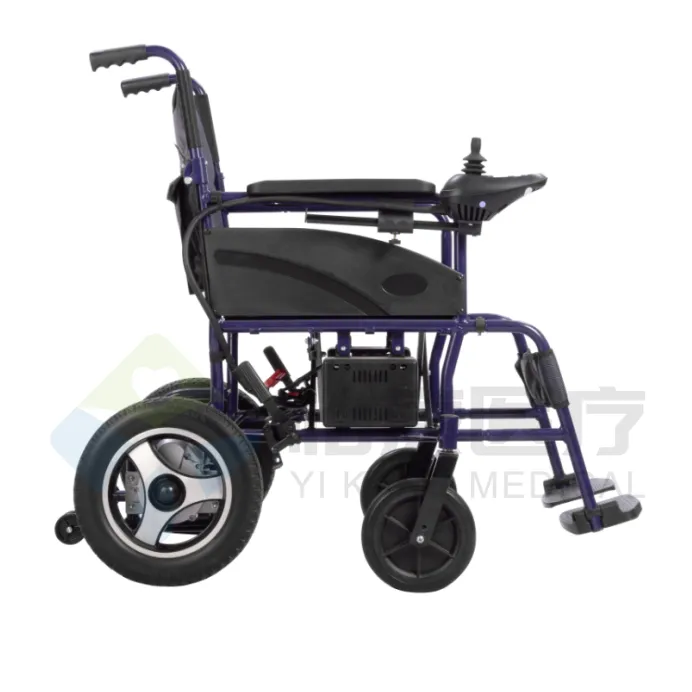
Lightweight Manual Wheelchairs: How Many Kilograms Truly Deserve to Be Called "Light"?
If consumers are purchasing a lightweight manual wheelchair, they should first distinguish between the "total weight" and the "detachable weight."
For example, a product advertised as "only 10 kg" might seem incredibly light to consumers, but in actual use, the weight might only be reached after removing the rear wheels, footrests, and seat; the full weight could approach 14 kg.
These two weights have completely different implications for practical use.
For those who frequently need family members to load and unload their wheelchairs, the real concern is the "weight under load." If the wheelchair needs to be lifted entirely for every car ride, the difference between 14 kg and 10 kg becomes very significant.
From a practical purchasing perspective, lightweight manual wheelchairs can be broadly categorized into three levels:
The first level is ultralight manual wheelchairs, typically weighing around 7-12 kg. These products generally utilize lightweight materials extensively and feature highly optimized structures. Their advantage is ease of transport, making them suitable for frequent travelers, those who frequently need to load and unload their wheelchairs, or users with some degree of self-drive capability. The disadvantages are usually higher prices, and some products may sacrifice some comfort, load-bearing capacity, or expandability.
The second level is light manual wheelchairs, approximately 12-18 kg. This represents a more realistic balance range. It balances structural strength, comfort, folding performance, and portability, making it a worthwhile consideration for ordinary family users.
The third tier is the standard portable manual wheelchair, weighing approximately 18-25 kg or even more. It may still be foldable and fit in a vehicle, but if frequent transport is the primary need, its weight advantage is no longer significant.
Therefore, if someone asks, "What's the ideal weight for a lightweight manual wheelchair?", instead of giving an absolute answer, it's better to understand it this way: for those whose core need is portability, a total weight of around 10-15 kg usually offers a strong lightweight advantage; if higher load-bearing capacity, greater stability, and more functionality are required, 12-18 kg is often a more practical balance.
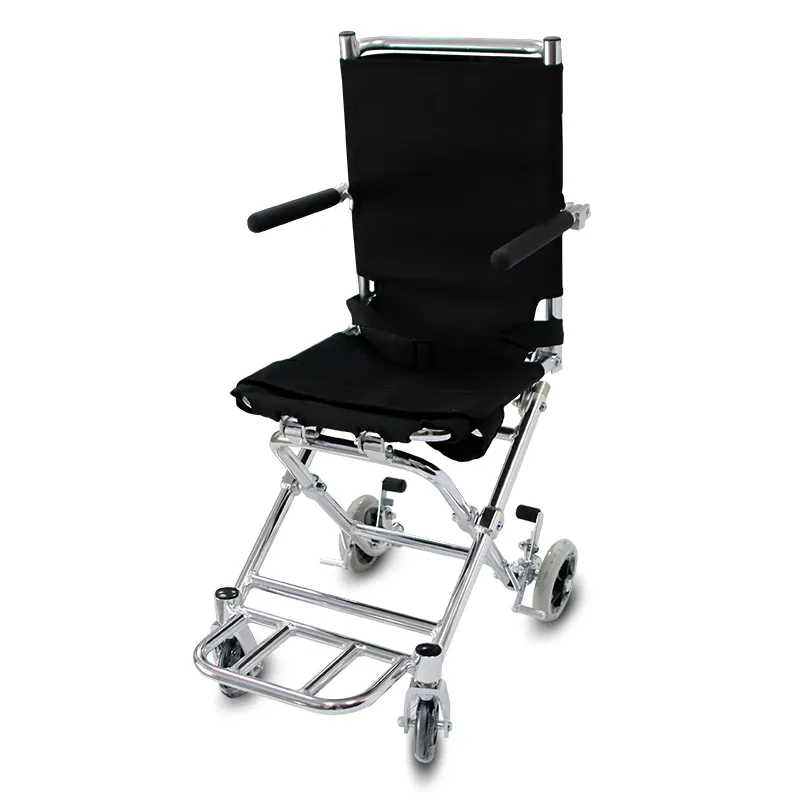
Lightweight Electric Wheelchairs: Is around 20 kg already very light?
Compared to lightweight manual wheelchairs, the weight evaluation criteria for lightweight electric wheelchairs should be significantly relaxed.
An electric wheelchair weighing around 15 kg, including the necessary battery, already falls into the category of a product that highly emphasizes portability. Market data shows that some lightweight folding electric wheelchairs typically range from 15-30 kg as a standard weight for lightweight or travel-type electric wheelchairs.
However, consumers must clarify a crucial parameter: does this weight include the battery?
The battery is often the most misleading part of lightweight electric wheelchair advertising.
For example, a lightweight electric wheelchair might be labeled as "18 kg," but this 18 kg may exclude the battery; with the battery, it could reach 22 kg or even higher. If the battery is removable, the product might advertise "frame only 16 kg," but users will still need to carry the frame and battery separately.
Therefore, when purchasing a lightweight electric wheelchair, at least three weights should be asked:
"What is the net weight of the entire wheelchair?"
"What is the weight of the battery?"
"What is the full operating weight with the battery installed?"
If these three figures are not clearly distinguished, it is difficult to truly determine how lightweight an electric wheelchair is.
Why can't lightweight electric wheelchairs be infinitely reduced in weight?
From an engineering perspective, reducing the weight of a lightweight electric wheelchair is not simply a matter of "making the materials thinner."
Excessive weight reduction in the frame can compromise structural rigidity; a too-small motor can affect climbing ability and sustained power output; reduced battery capacity may shorten range; and excessively small wheels may reduce traversal capabilities on rough terrain.
Therefore, lightweight electric wheelchairs actually involve a typical engineering balance:
Lower weight → easier to transport;
Larger battery → generally longer range;
More powerful motor → generally better climbing and load-bearing capacity;
Stronger frame → generally larger safety margin;
However, these factors often increase the overall weight of the vehicle.
This is one of the core product pain points in the lightweight electric wheelchair industry.
Consumers want it to be "light, strong, long-range, with strong climbing ability, high load-bearing capacity, and low price," but these requirements cannot be met simultaneously indefinitely.
Truly excellent products do not push a single metric to the extreme, but rather optimize the system based on the target usage scenario.
Is a lighter wheelchair always better?
"The lighter the better" is a very typical misconception in the wheelchair consumer market.
If a user needs to load their wheelchair into their car daily, then weight is certainly important; however, if another user spends all day in a wheelchair, primarily using it indoors and outdoors for extended periods, then seat support, stability, comfort, range, and maneuverability may be more important than being 5 kg lighter.
For example, a 10 kg lightweight manual wheelchair, even if very light, may not be suitable for long-term use if the seat width is unsuitable, the backrest support is insufficient, and the footrests are not adjustable.
Similarly, an 18 kg lightweight electric wheelchair, if its range is only a few kilometers, its climbing ability is weak, and its steering control is unstable, may not be better than a 25 kg product with balanced performance.
Therefore, judging a lightweight wheelchair cannot be based solely on its weight.
ISO documents themselves consider wheelchair mass, dimensions, and maneuverability as a set of related indicators, rather than evaluating weight in isolation. The ISO 7176 series, cited by the FDA, also covers multiple testing dimensions, including static stability, braking performance, dimensions, structural strength, dynamic stability of electric wheelchairs, maximum speed, and battery performance.
This indicates that a professional lightweight wheelchair evaluation system must upgrade from a "single weight indicator" to a "comprehensive performance indicator."
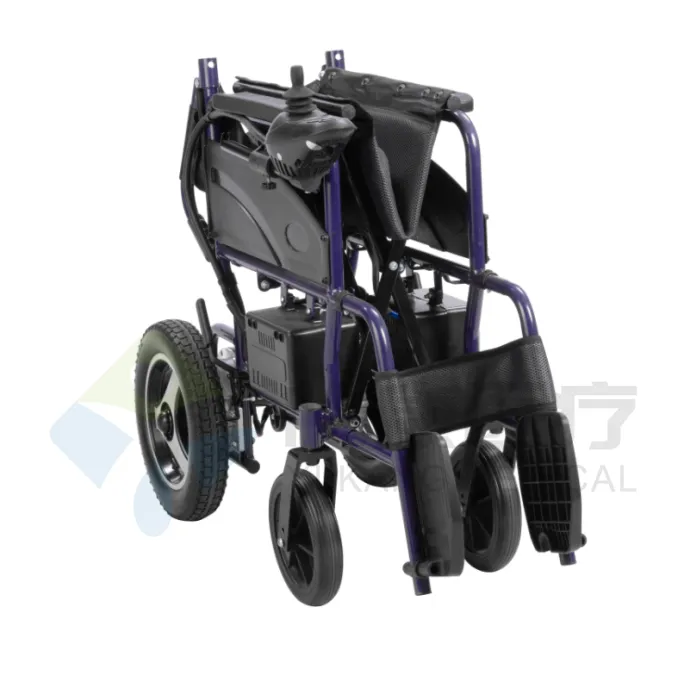
FAQ: Common Questions about Lightweight Manual and Electric Wheelchairs
Q1: What is the typical weight of a lightweight manual wheelchair?
There is no unified legal standard. From a market and practical usage perspective, approximately 7-12 kg can be considered ultralight, and approximately 12-18 kg is a more common range for lightweight manual wheelchairs. Whether it is suitable depends on factors such as weight capacity, seat width, drive system, and usage environment.
Q2: What is the typical weight of a lightweight electric wheelchair?
If it is a complete product including the battery, approximately 15-20 kg is considered a very lightweight electric wheelchair; approximately 20-30 kg is a more common range for lightweight, portable electric wheelchairs. However, different manufacturers may use different methods to calculate the "total weight," so it is necessary to confirm whether the battery is included.
Q3: Is a 10 kg manual wheelchair always better than a 15 kg one?
Not necessarily. A 10 kg product may have an advantage in portability, but if a 15 kg product better meets the user's needs in terms of seat comfort, weight capacity, stability, and drive efficiency, then 15 kg may actually be a better choice.
Q4: Is lighter always better for lightweight electric wheelchairs?
No. Weight reduction can affect battery capacity, motor performance, structural strength, and stability. When choosing a lightweight electric wheelchair, you should compare the weight including the battery, range, load capacity, climbing ability, turning radius, and braking performance.
Q5: Why is it essential to ask about the battery weight when buying a lightweight electric wheelchair?
Because some products advertise "weight excluding battery." In actual use or transport, the battery still needs to be carried. Consumers should confirm the weight of the wheelchair itself, the battery weight, and the total weight of the wheelchair under full usage conditions.