
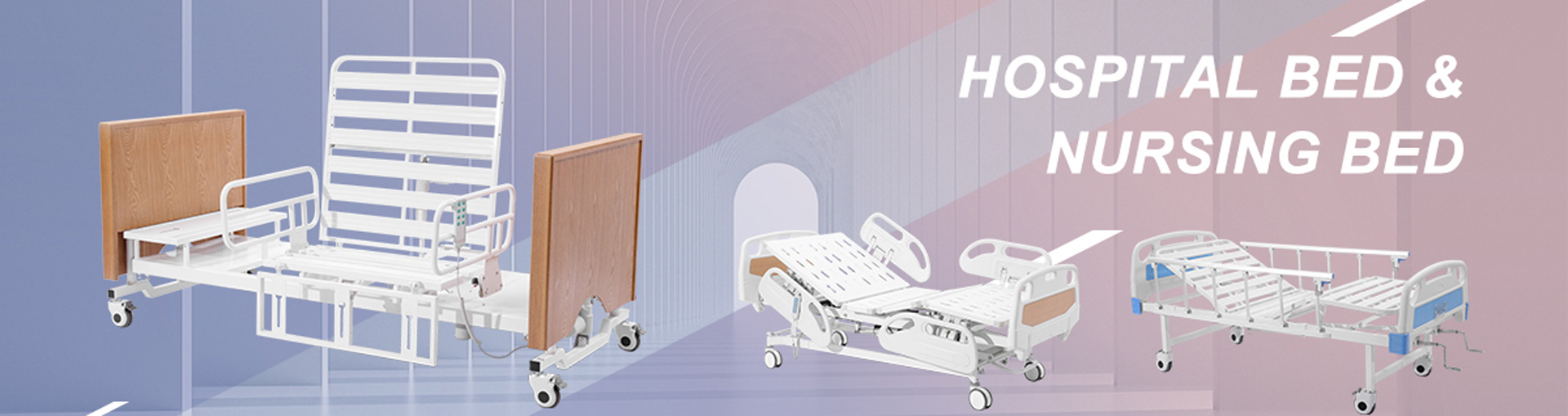
Common Types, Functional Parameters, and Purchasing Guide for Adjustable Hospital Beds
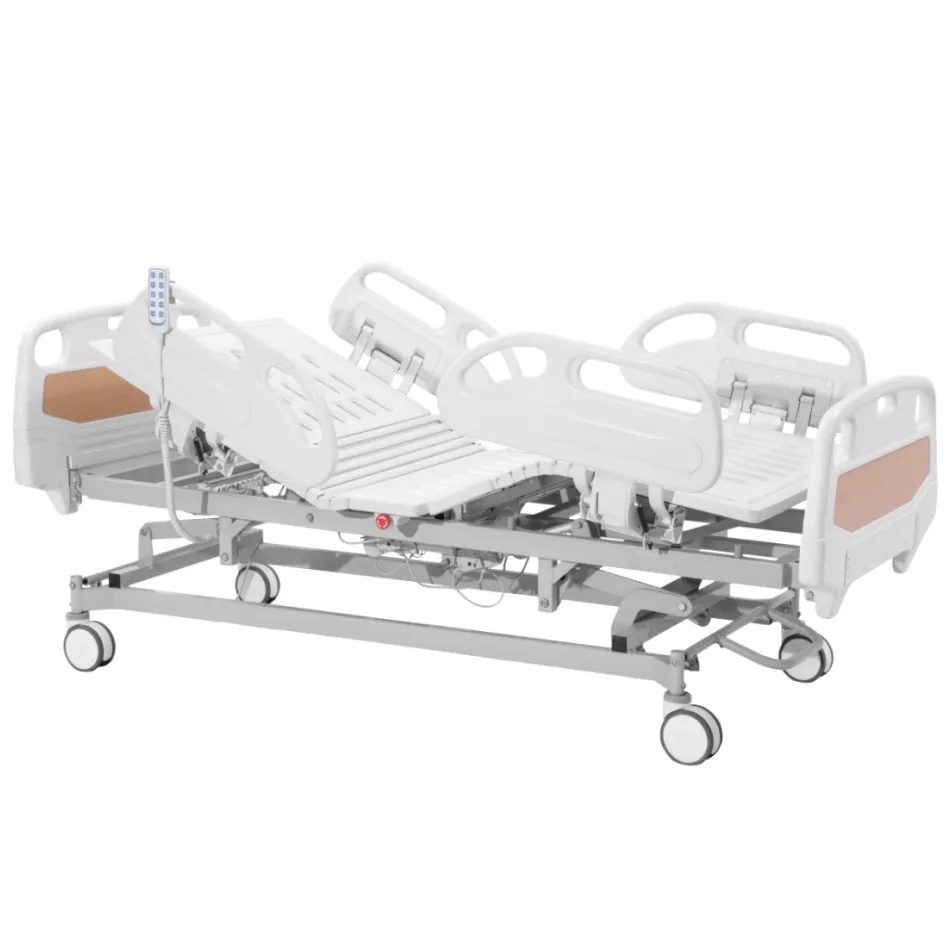
Adjustable hospital beds are essential medical devices used in hospitals, rehabilitation centers, long-term care facilities, and home-care settings. By adjusting the backrest, leg section, bed height, or the tilt angle of the entire bed frame, patients can transition between various positions—such as lying flat, semi-upright, or sitting—to facilitate daily rest, nursing procedures, and specific clinical positioning requirements.
However, not all hospital beds offer the same range of adjustability. While standard electric beds may only allow for backrest and leg-section adjustments, more advanced models may feature full-bed height adjustment, as well as Trendelenburg (head-down, feet-up) or reverse Trendelenburg (head-up, feet-down) positioning. When selecting a bed, it is important to identify the specific positions required by the patient and ensure the equipment is mechanically capable of achieving them.
What common positions can adjustable hospital beds support?
1. Supine Position (Lying Flat): A Basic Position for Rest and Care
In the supine position, the patient’s back and the primary surface supporting their body remain relatively horizontal. This is the most fundamental configuration for any hospital bed, and most models can be returned to this flat state by adjusting the bed panels.
The supine position is commonly used for rest, general observation, and certain medical examinations. For patients who are bedridden for long periods, pressure management—taking into account mattress characteristics, skin condition, and the overall care plan—is essential. Maintaining the same position for an extended duration can increase localized pressure; therefore, the supine position is not necessarily suitable for every patient or every clinical scenario.
2. Semi-Upright (Semi-Fowler’s) Position: Backrest Elevated by Approximately 30°–45°
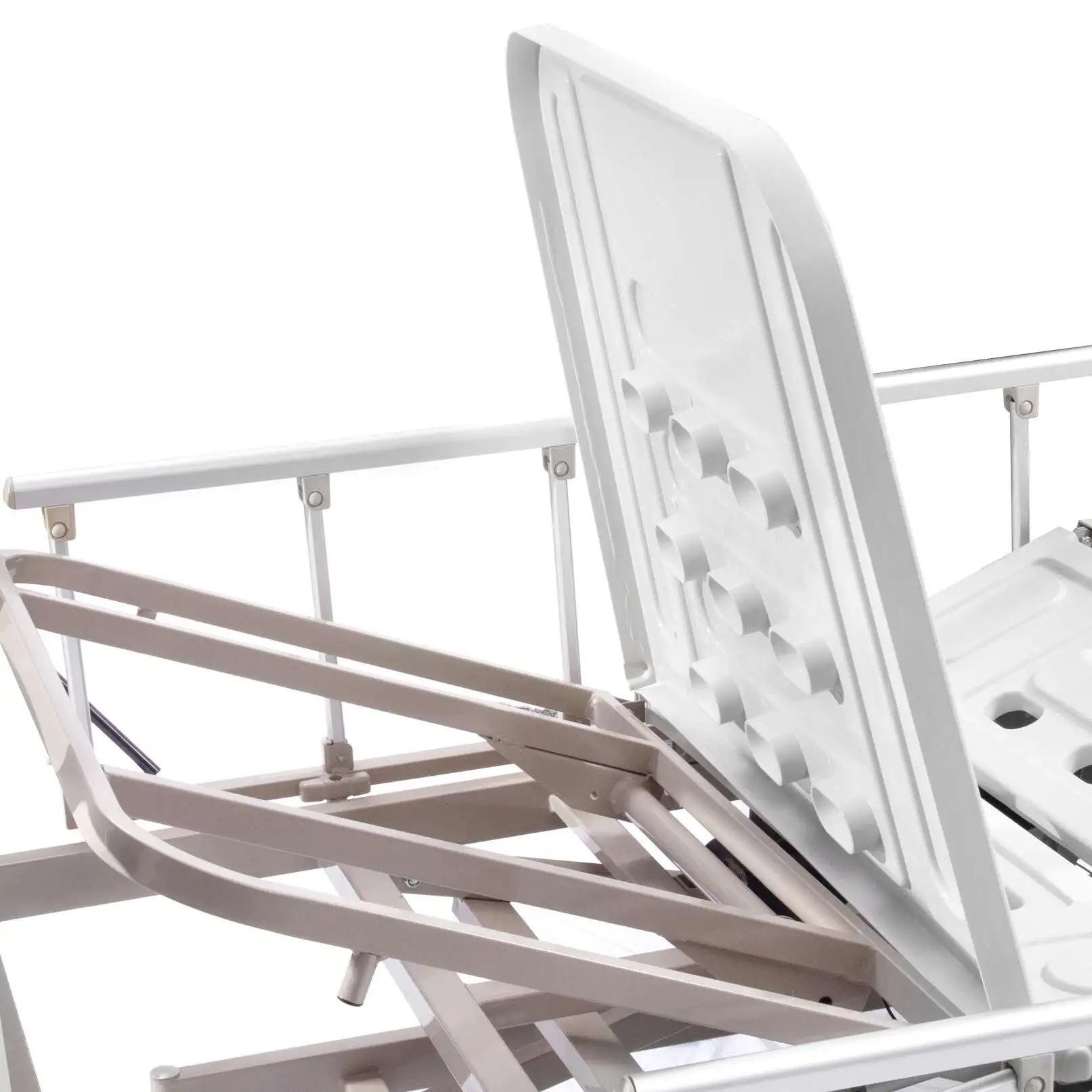
The semi-upright position involves elevating the patient’s upper body so that the torso rests at an angle. Adjustable medical beds typically achieve this through a backrest elevation function. While a range of 30° to 45° is commonly cited, specific clinical definitions of these angles may vary.
This position is frequently used for daily rest, social interaction, and various nursing tasks. For many patients, elevating the upper body can enhance comfort; however, the precise angle should always be determined based on the patient’s medical condition and the recommendations of healthcare professionals. When procuring hospital beds, key factors to consider include the adjustment range and operational stability of the backrest, as well as whether the patient is prone to sliding toward the foot of the bed when the backrest is elevated.
3. Fowler’s Position and High Semi-Fowler’s Position: Suitable for Significant Elevation of the Upper Body
Fowler’s position generally refers to elevating the backrest to place the patient’s upper body in a more upright, inclined position. In some nursing literature, an angle of approximately 45°–60° is classified as Fowler’s position, while a posture closer to an upright, seated position is often termed "High Fowler’s" position. As there is no universal consensus on these specific angle classifications, clinical guidelines should be followed.
These positions are typically used when a patient requires a more upright, seated posture for activities such as communicating, reading, or undergoing certain nursing procedures. For patients with specific respiratory issues or other clinical needs, the decision to elevate the backrest must be made by a healthcare professional; the mere presence of an adjustable backrest feature on a hospital bed does not justify independent adjustment of a patient’s therapeutic position.
Some adjustable hospital beds allow for a maximum backrest elevation of approximately 60°–75°, though the exact range varies depending on the product’s design.
4. Seated/Upright Position: Facilitating Communication and Daily Care
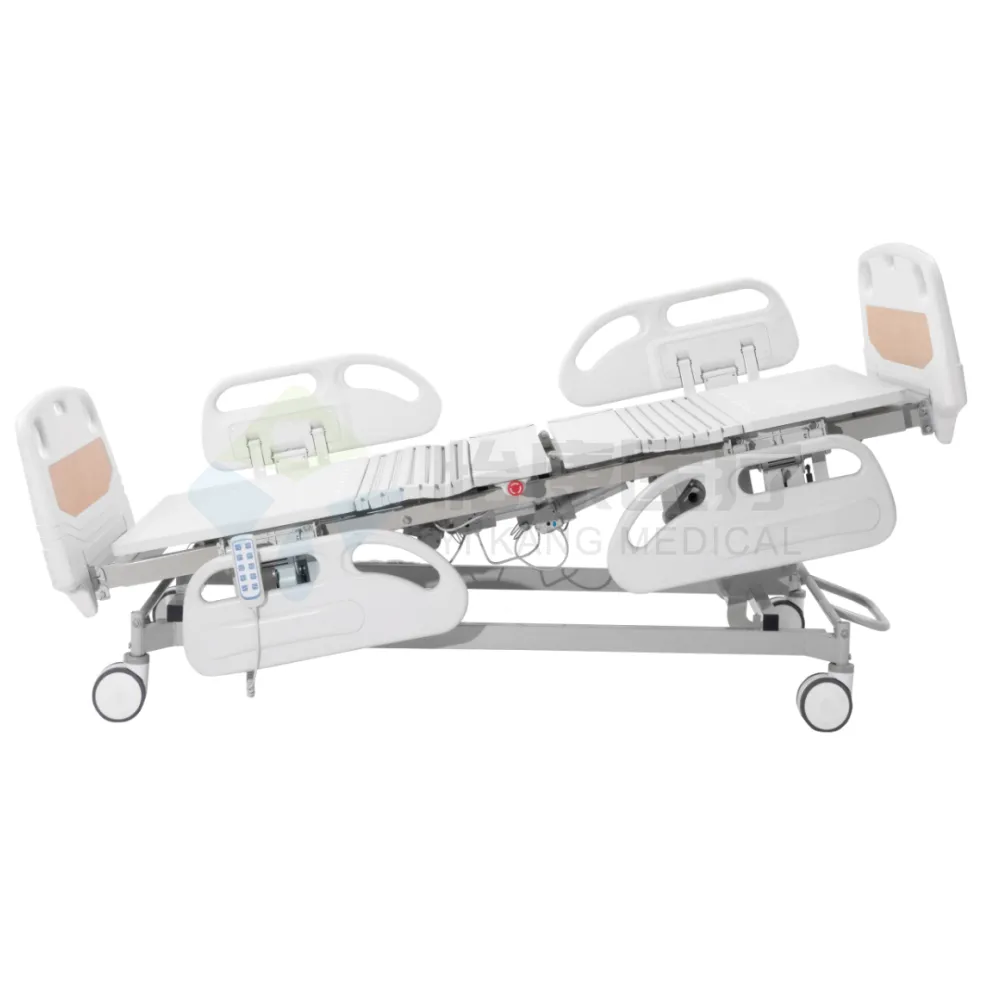
A seated or upright position is achieved by elevating the backrest, placing the patient in a posture that approximates sitting. This overlaps somewhat with the "High Semi-Fowler’s" position; the specific distinction depends on the angle of the torso, the support provided to the legs, and the patient’s overall posture.
If a hospital bed features both backrest and leg-section adjustments, it offers greater flexibility in positioning, making it easier for patients to read, communicate, and engage in various daily care activities.
It should be noted that prolonged elevation of the backrest may cause the patient to slide toward the foot of the bed, which increases shear forces on areas such as the sacrum and coccyx. Nursing staff should adjust the patient’s position based on their individual condition and assist with repositioning whenever necessary.
5. Knee-Flexed Position and Leg-Elevated Position: Improving Lower-Limb Support
A knee-flexed position is achieved by raising the section of the bed that supports the knees, causing the legs to bend; a leg-elevated position involves adjusting the leg section or the area supporting the lower limbs. The specific effect of these positions depends on the design of the bed platform and the available adjustment mechanisms. For many hospital beds, the leg-section adjustment angle typically ranges from approximately 30° to 45°; however, this is merely a reference range for common products rather than a universal standard. When procuring such equipment, it is important to verify whether the bed surface features a single-section or multi-section design, and whether the thigh and lower-leg sections can be adjusted independently.
These features allow patients to adjust the positioning of their lower limbs, enhance comfort, and facilitate certain nursing procedures. It should be noted, however, that leg elevation is not suitable for all patients; in cases involving specific circulatory issues, post-operative positioning restrictions, or other clinical conditions, one must follow the guidance of healthcare professionals.
6. Cardiac Chair Position: Combined Adjustment of Backrest and Leg Section
The "cardiac chair" position is typically achieved by raising the backrest, adjusting the knee support, and—as needed—modifying other sections of the bed surface to place the patient in a posture resembling that of sitting in a chair.
While this position may be used in specific nursing scenarios, the name alone does not imply that it is appropriate for all patients with cardiac conditions. Its actual application should be determined based on the individual patient’s status and a professional care plan.
From an equipment perspective, a medical bed must possess the necessary backrest and leg-adjustment capabilities to flexibly achieve this combined configuration. When procuring, it is also important to confirm whether these adjustments are independent or managed through a linked (synchronized) mechanism.
7. Trendelenburg Position: Tilting the Entire Bed Toward the Head End
The Trendelenburg position—also known as the "head-down, feet-up" position—involves tilting the entire bed frame so that the head end is lower than the foot end. This differs from simply raising the leg section or adjusting the backrest; it requires a dedicated mechanism capable of tilting the entire bed.
This position may be utilized for certain specialized medical procedures, but it is not suitable for all patients and should not be used as a general treatment method for the average patient. In particular, when respiratory, circulatory, or neurological issues are present, one must strictly adhere to professional medical instructions.
Not all adjustable hospital beds are equipped with a Trendelenburg (whole-bed tilt) function. When procuring, one should explicitly specify the requirement for whole-bed tilting capabilities and verify the tilt angle, control mechanism, safety limit features, and overall stability of the bed.
8. Reverse Trendelenburg Position: Tilting the Entire Bed Toward the Foot End
The Reverse Trendelenburg position refers to an orientation where the entire bed frame is tilted so that the head end is higher than the foot end. This is the opposite of the Trendelenburg (head-down, feet-up) position.
This position may be used for specific nursing tasks or medical procedures; however, its appropriateness and the specific angle of tilt must be determined based on the individual patient's condition. It should not be confused with simply raising the backrest of the bed; in the Reverse Trendelenburg position, the patient’s entire torso and lower limbs shift in angle along with the bed surface.
Some high-end electric hospital beds offer a tilt range of approximately 10° to 15°, though this varies significantly by model. Please refer to the product manual for specific angle specifications.
9. Lateral (Side-Lying) Position: Assisting with Turning and Positioning
In the lateral position, the patient is turned onto their left or right side, with the side of the body serving as the primary point of support. This position is frequently used for routine nursing care, physical examinations, and various positioning protocols.
Standard adjustable medical beds typically require the assistance of nursing staff, along with turning aids or positioning pillows, to achieve a lateral position; this does not imply that the bed itself features an integrated, motorized lateral-tilt function. Some specialized beds are equipped with active lateral-turning mechanisms—please verify this feature on a case-by-case basis.
For patients who are bedridden for long periods, the side on which they lie, the degree of tilt, and the duration spent in that position should be determined based on skin condition, pain levels, post-operative restrictions, and other clinical factors. Furthermore, adjusting a patient's position is not a substitute for proper skin assessment and the prevention of pressure injuries.
Which hospital bed functions correspond to different patient positions?
When procuring hospital beds, it is essential to translate clinical positioning requirements into specific mechanical functions. The table below is provided in English to facilitate international procurement, communication regarding product specifications, and inquiries with suppliers.
| Required Position | Required Bed Function | Typical Configuration |
| Supine Position | Flat mattress platform | Most hospital beds |
| Semi-Fowler's Position | Adjustable backrest | Backrest-adjustable bed |
| Fowler's Position | High-angle backrest adjustment | Backrest-adjustable bed |
| High Fowler's Position | Extended backrest adjustment range | Depends on model |
| Knee-Flexed Position | Adjustable knee or leg section | Bed with leg adjustment |
| Cardiac Chair Position | Combined backrest and leg adjustment | Multi-function bed |
| Trendelenburg Position | Whole-bed head-down tilt | Bed with tilt mechanism |
| Reverse Trendelenburg Position | Whole-bed head-up tilt | Bed with tilt mechanism |
| Side-Lying Position | Caregiver assistance or lateral-tilt function | Depends on patient needs |
The above information serves as a reference for common configurations and does not represent a universal classification standard for all hospital beds. For general hospital wards, if the primary requirements are for supine, semi-recumbent, or seated positions, priority should be given to hospital beds with adjustable backrests. If features such as leg adjustment or full-bed height adjustment are required, higher-specification electric hospital beds should be considered. If specialized positioning—such as Trendelenburg (head-down, feet-up), reverse Trendelenburg (head-up, feet-down), or active lateral tilting—is necessary, it is essential to verify that the equipment is equipped with the specific mechanisms required for these functions.
What technical parameters should be considered for adjustable medical beds?
1. Backrest and Leg Adjustment Angles
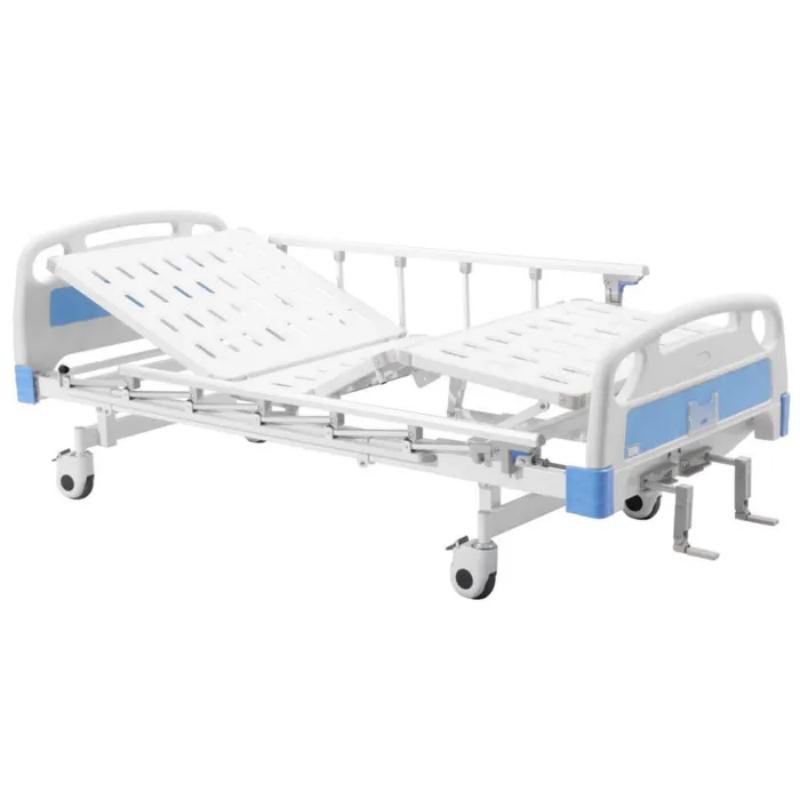
The backrest adjustment angle determines the range of positions available for the patient's upper body. For many models, the maximum backrest elevation angle is approximately 60°–75°, while the leg adjustment range is typically around 30°–45° (specific values vary by model).
When procuring these beds, evaluate the smoothness of the adjustment mechanism, the structural integrity of the bed platform, and whether the design prevents the patient from sliding downward when the backrest is elevated. For leg adjustments, focus on how the bed platform is segmented and its actual range of motion.
2. Bed Surface Height and Full-Bed Tilt Angle
Full-bed height adjustment allows for changes to the bed surface level, facilitating caregiving tasks or helping patients get in and out of bed. Full-bed tilting, by contrast, changes the angle of the entire bed frame. These two functions should not be conflated.
Some electric hospital beds offer a height range of approximately 40–80 cm, though the minimum and maximum heights vary significantly between products. When purchasing, clarify whether the stated height includes the mattress, and select a model based on the patient's transfer needs and the operational requirements of the nursing staff.
3. Safe Working Load and Safety Features
The "safe working load" defines the maximum load the equipment is permitted to bear under conditions specified by the manufacturer. During procurement, verify the maximum patient weight, the total load-bearing capacity of the bed, and the relevant usage conditions; note that mechanical test loads should not be equated with the permissible load for daily clinical use.
Additionally, examine the bed rails, caster braking systems, hand controls, mattress compatibility, and emergency operation mechanisms. The U.S. Food and Drug Administration (FDA) has noted that gaps between the bed frame, mattress, and bed rails can pose an entrapment risk. Therefore, the entire bed system must be evaluated holistically, rather than assessing individual components in isolation.
Common Issues and Solutions in Hospital Bed Positioning
1. Vague Positioning Requirements Leading to Procurement Errors
Procurement staff may sometimes specify only a general need—such as "must allow for a sitting/lying position" or "must support a head-up/foot-down tilt"—without defining the specific mechanical functions required. This leads to inconsistent interpretations and disparate price quotes from different vendors.
The solution is to translate clinical positioning needs into verifiable technical specifications. For instance, if a semi-upright (Fowler’s) position is required, the adjustment range for the backrest should be clearly defined; if knee flexion is needed, the configuration of the leg section must be specified; and if a head-up/foot-down (Trendelenburg/reverse Trendelenburg) position is required, the bed must explicitly feature whole-bed tilting capabilities, with the target tilt angles clearly stated.
2. Excessive Features with Suboptimal Clinical Outcomes
A high number of features does not equate to better clinical outcomes. Purchasing a highly complex bed when the patient does not require whole-bed tilting only inflates the budget and increases maintenance requirements. Conversely, if a patient requires specialized positioning but the equipment only offers basic backrest adjustment, the clinical needs will not be met.
The solution is to assess patient needs before determining equipment specifications. For general wards, priority should be given to basic positioning adjustments, adjustable bed height, and operational safety. For departments with specialized positioning requirements, beds should be selected based on those specific clinical needs.
3. Overlooking Pressure Management for Long-Term Bedridden Patients
Patients who are bedridden for extended periods are at risk of pressure injuries, bodily migration (sliding), and localized pressure. Simply adjusting the backrest or leg section is not sufficient to prevent pressure ulcers.
The solution is to integrate bed positioning with standardized nursing care—including regular skin assessments, the use of appropriate mattresses, structured repositioning schedules, and the provision of assistive devices for turning. For patients prone to sliding toward the foot of the bed, particular attention should be paid to the shear forces exerted on the sacrococcygeal region.
4. Neglecting Safety During Bed Adjustment
During the adjustment of a hospital bed, the relative positioning of the bed platform, side rails, and mattress may shift, creating a risk of entrapment or injury.
The solution is to ensure that mattresses and side rails are fully compatible with the specific hospital bed model. Regular inspections of gaps, locking mechanisms, and control systems are essential. Furthermore, the use of side rails should be evaluated based on the patient’s individual mobility and cognitive status; side rails should not be automatically assumed to be a universal solution for fall prevention.
Frequently Asked Questions (FAQ)
FAQ 1: What are the most common positions for adjustable medical beds?
Common positions include supine (lying flat), semi-recumbent, Fowler’s position, sitting position, and knee-flexed position. Some specialized beds also support Trendelenburg (head-down, feet-up) and reverse Trendelenburg (head-up, feet-down) positions. Lateral (side-lying) positioning typically requires assistance from nursing staff or the use of a bed equipped with a dedicated lateral-tilt function.
FAQ 2: Can a standard hospital bed be adjusted to a Trendelenburg (head-down, feet-up) position?
Not necessarily. Achieving a Trendelenburg position requires a mechanism to tilt the entire bed frame; it cannot be replicated simply by raising the backrest or the leg section.
FAQ 3: Can adjusting the position of a hospital bed help prevent pressure ulcers?
Adjusting a patient's position is one measure for preventing pressure injuries, but it is not sufficient on its own. It must be combined with regular skin assessments, appropriate mattress selection, and an individualized care plan.
FAQ 4: Is it always better for an electric hospital bed to have more features?
No. The configuration should be selected based on actual care requirements. Features that are rarely used only increase procurement and maintenance costs, while an insufficient range of functions may fail to meet clinical needs.
FAQ 5: What are the most important specifications to consider when purchasing an adjustable medical bed?
Key factors to evaluate include the adjustment range for the backrest and leg sections, the overall bed height, the range of tilt (for the entire frame), the safe working load, the compatibility between side rails and the mattress, the braking system, and the availability of after-sales service. For specialized clinical applications, the equipment configuration should be verified by healthcare professionals.