
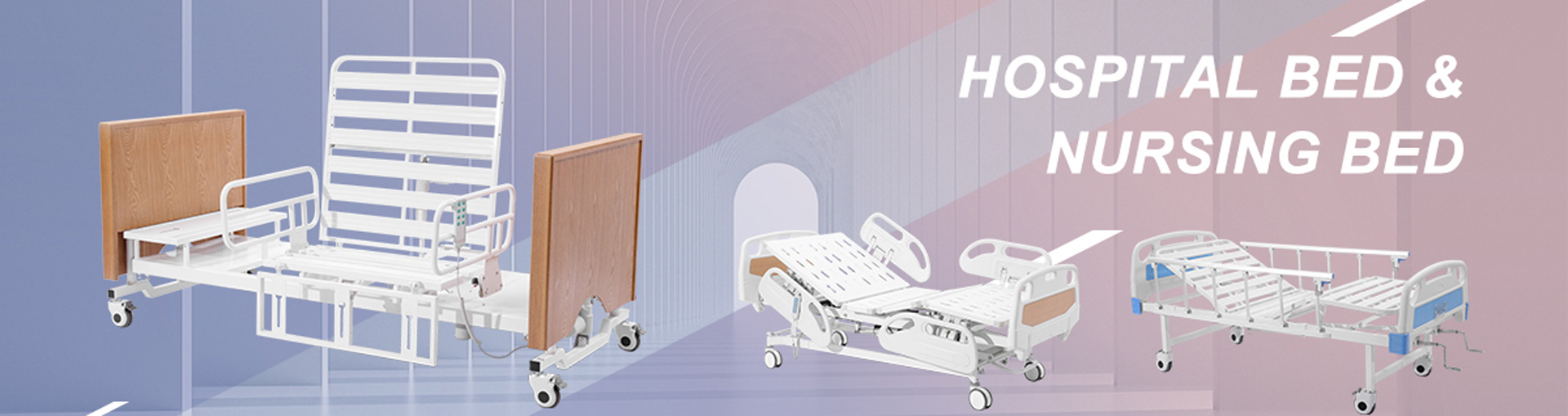
It is only in hospitals, rehabilitation centers, nursing homes, and home care environments that the beds in these facilities are a necessary infrastructure for supporting patients. They also serve as a platform for patients’ physical recovery after surgery and for the continued care given to them at home. Nevertheless, in actual medical care practice, a number of the safety risks patients face are not due to the use of a sophisticated type of medical procedure or the use of complex medical devices that can be life-threatening or at least potentially very harmful. Many risks result from the patient's regular activities in bed. For example, they are at increased risk of falling when turning over in bed or getting up. The risk is also heightened during unconscious movements that sleep brings about, e.g., dreaming and moving during sleep as a person. The risk is also a factor where balance is lost due to after-effect of an operation that leaves the patient weak. In general, hospital medical beds are more elevated than the beds at home, especially for those patients who are elderly, those with impaired physical mobility, those suffering from neurological diseases, or who are in an inconsistent state of consciousness. A fall doesn't only injure one, it can also prolong one’s stay at the hospital, add up health care costs, and cause other health safety incidents.
Considering the above circumstances, hospital medical bed side rails have slowly become one of the important features of modern bed design. Some people still think that hospital bed side rails are only the safety barrier protecting patients from falling down.
To be honest, however, hospital medical bed rails have gone beyond being merely traditional safety devices. They are, in fact, functional structures that integrate different aspects, such as protection from falling down, helping patients to move, assisting nurses in caring for patients, interaction and risk control through a human-computer interface, and so on.
In fact, nowadays most medical facilities, around and including the USA have recognized that it is paramount to ensure the safety of patients. Fall prevention has become an essential and highly regarded element in the nursing quality management of hospitals. The Food and Drug Administration has published a set of regulations to safeguard patients with regard to the use of hospital bed siderails. According to the FDA, hospital medical bed rails are of great help to the patients in turning over, moving in the bed while in hospital, getting in and out, and preventing falls during transportation; however, such help is only effective if the patients’ actual need or condition is taken into account. In other words, the wrong handling can result in entrapment, for example.
The major point of modern hospital bed rail design is not merely to enhance the level of safety protection by making it higher, but rather to achieve the best combination of safety and nursing convenience.
Then, what is the role of the hospital bedside rails? Moreover, why do bed rails are present nearly all the times in hospitals, except for very special patient cases where even bedrails might lead to harm? What kind of characteristics hospitals have to consider when they procure hospital medical beds? In this article, we will take a close look at the issues from medical and nursing care demands, functions related to the design of beds, standards in terms of safety, and development trends in the industry among other things.
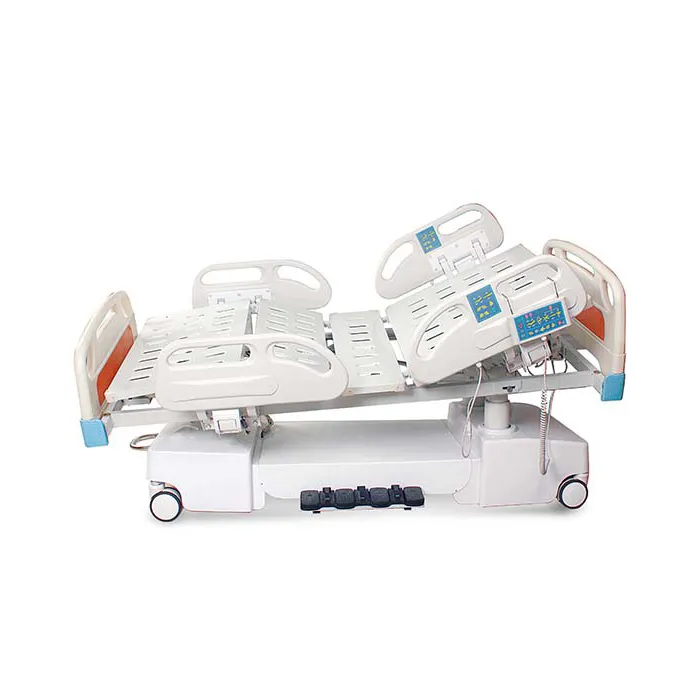
The Primary Function of Hospital Bed Rails: Reducing the Risk of Patient Falls and Improving Hospital Safety
The most basic and crucial function of hospital medical bed rails is to reduce the likelihood of patients falling from the side of the hospital bed.
Compared to ordinary home beds, hospital medical beds typically need to meet the demands of medical procedures, thus their bed height, structure, and adjustment functions are more complex. For example, multi-functional electric hospital beds often feature backrest height adjustment, legroom adjustment, and overall height adjustment, allowing for a wide range of adjustments to the bed height to meet nursing needs. When the bed is raised, the risk of falling increases if the patient lacks necessary protective measures.
Hospital bed rails are particularly valuable for the following patient groups:
Elderly inpatients. As people age, muscle strength declines, and balance weakens, making it easier to lose control when getting up or turning over at night. Even if the patient is conscious, slow movements may prevent them from adjusting their position in time.
Post-operative recovery patients. Some patients may experience temporary confusion, dizziness, and weakness after anesthesia, and wound pain can also affect their ability to move normally. In these situations, hospital bed rails can provide additional protection.
Patients with neurological disorders, such as stroke patients, cognitive impairment patients, and Parkinson's patients, may experience decreased body control or impaired judgment, making them more prone to accidental movement.
Patients who are bedridden for extended periods. Bedridden patients require frequent changes in sleeping position, and caregivers need to assist them with turning and moving. If the hospital bed lacks a properly designed guardrail, the patient may slip during these movements.
Therefore, hospital bed rails are not intended to restrict patient movement, but rather to provide safety protection when the patient's physical condition is not fully under their control.
Hospital bed rails can assist patients with turning, moving, and rehabilitation training
Besides preventing falls, hospital medical bed rails have another very important but easily overlooked function: assisting patients with body adjustments and rehabilitation training.
For many patients in the recovery period, relying on caregivers to perform all movements is not conducive to the recovery of physical function. Modern nursing concepts place greater emphasis on cultivating patients' autonomy, and hospital medical bed rails can serve as an auxiliary support tool.
For example, a patient with weakened lower limb strength but normal upper limb function can use bed rails to assist with body movement during rehabilitation training in a hospital bed, including:
adjusting from a supine to a semi-recumbent position;
assisting with turning from side to side;
improving sleeping posture;
helping to move closer to the bed edge;
assisting with getting in and out of bed.
High-quality hospital bed rails typically feature an ergonomic design with rounded surfaces, no sharp edges, and stable grip areas, enhancing patient safety.
Some advanced hospital medical beds use segmented rail designs, such as four-segment rails or half-length rails. These structures are more flexible than traditional fixed rails, allowing patients to choose the opening section according to their needs. For example, nursing staff can lower the corresponding section of the rail when administering IVs, performing examinations, or providing bedside care, while the rail can be raised for protection when the patient is resting.
This design reflects the trend in modern hospital medical bed development: bed rails are not only protective devices but also important assistive devices for patients to regain their autonomy.
Hospital Bed Rails Improve Nursing Efficiency
Hospitals handle a large volume of nursing work daily, and the design of hospital bed rails directly impacts the efficiency of nursing staff.
In traditional nursing environments, if hospital bed rails are complex to operate, nurses need to spend considerable time adjusting the bed structure each time they examine a patient, change dressings, clean, turn over, or transfer them. This not only reduces nursing efficiency but also increases the workload of medical staff.
Modern hospital bed rails typically employ quick-operation designs, such as:
One-hand lifting mechanism; Automatic locking mechanism; Folding and concealing design; Soft-close anti-collision function.
These designs allow nurses to quickly adjust the rails.
For example, in ICUs, general wards, or rehabilitation wards, nurses need to handle hospital medical beds multiple times a day. If each hospital bed's rails are operated dozens of times daily, the ease of use of the rail structure directly affects the overall nursing workflow.
Therefore, professional hospital medical bed manufacturers consider not only safety performance but also the actual user experience of nurses when designing bed rails.
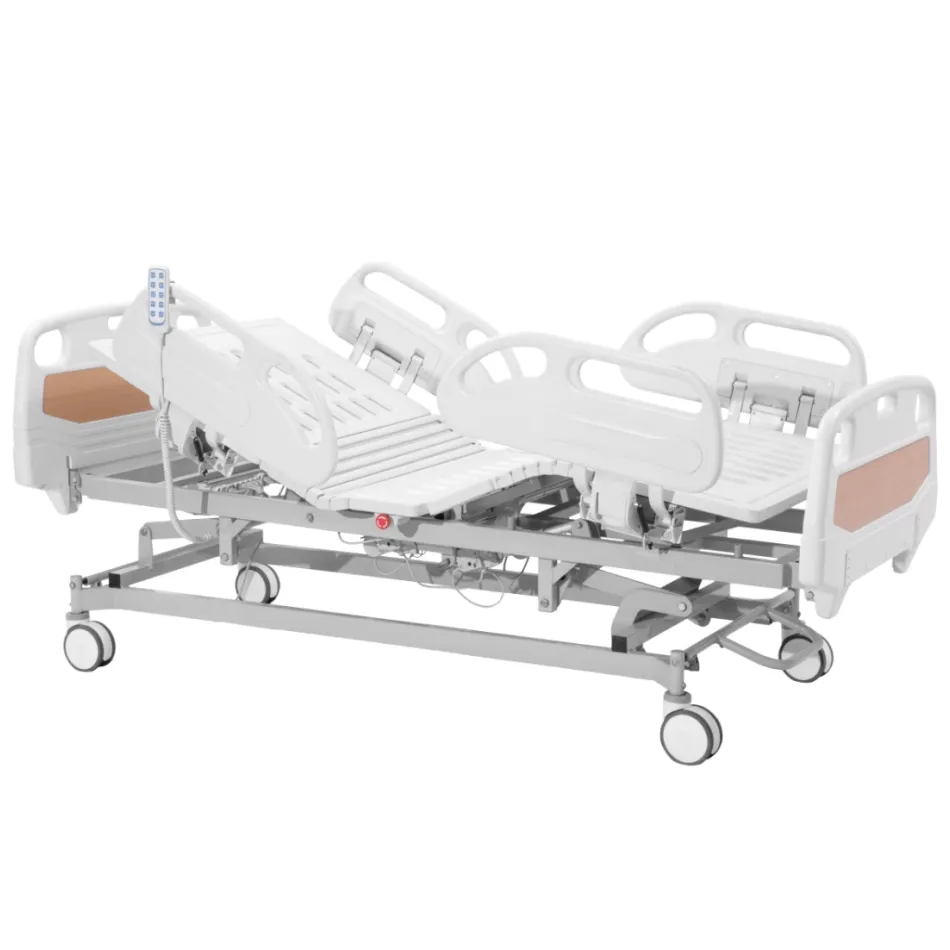
Hospital Bed Rails Need to Balance Safety and Anti-Pinch Design
While hospital medical bed rails can improve safety, installing them does not guarantee absolute safety.
In fact, hospital bed rail design requires very strict consideration of structural dimensions and usage. If the gaps between the rails are not properly designed, parts of the patient's body may enter the gaps, creating a risk of trapping.
FDA data on hospital medical bed safety indicates that patients may become trapped in the space created between the bed frame, mattress, and rails. Therefore, hospital bed systems need to comprehensively consider the bed structure, rail dimensions, and mattress compatibility.
Therefore, high-quality hospital medical bed rails typically focus on the following design factors:
Distance between the rail and the mattress;
Gap size between the rails;
Rightness of the rail fixation;
Stability during lifting and lowering;
Safe treatment of edges and corners.
Furthermore, hospitals should not simply assume that all patients must use rails long-term. The correct approach is to conduct a risk assessment based on the patient's physical condition.
For example:
For patients who are conscious and have good mobility, the guardrail can be lowered partially as needed to facilitate their movement;
For patients at high risk of falls, enhanced safety measures should be implemented;
For patients with cognitive impairment or agitation risk, comprehensive management combined with monitoring measures is required.
Hospital bed rails are auxiliary safety devices, not tools that replace nursing observation.
What are the differences between different types of hospital bed rails?
With the development of medical equipment, there are increasingly more hospital bed rail structures on the market, and different types of rails are suitable for different medical environments.
I. Full-Length Hospital Bed Rails
Full-length rails cover a longer area of the hospital medical bed, providing more comprehensive lateral protection.
This type of rail is typically used in:
ICU beds;
Intensive care beds;
Long-term care beds;
Hospital beds for patients with limited mobility.
The advantage is a larger protection area, reducing the risk of patients rolling off while sleeping.
However, full-length rails also need to be designed for easy opening; otherwise, it may affect nursing procedures.
II. Half-Length Hospital Bed Rails
Half-length bed rails primarily cover the upper body area of the patient, emphasizing a supportive function.
This design is suitable for:
Rehabilitation patients;
Patients capable of independent movement;
Patients requiring training in getting in and out of bed.
Half-length bed rails do not completely restrict patient movement while providing grip support.
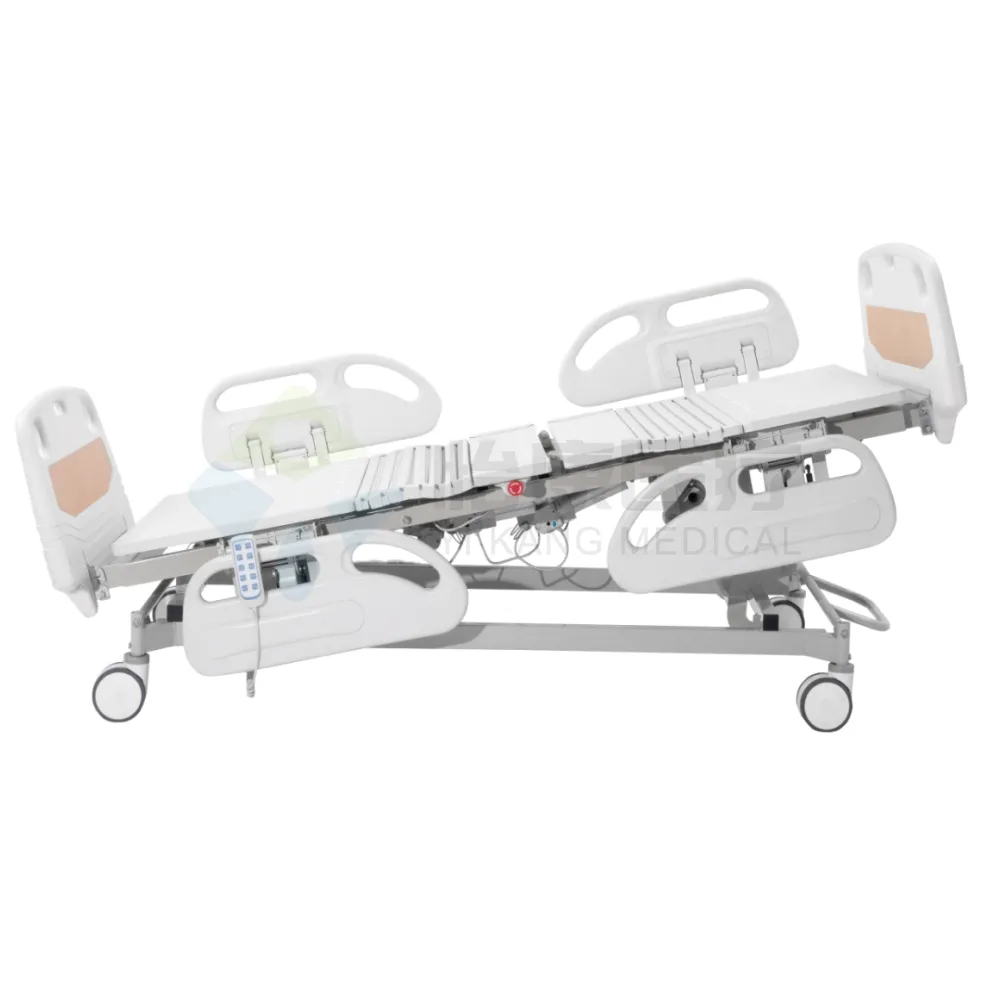
III. Folding and Concealed Hospital Bed Rails
Modern electric hospital beds increasingly adopt folding bed rails.
These rails can:
Reduce space occupation;
Facilitate operation by nursing staff;
Enhance the overall aesthetics of the ward;
Accommodate electric adjustment functions.
For high-end medical institutions, this type of design has become an important development direction for hospital medical beds.
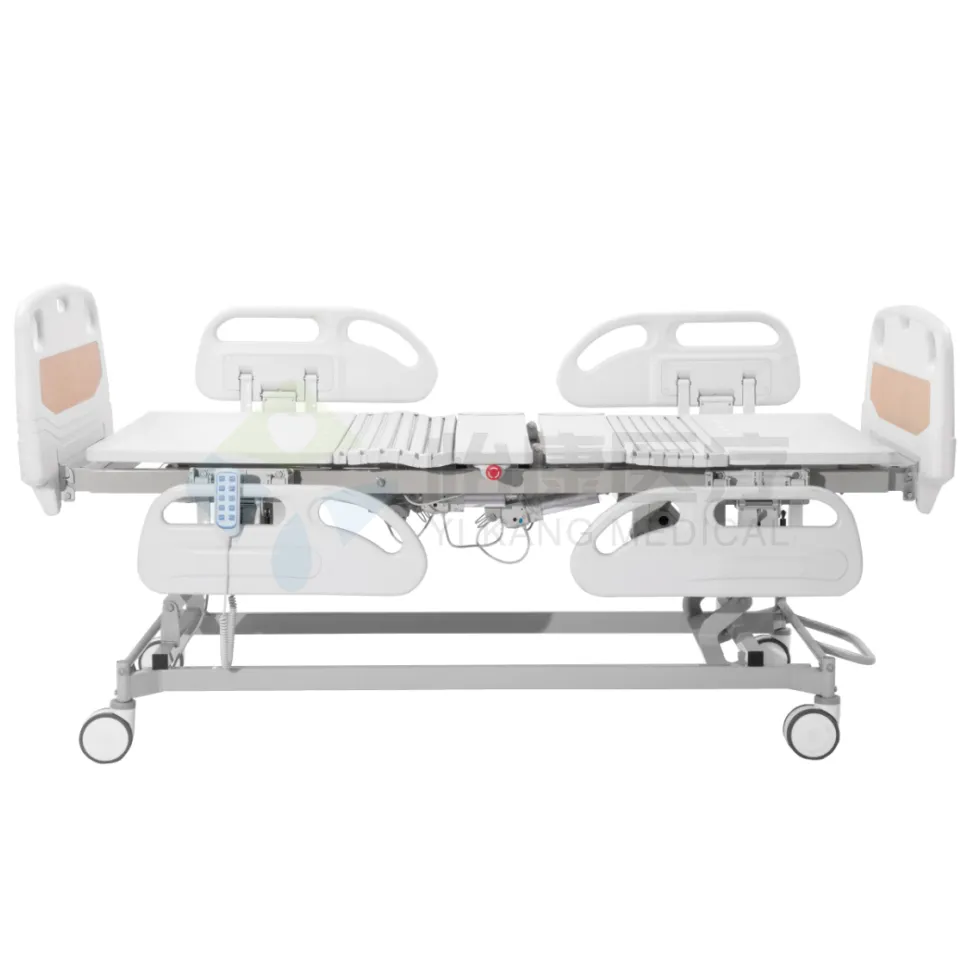
Materials of Hospital Bed Rails Affecting the Bed's Durability and the Maintenance Cost
The quality of the bed rails is especially important for the beds in hospitals, because these beds usually undergo long-term, high-frequency use.
At present, the hospital medical bed rail materials commonly used are basically ABS engineering plastics, aluminum alloy, stainless steel, and steel with powder coating.
The advantage of ABS bed rails includes that being lightweight, having a smooth, easily cleanable and disinfectable surface, and for that reason, this type of rails is widely adopted in general hospital medical bed products.
The advantages of aluminum alloy bed rails include being lightweight, strong, and corrosion-resistant, therefore they are more appropriate for electrically operated hospital medical beds and top-of-the-range nursing equipment items.
The stainless steel type of bed rails is very durable and is also suited for long-term, high-intensity usage medical environments.
Besides, hospital medical beds should also be made from materials that do not easily lose their original color, are hard to deteriorate, or even change appearance, especially under repetitive use and exposure to disinfectants.
Quality hospital medical bed suppliers, in general, will perform a series of rail material tests like: Lifting cycle test; Load-bearing capability test; Structural integrity/stability test; Corrosion resistance/acid-resistance test; etc.
In other words, these tests are for making sure that a hospital medical bed's rails are capable of enduring regular daily usage over long periods of time.
FAQ: Frequently Asked Questions about Hospital Bed Rails
Q1: What is the primary function of hospital bed rails?
The primary function of hospital bed rails is to reduce the risk of patient falls, while also assisting patients in turning over, adjusting their posture, getting in and out of bed, and improving patient safety.
Q2: Are hospital bed rails safer the higher they are installed?
No. Hospital bed rails need to be used appropriately based on the patient's actual condition. Overuse or misuse may introduce new safety risks; therefore, hospitals usually need to assess the patient's condition.
Q3: What materials are generally used for hospital medical bed rails?
Common materials include ABS engineering plastics, aluminum alloys, stainless steel, and steel with a painted finish. Different materials are suitable for different medical environments and need to be selected according to the hospital's needs.
Q4: Why are guardrails commonly equipped on electric hospital medical beds?
Because electric hospital medical beds are usually used for patients with higher nursing needs. The bed frame can be adjusted in height and angle, and guardrails further enhance patient safety during use.
Q5: Do hospital bed rails require regular maintenance?
Yes. Hospitals should regularly check the lifting function, locking structure, connecting parts, and surface condition of the guardrails to ensure the long-term safe operation of the hospital beds.