
A wheelchair for a child with cerebral palsy is a tool for everyday mobility not less significantly, a means to support their therapy. Since the concept of pediatric rehabilitation keeps developing, these days special wheelchairs for children with cerebral palsy not only assist mobility but also integrate posture management, physical support, rehabilitation exercise activities, safety equipment, and growth adaptation. Many parents have similar queries when they first come to learn about children’s wheelchairs: "What is the best wheelchair for a child with CP?" "What separates a regular children’s wheelchair from the one made for cerebral palsy?" "Is price an indication of quality?" "How should the best cerebral palsy wheelchair for the child be picked if one’s condition is known?"
Actually, there is no one-size-fits-all solution. Children with different degrees of cerebral palsy show a great variability in motor capacity, muscle tone, body development, cognitive level, and home factors. Thus, the best wheelchair should be one that fits the physical condition and rehabilitation needs of that particular child. Recently, more and more rehabilitation medicine research have found out that the effective and rational application of specific children’s wheelchairs for cerebral palsy not only enables children to stabilize their sitting posture but also minimizes the occurrence risk of secondary complications like scoliosis, contractures of the joints, and hip dislocations, in return, children can better learn, play, make new friends, and get involved in rehabilitation training.
We’ll introduce cerebral palsy wheelchairs in terms of their functional features, classification methods, criteria for selection, the main equipment items, rehabilitation benefits, as well as matters to take care in daily use. The target is to guide parents towards a more thorough understanding of their kids’ wheelchairs and selecting the right products that can last for a long time for their children.
Why should children with cerebral palsy be provided with special cerebral palsy wheelchairs rather than ordinary children's wheelchairs?
Cerebral palsy is a non-reversible condition that results from a brain injury, usually during its early developmental phase, and it leads primarily to abnormal movements and postures. This is one of the largest single causes of motor disability in childhood. Cerebral palsy cases are reported from the global public databases at an approximate frequency of 2 to 3 every 1 thousand live births. Due to the steady improvement in care for newborns, more and more infants at high risk or born with premature have been successfully surviving, leading to higher and higher demand for children's physical therapy and rehab.
Pupils with cerebral palsy frequently have various difficulties such as abnormal muscle tone, lack of motor coordination, poor trunk control, weak balance and difficulty in independent walking. Some walk for a short time but get tired soon; others require assistance to stand; and finally, children with very heavy disabilities can be said to be wheelchair dependent for daily routine at home.
Certainly, for these kids, an appropriate children's wheelchair is not merely a means of transport but also plays a major role in their motor development and rehab outcomes.
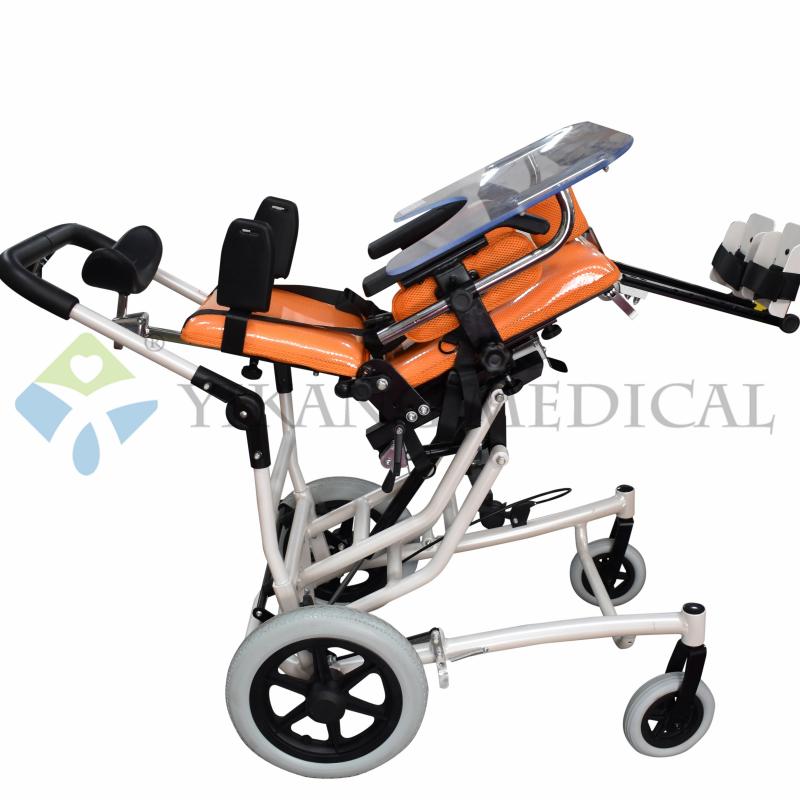
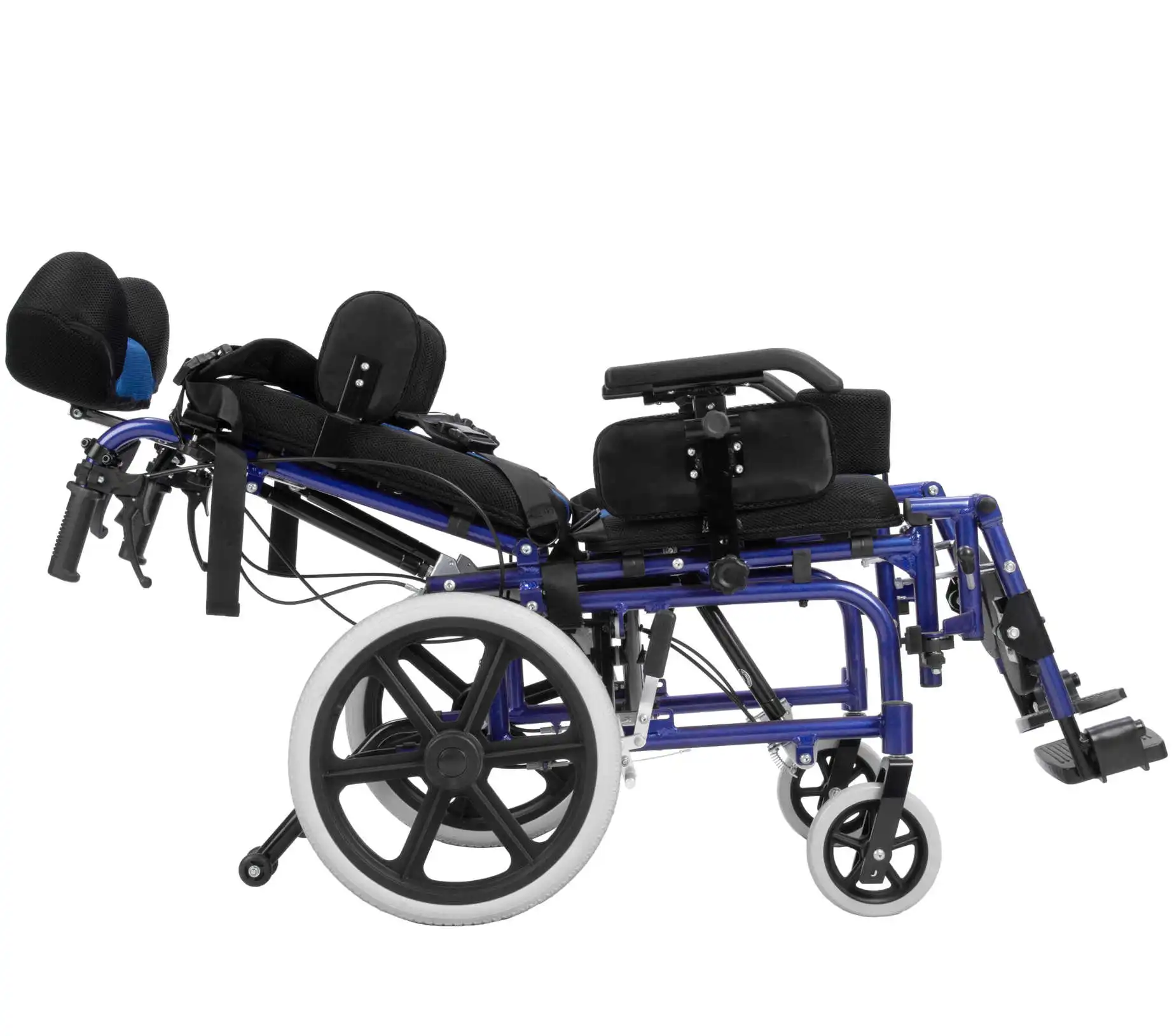
Regular children's wheelchairs mainly meet the basic needs of children who cannot move very well by design being lighter in weight and more mobile. However, the design of special CP wheelchairs fully considers the stable support requirements children with CP have, and they have been extensively upgraded in aspects of seat layout, posture, pressure distribution, and so on. For example, wheelchair for disabled child, usually, consists of adjustable headrests to support the head, sideways or lateral supports to stabilize the trunk, pelvic fixation straps to secure the pelvis, chest restraints to fix the upper body, thigh separators to avoid inner thighs contact, adjustable foot supports to support the feet when they move, and tilting mechanisms to help the child sit more comfortably.
For a long period, the right use of wheelchairs can also contribute to a better respiratory function for the child as well as improved swallowing, and better use of the visual ability as the physical and the facial body are both fixed and aligned.
Once the body is stable, then children will have more space to move with their upper limbs. Therefore, not only learning and drawing, or playing with toys, but also completing the task of rehabilitation training through the upper limbs can be done in a smoother manner thereby, children achieve the higher quality of life.
Hence, for kids with cerebral palsy who need a long period seated, a wheelchair customized for their CP condition should be a far better choice than a general children's one.
What is the best wheelchair for children with CP?
Many parents look desperately for an ultimate answer like a particular brand or model that is the best for cerebral palsy. But a professional rehabilitation device perspective would suggest that no single wheel chair is the best for all children with CP. A wheelchair that suits a child very reasonably is one made based on the current status, future development, and motor capabilities of the individual child, and it aligns with the child's long term rehabilitation plans.
The main function of the best wheelchair for children with cerebral palsy is managing the posture properly that should be the first consideration in the development of a wheel chair as one can expect it to last for many years or so.
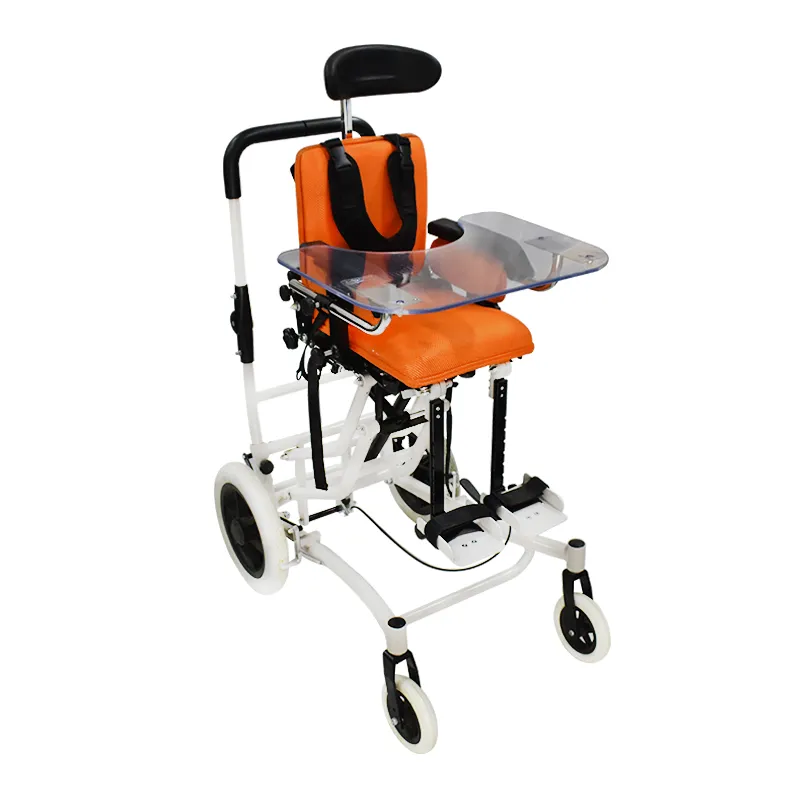
Due to spasticity, children with cerebral palsy are likely to have various postural problems such as head forward or back, pelvis backwards, lateral tilt, etc. The main problem is that if a child maintains the wrong posture for a long while, it not only can make him or her a victim of discomfort, but also cause severe medical problems like scoliosis, contractures, and bone deformation especially in the pelvis. In this regard, wheelchairs that are made for children and are suitable for use by kids with CP must incorporate multiple support points so that a fairly natural sitting posture can be kept, such as through head support, side trunk support, pelvic positioning, leg fixation, and so on, and even the footrest adjustment.
On top of that, an outstanding children’s wheelchair also needs to have a lot of different adjustments. While kids are growing rapidly, their height, weight, and body proportions change all the time. In such a case, the wheelchair will become too big for the child if fixed size was chosen at the time of purchase, or even a child might find himself or herself unable to do anything since all the wheelchair components would be too narrow or low as in such cases of the wrong sizes the wheelchair might have the problem of the seat width being too small leading to no possibility for even the most basic movements being restricted, or the case of seat depth being too small leading to compression of the thighs resulting in pain and possibly affecting blood circulation or even, the backrest height being too low for the child to support his or her head etc. Hence, it is quite reasonable for most manufacturers to introduce wheelchairs with the main components adjustable that children with cerebral palsy need.
Furthermore, safety is also a crucial factor in the evaluation of wheelchairs for children with cerebral palsy.
Wheelchairs used in combination with a wheelchair, i.e., frames of the wheelchair which are stable, tip-prevention devices, high-performance wheel brakes, non-slip seat cushions, and multi-point fastenings (i.e., restraint lines that prevent the child from falling over) can effectively safeguard the child while seated on the wheelchair for activities during their daily life.
Especially in a child who has involuntary movements or very weak control of the body, having such a stable and trustworthy fixing system greatly minimizes the probability that the child will have an accident and fall. In this way, parents may relax and carry out their parenting tasks at home more comfortably.
What should be given the most attention when selecting a wheelchair for children with cerebral palsy?
Deciding what kind of wheelchair to buy is not just a matter of picking the one with the most features and the cheapest one, it's a matter of thoroughly understanding what the kid really needs. The main recommendations that professional rehabilitation services give to families are summarized below:
1. Body Size Matching
The physical dimensions of a wheelchair determine how good the sitting experience is for the user. If the seat width is bigger than one’s body, then there could be sideways shifting that causes instability; on the other hand, if the seat is too narrow, it could squeeze the thigh and the hips.
If the seat is too deep, the back of the knee could be squeezed, thus, the blood circulation of the lower limb might be compromised; on the other hand, if the seat is very shallow it is not a good way of supporting the thighs.
Thus, it is a good idea for parents first to measure the child's hip width, thigh length, calf length, shoulder height, and overall height when choosing a wheelchair for a child with CP and considering the anticipated growth of the child in the future.
2. Does it have a comprehensive posture management system?
For a majority of children with cerebral palsy, the most important aspect is posture, not mobility. High-end wheelchairs designed for kids and made for cerebral palsy often are the ones that have headrests that are not of standard height, but are adjustable, chest supports and the like are there with which children's positions can be stabilized, and also lateral torso supports so that if a child leans to one side, it can be stopped; pelvis fixation devices so that the child is not sliding off as it would make the child lose balance, and thigh separators to avoid a situation where the feet become jammed in between due to very close thighs when the child is sitting; and multi-angle foot supports are also very important because different children have a different way of standing or lying down.
Through all these, the child’s neutral position while sitting is assured, postural compensations triggered by abnormal muscle tone are reduced, and skeletal deformities in such children are prevented.
3. Comfort for Continued Use
Some children have to sit in a wheelchair for several hours a day. Therefore, comfort is most important. The design and materials of such a backrest should be a breathable ones, high-density seat cushion to avoid pressure sores in the hips and lower back, a backrest that follows the natural curve of the spine without being too high or low, a headrest to support the neck, and so on.
4. Practical for Living a Normal Life at Home
The type of home environment a child lives in affects the kind of wheelchair they need. For example, if a family is going to frequently travel on and off stairs or in and out of cars, a lightweight, foldable wheelchair would be more convenient. On the other hand, if the child is mostly going to be at home or in a rehabilitation center which is more like a wheelchair-friendly environment, a larger, more advanced wheelchair which has a more complex posture management system would be a better choice.
What are the Common Types of Wheelchairs for Cerebral Palsy?
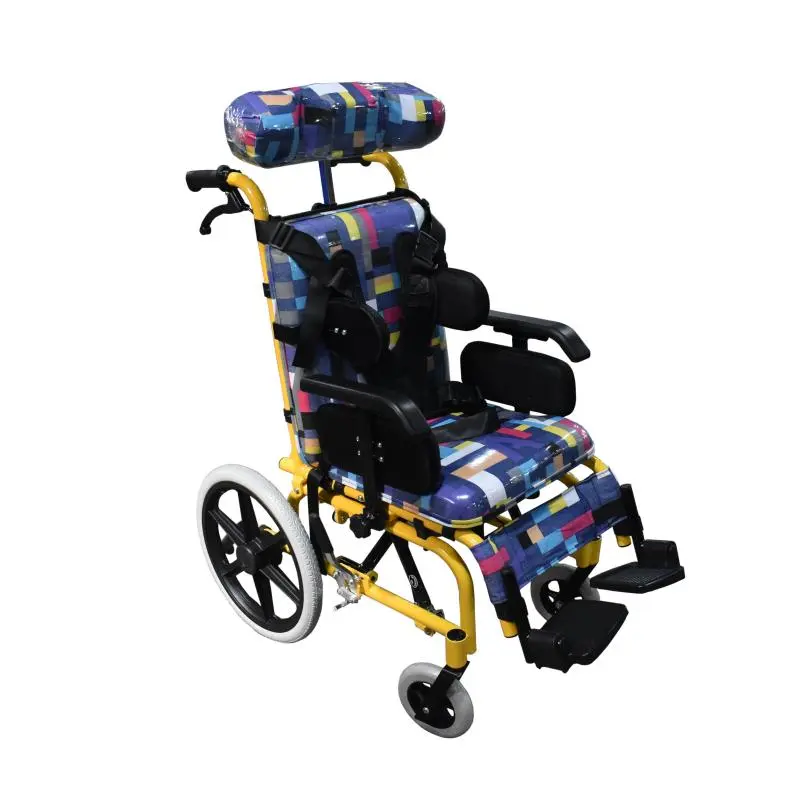
To date, wheelchairs for children with cerebral palsy have been primarily split into several categories: manual push-ride wheelchairs for young children, posture management wheelchairs, reclining wheelchairs, and electric wheelchairs. Each category is suitable for a certain type of user.
The regular type of push wheelchairs for children is quite a light and simple structure and relatively cheap and hence very suitable for children having mild cerebral palsy with good motor functions or who require only short-time help in movement. However, such types of wheeled equipment have very low posture- support abilities and can hardly provide physical safety to children who remain seated longer periods in these chairs.
Wheelchairs for management of a child’s posture are a major trend in rehabilitation centers nowadays. The modular support system of these devices can offer a wide and diversified support not only for the head, shoulders and the trunk of the body but also for the pelvis and lower limbs thus such children can sit in it comfortably for a long time even when their condition is severe. These wheelchairs have also become very popular among parents.
Tilted wheelchairs for cerebral palsy have recently become a topic of great interest. Through changing seat inclination, the whole posture can be altered without changing hip, knee and ankle joint angles. The new technology helps relieve pressure at the localized points of the body, increases lung capacities of the child, decreases the activity level of certain muscles, and at the same time increases the level of comfort experienced by the person seated. Thus, tilted wheelchairs offer very big advantages if we look at the long-term posture management.
On the basis of the assessment of professionals, for those children who have some degree of self-movements and thinking skills, the use of the children electric wheelchair would be feasible option. Electric powered chairs for children with cerebral palsy will not only help them have better control of their directions of movement and improve independence in everyday activities and participation in school and other social situations, but also are beneficial for the child's psychological development and self-esteem increase.
How do wheelchairs designed for children with cerebral palsy promote rehabilitation?
Many may think that wheelchairs for children with cerebral palsy only serve as transport, yet actually they have become a crucial part of the modern pediatric rehabilitation system. The correct and rational use of such wheelchairs for children with cerebral palsy in combination with physical therapy, occupational therapy, speech therapy, and home rehabilitation can bring more comprehensive development opportunities to the child.
To begin with, a stable seating posture helps with the functioning of the entire body. If a child can maintain a correct posture, his chest fully opens, breathing becomes more efficient, and swallowing is more coordinated, as a result, aspiration is less probable. In addition, the head will be in a natural position, which facilitates the child's observation of the surrounding environment, and eye contact & verbal interaction with family members, teachers, as well as classmates.
Also, a stable trunk allows more free movement with hands. Since the body is not anymore trying to balance, children are able to concentrate on activities like gripping, drawing, writing, puzzles, and even various sorts of rehabilitation games. This improves the fine motor skills development of their arms.
Mechanically, wheelchairs for children with cerebral palsy can contribute to delaying the occurrence of secondary skeletal problems. It is known that children with cerebral palsy who are in abnormal positions for a long time may develop deformities like scoliosis, pelvic tilt, hip subluxation or joint contractures, if their body positions are not properly regulated. Therefore, the implementation of a correct posture management will significantly reduce the risk of the above-mentioned deformities and make the child's quality of life much, much better in decades.
In several rehabilitation centers, clinical reports show that the children who have regular and long-term use of posture-management wheelchairs for cerebral palsy together with continuous rehab program generally have better scores than the ones who are not properly postured when it comes to sitting, participating in daily activities of life, and the burden on family caregivers. Of course, the specific outcomes can still vary depending on the condition's severity, the frequency and intensity of recovery and parental collaboration level.
What are the correct ways to use and to maintain a child's wheelchair?
Getting a wheelchair for cerebral palsy is the beginning only because correct use and regular maintenance of the wheelchair are of equal importance. Parents should be taught to check the wheelchair regularly for any issues such as whether the braking system is working properly, tire wear is visible, the screws have come loose, the seatbelt is still fastened, or support parts have moved. In case of aging, worn or damaged parts, they should be changed in order not to compromise a child's safety.
Besides, the wheelchair for a cerebral palsy child needs adjustment regularly according to his/her body growth. It is generally suggested to get a professional physical therapist or orthotic equipment dealer evaluation around every 6-12 months to check whether the seat’s width, depth, backrest height, footrest length, and the posture support system are still suitable for the child's current physique. For fast-growing kids, it is essential to replace or upgrade their wheelchairs in response to the changes and not use devices that are obviously not appropriate for them for a long time.
Daily cleaning is essential too. The chair cushion, backrest, and seatbelt should be regularly cleaned in order to prevent bacterial growth and skin irritation. Comfortable fabrics reduce the discomfort from being too sweaty, therefore, helping to prevent the occurrence of skin problems as well.
FAQ: Frequently Asked Questions about Wheelchairs for Cerebral Palsy and Children's Wheelchairs
What are the differences between wheelchairs for kids with cerebral palsy and regular kids'? wheelchairs?
Wheelchairs for children with cerebral palsy, besides serving as transport, have the capabilities to help the user achieve good posture, provide bodily support, distribute pressure, and even aid in rehabilitation, thus being well-suited for a cerebral palsy child who has limited mobility and control over their body postures. On the other hand, regular children's wheelchairs are mostly designed to satisfy the needs of regular children for movement.
Are more expensive wheelchairs for children with cerebral palsy always better?
It depends. Wheelchairs with higher price for cerebral palsy children are often more versatile with a larger number of functionalities that can be changed but whether they are really better depends completely on the condition, needs, and the goals of the child after the assessment of a professional. A scientific fit will always be much more essential than getting one of high-cost only.
How often should one be replacing the wheelchair of a child?
No rule about such a question. It's entirely at one's discretion or the child's needs. One is allowed to continue using the old one as long as it is still adjustable and fulfilling the child's physical requirements. Otherwise, when the size has grown too large or the support capacity has diminished or components have been old or worn out one should change or adapt the chair as needed.
Does a child with cerebral palsy, when using a wheelchair regularly for most of his life, lose opportunity to walking?
Generally speaking, not at all. The purpose of a wheelchair for children with cerebral palsy, when used appropriately, is to enhance postural balance, living quality as well as the opportunity to interact more with others through using it; it is neither standing nor walking that is replaced by that. Under the guidance of a rehab therapist, the usage of a wheelchair is to coincide with rehabilitation such as standing and walking training.
At what age can a child with cerebral palsy be introduced to a children's wheelchair?
If a child is identified and assessed professionally that the kid should have a wheelchair for prolonged postural support or even mobility help, a suitable one for cerebral palsy child can be chosen based on his age and the state of the body. There isn't any absolutely fixed limit of using these devices in terms of age.