
If you are still capable of walking but have difficulty walking for a long time, the solution is usually: a four-wheeled rollator.
The majority of times that people start exploring wheelchair options, they have not, in fact, lost the ability to walk.
Owing to the aging population and the rise in cases of chronic diseases, musculoskeletal or neurological disorders, mobility aids have come to be an important part of rehabilitation through clinics and home visits. The WHO's publicly available data reveals that billions of people worldwide are affected by mobility issues, which can be slight to severe.
Many of these people haven't even lost the ability to walk totally, but walking for long is hard on them due to weak muscles, poor physical balance, joint pains, or other reasons。
Actually, the main concern of the majority of families is that an elderly person starts moving very slowly, becomes easily tired, or perhaps even falls once in a while is usually the reaction - they run out to buy a wheelchair for him. They think that a wheelchair will solve the issue of the elderly person not being able to move. However, in many cases, this easy solution can result in a further loss of physical activity, faster disappearance of muscle strength in legs, further weakening of walking capability, etc.
Actually, most medical doctors and caretakers in the world emphasize the fact that as long as the person has the ability to stand up and walk safely, it is better to let him walk and not become completely dependent on wheelchair. That is because our physical functions - muscles, joints, bones, and heart and lung functions are maintained through activity and only through it.
Thus, for such people who are still capable of walking but unable/ unwilling to do it for several hours a day, how is a wheelchair a better choice?
Quite a few people who still walk but very few times can do it for extended periods end up using a wheelchair. A wheelchair can certainly be helpful, but a four-wheeled rollator might be better.
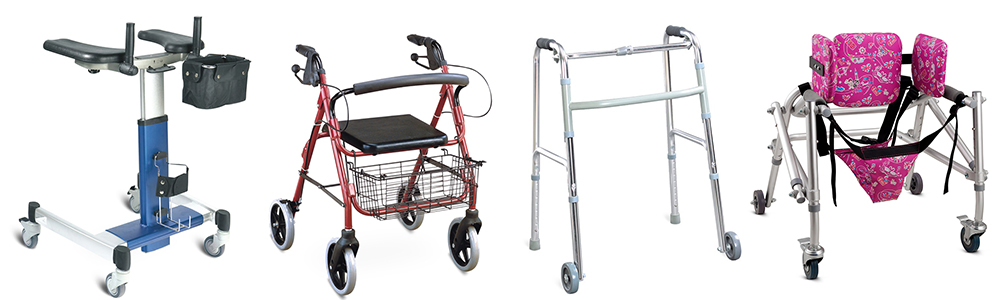
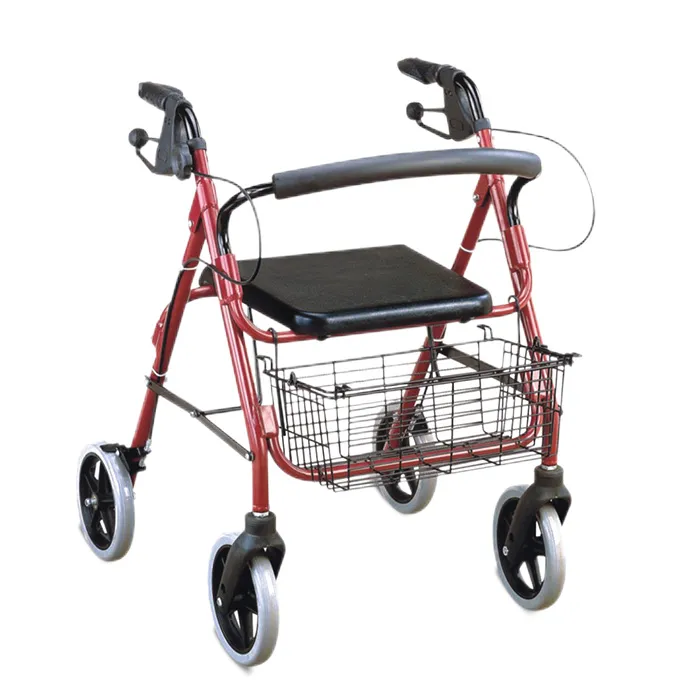
Rollators are now one of the main assistive devices in rehabilitation clinics, nursing homes, and other places where home assistance services are provided. Four-wheeled rollators are a type of walking aid consisting of a platform with wheels, a handbrake, ergonomic handrails, and a backrest, and sometimes a seat.
The four-wheeled rollator not only supports the user but also encourages them to walk independently. For many patients with mild to moderate disabilities, a rollator increases safety, maintains physical activity, and thus becomes one of the important auxiliary tools recommended in international rehabilitation medicine.
The purpose of the article is to describe the differences between wheelchairs and four-wheeled rollators, so you will know who is best fitted to take up walking again, which situations require a four-wheeled rollator, and how to choose the right and safe mobiilty aid for different physical conditions.
What is the main reason that people choose wheelchairs prematurely?
The real issue is not one's ability to walk but one's fear of falling.
There are many situations in which a family buys a wheelchair not because the person is absolutely not able to walk but because they are afraid of their own falls.
For example, a person in his or her sevenieths might be perfectly able to walk even two or three hundred meters continuously but, say after walking for about ten minutes, he might begin to get leg pains, lower back pain, or he might worry about losing his balance. In order to avoid an accident such as fall, a family would simply move the wheelchair. On the face of it, it is a nice solution as it reduces their physical activity and improves mobility. However, in the long term, it is quite easy to form a vicious circle。
Patients on wheelchairs do not get up and walk much anymore; therefore, their legs get gradually weaker, range of motion of the joints gets smaller, cardiopulmonary endurance, gets down, and coordination also gets weaker. Gradually, the ability one had of standing up and walking becomes lost and it becomes more and more difficult to stand on legs and walk.
In fact, very often, old people don't become wheelchair users just because their illnes suddenly got worse but because their functions slowly got worse due to inactivity over several weeks or weeks.
Lots of problems result when you spend too much time in a wheelchair. For example, sitting down for longer periods of time increases the pressure on the hips and affects local blood flow; reduced mobility leads to lowered bone density; prolonged sitting can lead to increased constipation, lower limb oedema, and reduced metabolic function.
That said, it's not because wheen chairs are bad; it's because those with serious mobility problems should use wheelchair as opposed to other mobility aids like walkers or rollators as main mobility tools. Therefore, provided a patient is still able to walk safely, the international consensus among healthcare professionals in physical rehabilitation generally supports the principle of "use it or lose it," i.e., that they should try to preserve their existing physical abilities as much as possible. Those patients still able to walking at least part of the time who can use a four-wheeled rollator would normally be a better idea with regard to long-term rehabilitation goals than directly switching to a wheelchair.
What's behind the popularity of four-wheeled rollators?
A four-wheeled rollators are walking aids featuring a platform with four wheels, a handbrake system, ergonomic handrails, a backrest, and a seat. Compared to traditional walkers, its biggest advantage is that it avoids the necessity of picking the entire rollator each time you want to move forward; rather, you simply push it forward, which makes walking much smoother and more comfortable。
Modern types of four- wheeled rollators also feature parking brakes, storage compartments, back rests, and folding mechanisms that make them not only suitable for use at home but also in parks and shopping malls. For people needing to rest often, one of the most important features is the seat which they can use to briefly rest if they want to without having to rely on finding seating benches or being dependent on others.
In recent years, four-wheel rollators have steadily increased in market adoption in European home-care settings with an ever larger number of healthcare institutions considering four-wheel rollators as one of the most important transitional devices in the wheelchair spectrum - not merely as walking support aids but even more importantly, as an activity promotion device.
Wheelchairs and four-wheeled rollators have one big difference. It's not which one is more advanced, but which is the more appropriate choice.
Some consumers mistakenly think that a four-wheeled or wheeled mobility aid has to be either bigger, more expensive, or packed with a variety of features in order to deliver the best performance. In fact there's no superior performance of one device over the other, but they are just used for different groups of people。
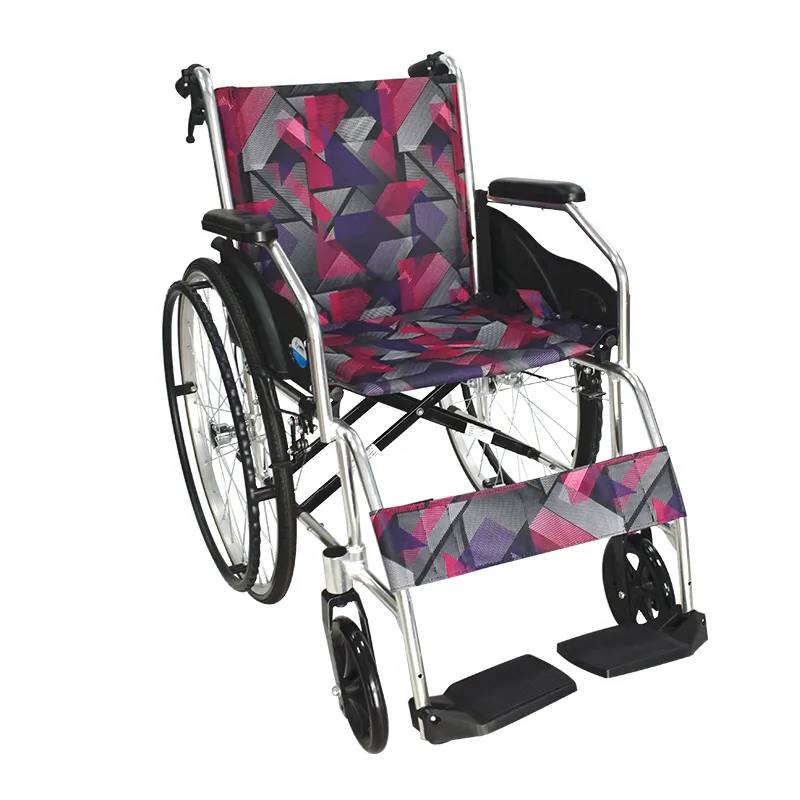
Whe wheel chairs are mainly for disabled individuals who cannot move about independently or who have to go on very long journeys or patients whose bodies cannot carry the weight of standing up. In these types of cases the chair carries the body and thus the user can travel without using any physical power. So for individuals with severe limitations on mobility, a wheelechair is a highly effective and needed device, and often the only viable option.
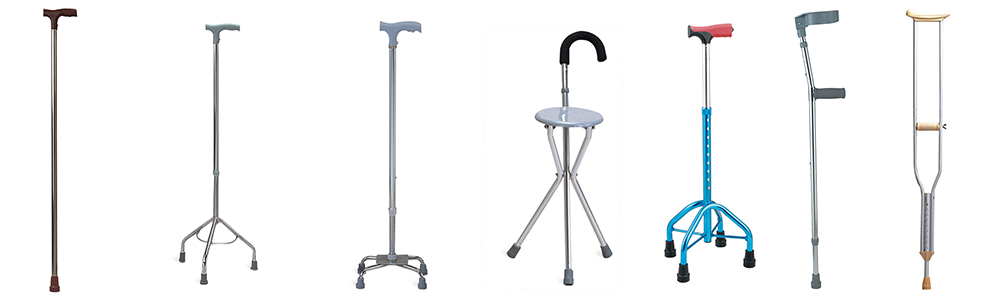
On the other hand, rollators are usually preferred for people who can still walk and have enough muscle strength, but they get tired very quickly and need to rest very frequently, or they don't have sufficient balance, or are in the later part of their lives that their legs don't carry as much weight anymore or they have joint problems that hurt them whenever they walk. The rollator doesn't replace walking itself but only supports the gait throughout walking helping to make the person stable and reduce the likelihood of falling.
In this way, from the viewpoint of rehabilitation, the rollators offer the highest therapeutic value in enabling patients to walk again. While walking the lower limb muscles are continuously activated; the joints are kept moving; the balance organs of the body are trained and the pulmonary system is to an extent also getting exercised.
Thereby, a rollator is no less than a walker and also no more than a wheelchair. When someone can walk quite safely, it can function as a rehabilitation aid.
To sum it up, if a person can still walk, and it has become difficult for that person to stay at one spot for longer than ten minutes due to a decline in physical stamina balance of the body has decreased or the joints are hurting then it is a very suitable and appropriate time to try a rollator instead of just getting the first wheens chair offered by the shop as the mobility device.
What factors are most relevant to someone's mobility needs to determine which one is the best choice?
A four-wheeled rollator is suitable for the following groups:
First, the older population whose muscle force and bone density are decreasing due to aging.
Different types of elderly persons can still walk independently but they are walking only for very short durations. After being on their feet for just a while, they get very tired, and their lower legs can feel quite weak. These are the people for whom a four-wheel rollator is the best choice because it offers them support and at the same time lets them walk in the usual manner that they are used to it thus preventing their body from being physically degraded due to prolonged wheelchair use.
Second, patients with various forms of arthritis, for example, knee osteoarthritis, hip disease, or even mild-moderate spinal degeneration often can be seen walking less and less until finally stopping entirely due to the level of pain their bones are suffering. A rollator can help them take the weight off one leg at a time and distribute it over a much larger area. Thus they can not only stand straight as possible without putting too much stress on painful joints but they are also likely to find walking less painful.
Additionally, many persons suffer from patients early and mid-stage of Parkinson's, stroke rehabilitation, people who have declined in cardiopulmonary function but still walk, those patients need to get their movement functions back as much as possible can significantly benefit from four-wheel rollators.
A rollator not only keeps them safe but also allows them to actively move which perfectly matches the modern rehabilitation concept of “preserving as much of the client’s function as possible”.
What are the advantages of a four-wheeled rollator compared to a regular walking aid?
Many consumers compare four-wheeled rollators with traditional walking aids. While both are walking assistance devices, the user experience differs significantly.
Traditional walking aids typically use a fixed frame structure, requiring users to repeatedly lift and lower the rollator before taking another step. This provides greater stability for users with strong upper limbs, but continuous use can increase fatigue in the shoulders, wrists, and arms. For older adults with limited mobility, long-distance use can be strenuous.
Four-wheeled rollators, on the other hand, feature a four-wheel rolling design. Users don't need to frequently lift the device; instead, they are naturally propelled in the direction of walking, resulting in a smoother gait and higher mobility. Furthermore, most four-wheeled rollators are equipped with ergonomic handles and dual-side handbrake systems, allowing for more precise speed control, especially on slopes, turns, or complex terrain, enhancing safety.
In addition, modern four-wheeled rollators typically include many practical features. For example, a foldable design makes them easy to store in a car trunk; storage bags can hold shopping items, water bottles, medicines, and other daily necessities; and a backrest seat allows users to sit down and rest when tired from walking. These seemingly simple design details significantly enhance the daily user experience and are a major reason for the increasing popularity of four-wheeled rollators in recent years.
How to Choose a Four-Wheeled Rollator That Truly Suits You?
The market offers a wide variety of four-wheeled rollators, ranging from lightweight home-use models to professional models for medical institutions. Different products vary in size, load-bearing capacity, materials, and features. Therefore, before purchasing, it is recommended to focus on the following aspects:
First, choose a handlebar height appropriate for the user's height. Handrails that are too high can cause shoulder tension, while handlebars that are too low will increase the degree of bending over; both will affect gait and comfort over long-term use. Generally, adjustable armrest height can meet the needs of different users and is an important feature of mainstream products.
Secondly, the overall load-bearing capacity of the vehicle needs attention. The load-bearing capacity of a typical four-wheeled rollator is usually around 100kg to 136kg, with some reinforced models reaching 150kg or even higher. If the user is heavier, a higher load-bearing model should be prioritized to ensure long-term stability.
Thirdly, the frame material should be considered. Currently, the market mainly uses aluminum alloy and steel frames. Aluminum alloy is lighter, easier to transport and fold, and suitable for daily household use; steel frames are more robust and suitable for high-intensity care environments. There is no absolute superiority or inferiority among different materials; the choice should be based on the actual usage scenario.
In addition, it is important to check the responsiveness of the braking system, the smoothness of wheel rotation, the ease of operation of the folding mechanism, and whether the seat size meets the user's needs. A well-designed four-wheeled rollator not only provides stable support but also maintains comfort and reliability during long-term use.
Yikang Medical®: Focusing on the Safety, Stability, and Long-Term User Experience of Assistive Mobility Devices
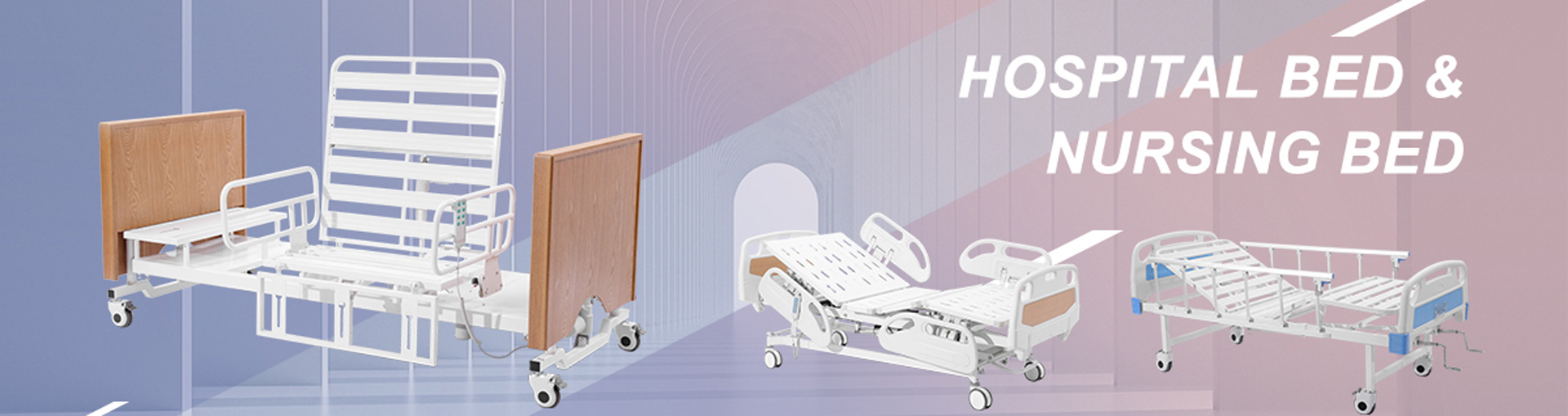
As global demand for rehabilitation and nursing care continues to grow, the design concepts of assistive mobility devices are also constantly evolving. Yikang Medical® has long been dedicated to the research and development and manufacturing of medical care equipment and rehabilitation assistive products, encompassing multiple series including wheelchairs, four-wheeled rollators, walking aids, nursing beds, and hospital beds, widely used in hospitals, elderly care facilities, rehabilitation centers, and home care settings.
In the manufacturing process of assistive mobility products, Yikang Medical® places great emphasis on product structural stability, ergonomic design, and long-term durability. For example, some four-wheeled rollators utilize a high-strength aluminum alloy frame, ensuring both lightweight construction and load-bearing capacity; the folding structure undergoes repeated durability testing for easy transportation and storage; ergonomic handrails, high-quality wheels, and a responsive dual-side braking system further enhance the comfort and safety of daily use.
As a company with many years of experience in manufacturing medical and nursing equipment, Yikang Medical® has established a relatively complete production management system. It has passed ISO9001 and ISO13485 quality management system certifications, and some products meet CE and FDA market access requirements. The company has a modern production base and automated manufacturing equipment, implementing standardized quality control in the production of wheelchairs, four-wheeled rollators, and other products, striving to provide stable and reliable rehabilitation and nursing equipment to customers worldwide.
It is worth emphasizing that, regardless of whether you choose a wheelchair or a four-wheeled rollator, the true determinant of effectiveness is not only the product itself, but also proper assessment, scientific selection, and standardized usage. Therefore, it is recommended that users consult with doctors, rehabilitation therapists, or professional sales personnel before purchasing, and choose the most suitable assistive device based on their own physical condition.
FAQ
FAQ 1: Is a four-wheeled rollator really better than a wheelchair?
It's not a simple matter of comparing which is better, but rather which is more suitable. If you can still walk safely, but have difficulty walking long distances, a four-wheeled rollator is generally more in line with rehabilitation principles; if you are unable to stand or walk independently, a wheelchair is safer and more practical.
FAQ 2: Who is most suitable to use a four-wheeled rollator?
Suitable for those with mild to moderate mobility loss, poor balance, easy fatigue, musculoskeletal diseases, some stroke rehabilitation patients, early to mid-stage Parkinson's disease patients, and elderly people who need to maintain walking ability long-term.
FAQ 3: Can a four-wheeled rollator completely replace a wheelchair?
No. A four-wheeled rollator is a walking assistance device that requires the user to have a certain level of standing and walking ability; a wheelchair is suitable for people who cannot walk safely or bear weight. The target audiences are different.
FAQ 4: What parameters should I pay most attention to when purchasing a four-wheeled rollator?
We recommend focusing on key factors such as frame material, overall weight, maximum load capacity, armrest adjustment range, wheel size, braking performance, folding mechanism, and whether it includes a seat, backrest, and storage pockets. Choose the appropriate model based on your intended use.
FAQ 5: What rehabilitation assistive products does Yikang Medical® primarily offer?
Yikang Medical® primarily researches and manufactures wheelchairs, four-wheeled rollators, walkers, hospital beds, nursing beds, toilet chairs, and other medical and rehabilitation assistive equipment. Our products are widely used in hospitals, nursing homes, rehabilitation centers, and home care settings. We are committed to providing stable, safe, and professional mobility assistance solutions to customers worldwide.