
As children with cerebral palsy grow, they often face varying degrees of challenges regarding motor control, muscle tone, balance, and postural stability. Consequently, they frequently require specialized care equipment in their daily lives to enhance mobility, improve sitting posture, and reduce the burden of care, while also enabling better participation in family, school, and social activities.
Among the various types of care equipment, wheelchairs designed for cerebral palsy are widely used assistive devices. Beyond merely facilitating mobility, they play a crucial role in helping children maintain a stable and safe sitting posture through proper seat support, postural adjustment, and body stabilization. For children with significant limitations in motor function, a suitable wheelchair is not simply a means of transport; it is a vital assistive system that bridges rehabilitation training, daily living, independent activity, and social participation.
However, many parents fall into a common misconception: believing that purchasing a wheelchair will solve all their child's mobility and care-related issues. In reality, the care needs of children with cerebral palsy are multifaceted. It is necessary to establish a comprehensive system—tailored to the child's age, motor abilities, muscle tone, physical development, and home environment—that incorporates wheelchairs, postural support devices, standing frames, transfer aids, and daily living aids.
Relevant pediatric and rehabilitation guidelines also indicate that children with cerebral palsy often require a combination of wheelchairs, adapted seating, standing frames, orthoses, and assistive technology devices to support mobility and daily functioning.
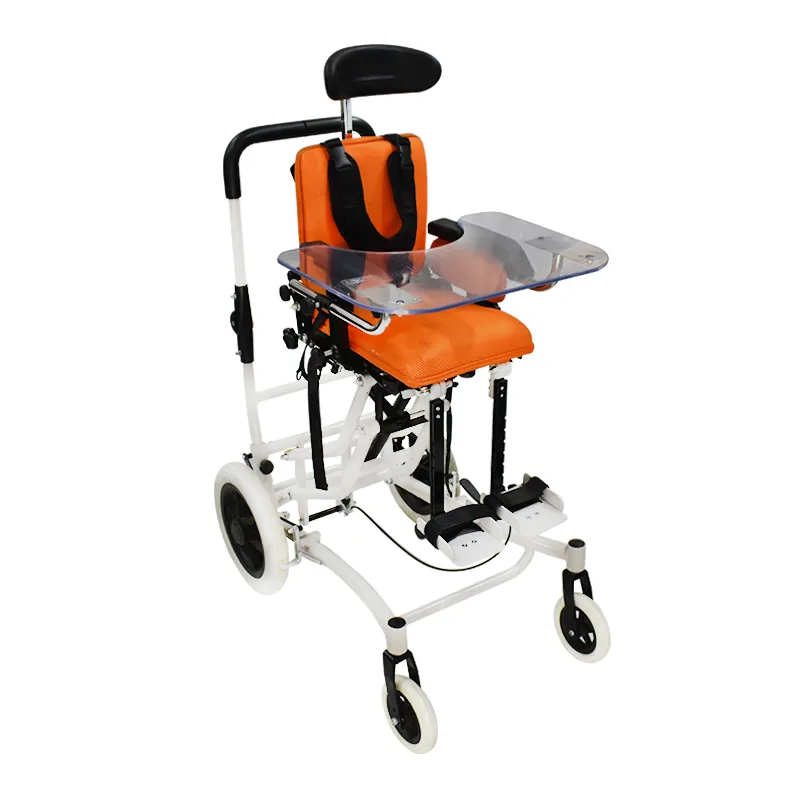
Why do children with cerebral palsy need specialized care equipment?
Cerebral palsy is a neurodevelopmental disorder affecting movement and postural control, with manifestations varying greatly from child to child. Some children can walk independently and require only minimal assistance, whereas others may experience significant muscle tone abnormalities, limited limb mobility, and an inability to sit independently, necessitating long-term reliance on assistive devices for mobility and daily care.
Standard children's chairs, strollers, or conventional wheelchairs often fail to meet the specific physical needs of children with cerebral palsy. This is because the challenges faced by these children extend beyond the inability to walk and include:
First, insufficient postural stability. For instance, some children tend to lean to one side or lack adequate head control, making it difficult for them to maintain a correct sitting posture for extended periods.
Second, abnormal muscle tone. For instance, children with spastic cerebral palsy may experience muscle stiffness and limited joint mobility; maintaining incorrect postures over the long term can further impact their physical development.
Third, there is often a lack of independent mobility. Some children cannot propel standard wheelchairs themselves and require electric drive systems or assistance from caregivers.
Fourth, prolonged sitting can increase the risk of pressure-related issues. If the seat support and cushion are not properly selected, areas such as the buttocks and sacrum may be subjected to continuous pressure.
Therefore, the core objective of care equipment is not merely to replace physical functions, but to help the child achieve greater independence and comfort based on their existing capabilities.
Why are wheelchairs for cerebral palsy central to the system of care equipment?
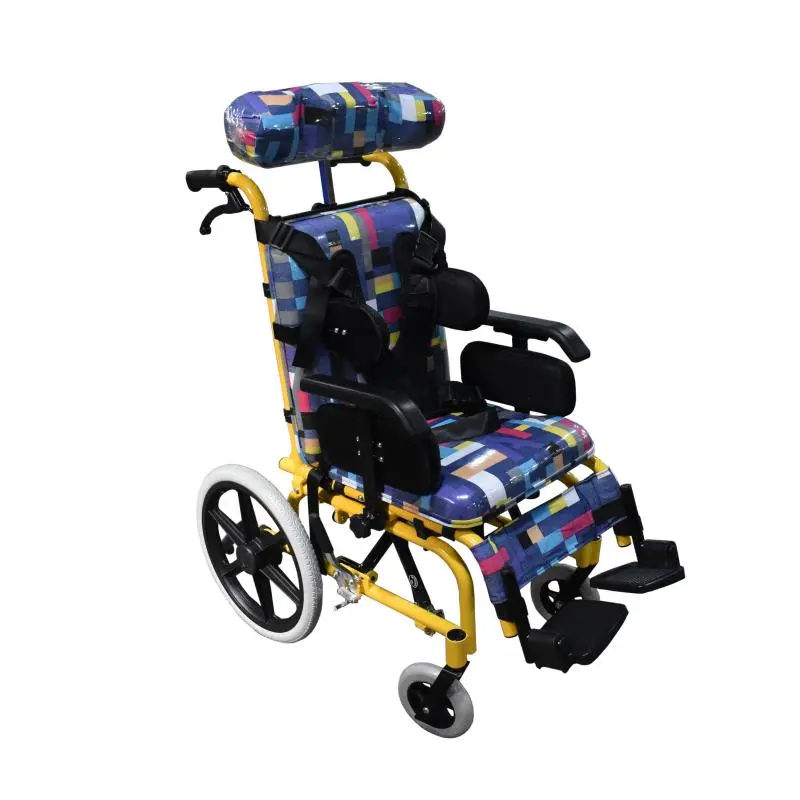
Among the various assistive devices used by children with cerebral palsy, the specialized wheelchair usually plays a central role because it addresses three key issues simultaneously: mobility, postural management, and daily participation.
While standard wheelchairs focus primarily on the ability to move, specialized cerebral palsy wheelchairs focus more on how to move while seated safely and stably.
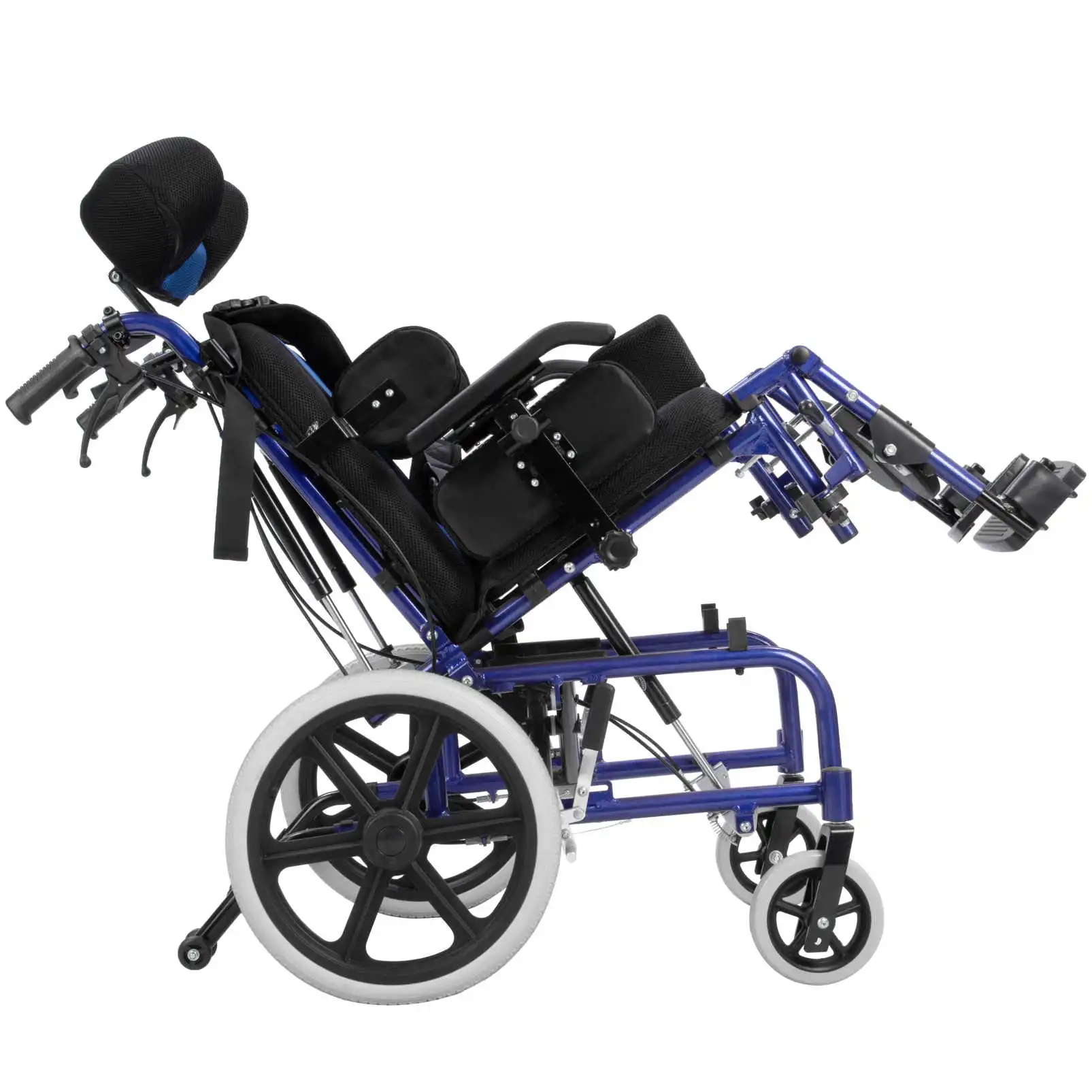
For example, some children with cerebral palsy experience issues such as posterior pelvic tilt, lateral leaning, or poor head control. Sitting directly in a standard wheelchair could lead to sliding, tipping sideways, or maintaining abnormal postures over time. In contrast, specialized cerebral palsy wheelchairs typically incorporate features such as:
•Adjustable backrests;
•Head supports;
•Lateral support pads;
•Pelvic stabilization belts;
•Adjustable footrests;
•Specialized seat cushions;
•Tilt-in-space or recline functions.
These design features help children maintain better body alignment, thereby enhancing both comfort and safety.
Research and clinical practice indicate that for children with cerebral palsy, a well-designed functional seating system can improve pelvic stability, trunk control, and upper-limb mobility. Some studies recommend configuring functional seating systems—including pelvic stabilization, footrests, and lateral supports—based on the child's specific needs.
Therefore, when selecting a wheelchair for a child with cerebral palsy, one should not focus solely on size and price, but rather on whether the chair suits the child's current physical condition.
How should wheelchairs be selected for children with different types of cerebral palsy?
Motor abilities vary significantly among children with cerebral palsy; consequently, wheelchair selection must be tailored to specific individual needs. For children with mild movement impairments who possess sufficient upper-body strength to propel a wheelchair themselves, a lightweight manual wheelchair designed for cerebral palsy may be considered. These models are typically lightweight and highly maneuverable, helping to foster the child's ability to move independently.
For children with moderate to severe cerebral palsy who lack the upper-body control to continuously propel the wheels, an electric wheelchair is an option. Powered by a controller, motor, and battery, electric wheelchairs reduce the physical strain of movement and expand the child's range of activity.
For children with significant postural control issues, priority should be given to wheelchairs that offer postural support features. Examples include:
•Lateral supports for children prone to leaning sideways;
•Headrests for those with insufficient head control;
•Pelvic positioning aids for those with poor pelvic stability;
•Pressure-relieving cushions for those who spend long periods in the wheelchair.
It is important to note that more features do not necessarily equate to a better wheelchair. Excessive support—if not professionally adjusted—can actually restrict a child's active movement. Therefore, the selection process should be guided by the principle of "meeting specific needs" rather than simply pursuing complex configurations.
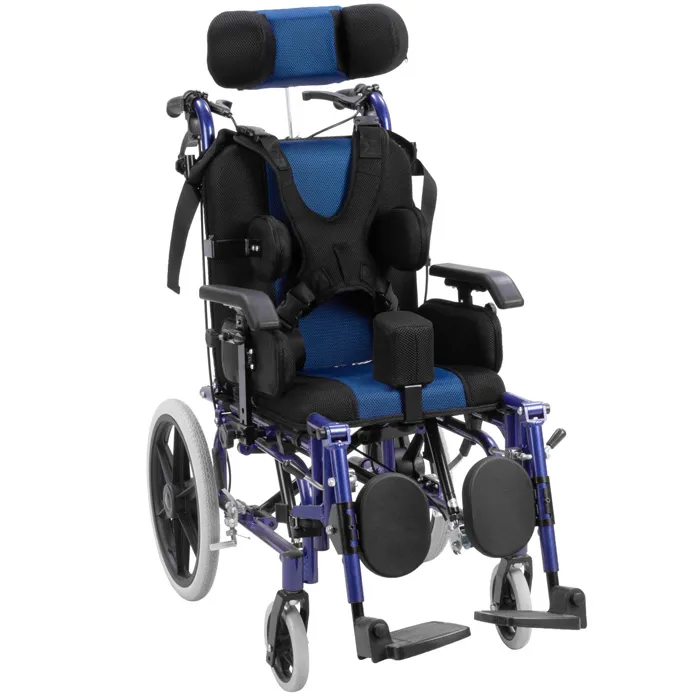
For Cerebral Palsy Wheelchairs, Postural Management Is More Important Than Mobility
When purchasing a wheelchair for a child with cerebral palsy, many parents focus first on wheel size, folding mechanisms, and price; however, for these children, postural management is often more critical than mobility itself.
A correct sitting posture typically involves:
•Maintaining pelvic stability;
•Providing effective back support;
•Positioning the head for good control;
•Supporting the feet;
•Positioning the arms to allow for easy movement.
Guidelines on posture suggest that when seated in a wheelchair, a child should maintain an upright back and keep their hips positioned well back in the seat. Arms and legs should be properly supported, and straps or footrests should be used to minimize sliding.
If a child with cerebral palsy remains in an incorrect sitting posture for extended periods, it can negatively affect:
•Spinal alignment;
•Hip joint development;
•Joint range of motion;
•Respiratory function;
•Upper-limb functional ability.
Thus, a high-quality wheelchair for cerebral palsy does more than just aid mobility; it helps maintain the child's physical function.
What other care equipment is needed besides a wheelchair?
While wheelchairs designed for cerebral palsy are essential equipment, a comprehensive care system often requires other assistive devices as well.
1. Postural Support Seating
For younger children or those unable to sit independently, specialized seating helps maintain proper posture during activities such as eating, studying, and playing.
Such equipment typically features:
•Height adjustment capabilities;
•Back support;
•Lateral support;
•Secure restraint systems.
These seats reduce the time a child spends lying down and increase opportunities for participation in family activities.
2. Standing Frames
Some children with cerebral palsy cannot stand independently and require standing frames to facilitate weight-bearing exercises.
The benefits of standing equipment include:
•Promoting weight-bearing in the lower limbs;
•Helping to maintain joint mobility;
•Improving body posture;
•Increasing opportunities for interaction with others.
Professionals should assess the child's physical condition to determine the suitability of standing training and the appropriate duration of use.
3. Orthoses
Orthoses—such as Ankle-Foot Orthoses (AFOs)—are also common assistive devices for children with cerebral palsy.
Their primary functions include:
•Improving foot positioning;
•Restricting abnormal movements;
•Providing joint stability.
However, orthoses require periodic adjustments to accommodate the child's growth; failure to adjust them as the child develops can compromise comfort.
4. Transfer Aids
For children who are gaining weight but have limited mobility, the physical strain of repeatedly lifting and transferring them can place a heavy burden on caregivers.
Consequently, some families utilize:
•Patient lifts (hoists);
•Transfer boards;
•Lifting aids.
These devices not only assist with the child's mobility but also reduce the risk of back and lumbar injuries for caregivers.
5. Communication Aids
Some children with cerebral palsy experience difficulties with verbal expression and require assistive communication devices, such as picture exchange systems or electronic communication aids.
Mobility and communication skills are closely linked; the ability to move more freely within home, school, and social environments helps increase opportunities for participation.
What factors should be considered when selecting a wheelchair for a child with cerebral palsy?
When choosing a wheelchair, one should not focus solely on the child's current age but must also consider their growth and development over time.
Key specifications for wheelchairs designed for children with cerebral palsy include:
(1) Seat Width
The seat width must suit the child's current body size while allowing reasonable room for growth. A seat that is too wide reduces support, while one that is too narrow causes compression.
(2) Seat Depth
Depth affects thigh support. Excessive depth can interfere with knee positioning, while insufficient depth fails to provide adequate support.
(3) Backrest Height
Children with limited head and trunk control require a backrest that offers higher support.
(4) Weight Capacity
As children grow rapidly, the wheelchair must accommodate future usage needs. Pediatric models typically support weight ranges of approximately 40–80 kg; the specific choice depends on the product design.
(5) Adjustability
"Growth-friendly" wheelchairs for cerebral palsy often allow adjustments to seat width, footrest height, and backrest angle, thereby extending the product's lifespan.
What are the biggest challenges when purchasing a wheelchair for a child with cerebral palsy?
A common issue when selecting care equipment for children with cerebral palsy is that parents often do not know how to determine if the equipment is truly suitable for their child.
Many families encounter the following situations:
First, purchasing based solely on age.
Physical capabilities can vary significantly among children of the same age; therefore, age should not be the primary criterion for selection.
Second, focusing only on price.
Low-priced wheelchairs may lack necessary adjustment features, whereas products with excessive features—if ill-fitting—can result in wasted resources.
Third, purchasing equipment without making adjustments.
As children with cerebral palsy grow and change physically, the wheelchair's dimensions, support positioning, and cushion pressure distribution require regular checks.
Fourth, treating the wheelchair as a substitute for rehabilitation therapy.
Wheelchairs for cerebral palsy are designed to assist with daily living and enhance participation; they cannot replace rehabilitation therapy.
The professional approach involves a collaborative assessment by rehabilitation therapists, physicians, parents, and equipment suppliers to select equipment based on the child's specific goals.
How can a proper care equipment system be established for children with cerebral palsy?
A comprehensive care equipment system should generally be built around five key areas: mobility, posture, daily living, self-care, and rehabilitation.
Mobility:
Select manual wheelchairs, electric wheelchairs, or other mobility aids based on the child's capabilities.
Posture:
Configure appropriate seat cushions, backrests, lateral supports, and head supports.
Daily Living:
Select assistive devices suitable for eating, bathing, and sleeping.
Rehabilitation:
Incorporate standing frames, training equipment, and orthoses.
Home Environment:
Adjust doorway widths, install ramps, and add bathroom assistive facilities based on the child's needs.
Equipment needs vary depending on the child's GMFCS (Gross Motor Function Classification System) level. For instance, children with limited motor ability may rely more on wheelchairs and postural support systems, whereas those with better motor skills might focus more on training and enhancing independent mobility. Relevant clinical guidelines emphasize integrating assistive devices with functional training, tailored to the child's goals and actual living environment.
FAQ
Q1: Do children with cerebral palsy necessarily need a specialized cerebral palsy wheelchair?
Not necessarily. Some children with mild cerebral palsy can walk independently and may only require other assistive devices. However, for children with limited mobility or difficulties with postural control, a specialized cerebral palsy wheelchair can provide crucial support.
Q2: Can a standard pediatric wheelchair replace a specialized cerebral palsy wheelchair?
This is generally not recommended. Standard wheelchairs primarily address mobility, whereas specialized cerebral palsy wheelchairs focus more on postural support, body stabilization, and long-term seated posture management.
Q3: How often should a cerebral palsy wheelchair be replaced?
There is no fixed schedule; the decision depends on the child's growth rate, physical changes, and the wear and tear of the equipment. During periods of rapid growth, the size may need to be adjusted periodically.
Q4: Should a child with cerebral palsy choose a manual or an electric wheelchair?
The choice depends on the child's upper-limb function, cognitive ability, mobility needs, and home environment. Children capable of self-propulsion might consider a manual wheelchair, while those unable to propel effectively could be evaluated for an electric wheelchair.
Q5: Is a more expensive cerebral palsy wheelchair with more features always better?
No. The key is whether it meets the child's specific needs. Insufficient features fail to provide adequate support, while excessive features that do not fit the child's needs are equally ineffective.