
As the population ages and the need for mobility solutions and long-term care grows, electric wheelchairs are evolving to offer greater comfort, functionality, and personalization. High-back electric wheelchairs have become a key product in the home care, elderly care, and rehabilitation equipment markets; they provide extensive back support and often feature options such as headrests, reclining backrests, and tilt-in-space seating.
However, high-back power wheelchairs come in various types. Models differ in terms of backrest structure, seat adjustment mechanisms, drive systems, battery range, and intended usage environments. An unsuitable choice can lead to discomfort, body slippage, difficulty maneuvering indoors, or excessive maintenance costs. Therefore, understanding the different types, benefits, and key selection criteria helps users and purchasers find the most appropriate product.
What Is a High-Back Electric Wheelchair?
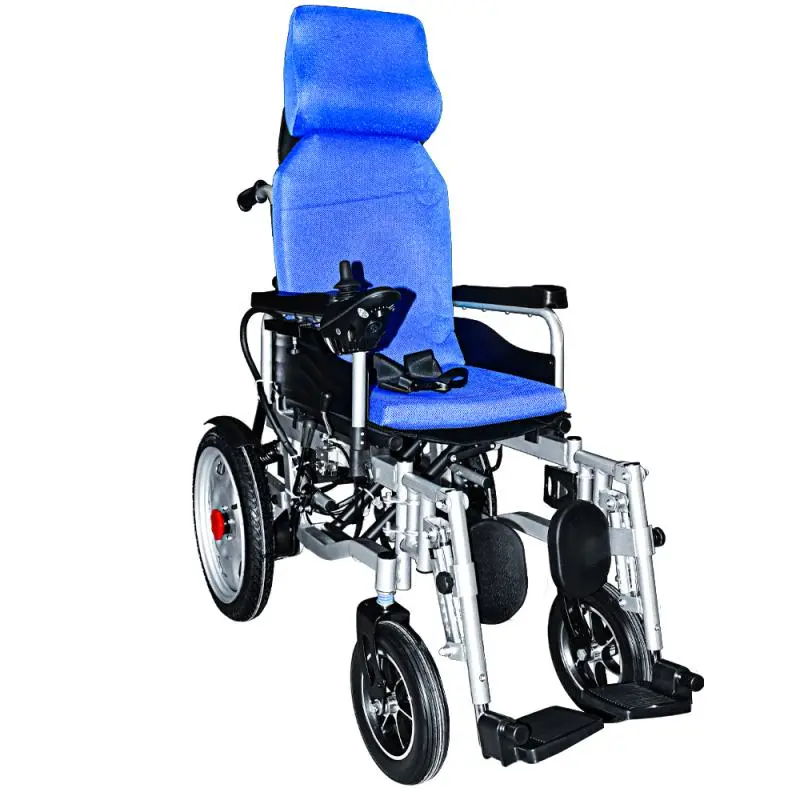
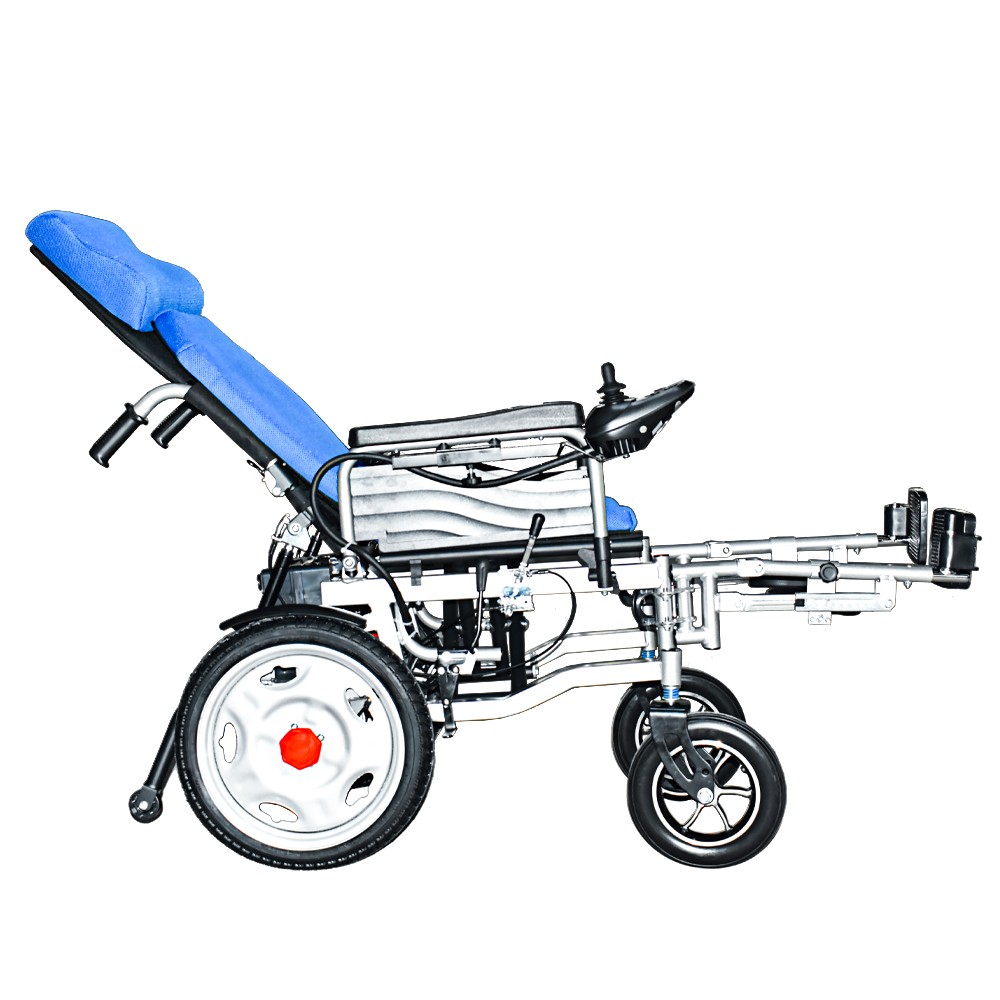
A high-back electric wheelchair is a battery- and motor-powered wheelchair featuring an extended backrest. Users typically control movement—forward, backward, turning, and speed—via a joystick, eliminating the physical exertion required for manual propulsion. Some models include features like headrests, adjustable backrests, power leg rests, or tilt functions to meet specific postural support needs.
The primary distinction between high-back wheelchairs and standard models lies in the backrest height and support structure. While standard electric wheelchairs prioritize daily mobility, portability, and maneuverability, high-back models focus more on back support and postural positioning for specific users.
It is important to note that a high backrest does not automatically imply head and neck support, nor does it guarantee the ability to recline fully flat. The actual level of support depends on factors such as backrest shape, headrest configuration, seat dimensions, and the user's physical condition. Consequently, purchasing decisions should not rely solely on the product name; one must also consider the user's postural control, the duration of daily use, and the environment in which the wheelchair will be operated.
What Are the Different Types of High-Back Electric Wheelchairs?
High-back electric wheelchairs can be classified based on their seat adjustment functions and drive mechanisms. There may be overlap between categories; for instance, a rear-wheel-drive wheelchair might also feature an electric recline function.
1. Fixed High-Back Electric Wheelchairs
Fixed high-back power wheelchairs feature a backrest set at a fixed angle and typically lack electric recline or seat tilt functions. Their structure is relatively simple and operation intuitive, making them suitable for users who primarily require powered mobility and basic back support.
These wheelchairs are generally suited for use in homes, senior living communities, and for short daily outings. Their advantages include simplicity and ease of maintenance, though the backrest angle cannot be adjusted to accommodate user fatigue. For users requiring prolonged sitting, factors such as seat width, backrest curvature, cushion support, and headrest positioning remain important considerations.
2. Electric Reclining High-Back Wheelchairs
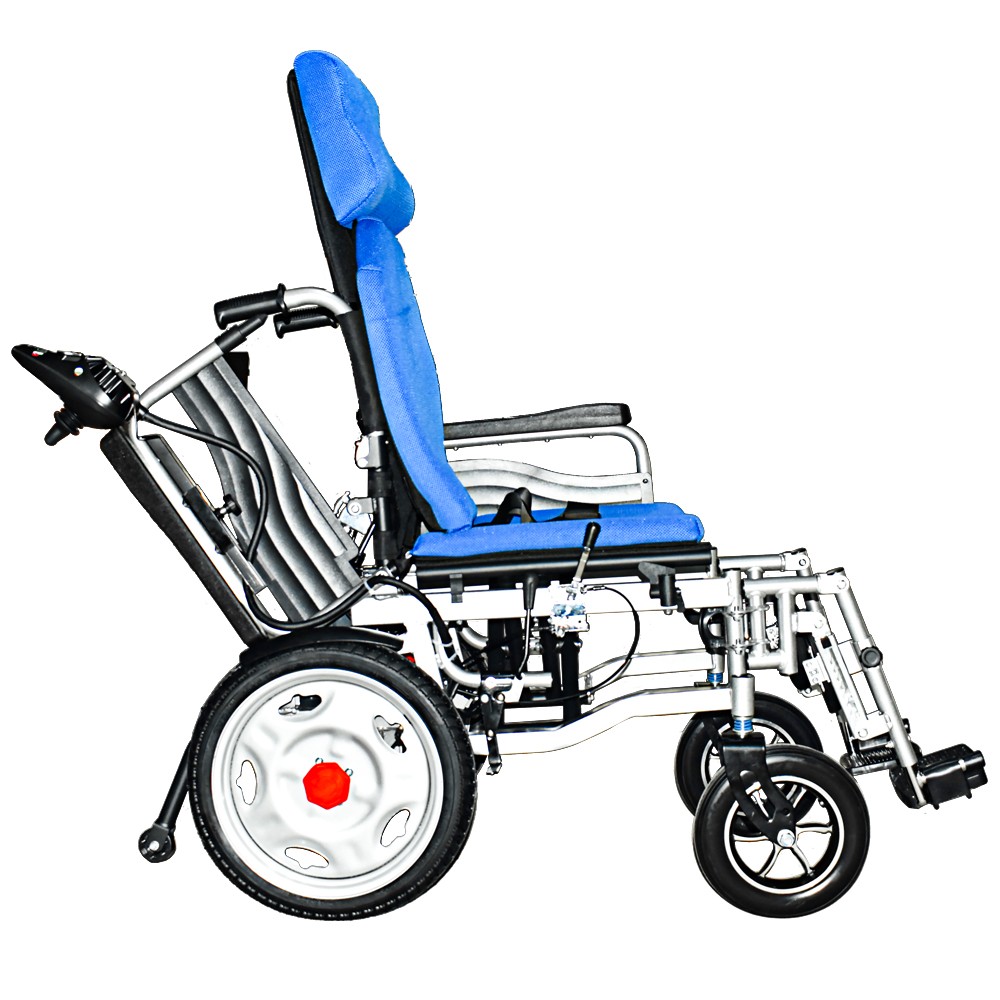
Electric reclining high-back wheelchairs allow users to adjust the backrest angle via a control device, enabling transitions between a more upright posture and a reclined position. Some models offer independent backrest adjustment, making them suitable for users who need to change their sitting position to alleviate fatigue caused by maintaining a static posture.
However, adjusting only the backrest angle can cause the body to slide forward on the seat, increasing the risk of skin friction and shear forces. Therefore, when selecting a model, one should evaluate the backrest adjustment range, seat structure, and safety features. Users unable to adjust their own posture independently should undergo a professional assessment first.
3. Tilt-in-Space High-Back Electric Wheelchairs
Tilt-in-space high-back electric wheelchairs allow the entire seat and backrest assembly to tilt backward while maintaining the relative angle between them. Compared to simple reclining, this design helps minimize body sliding against the seat and offers more adjustment options for users requiring additional postural support.
These wheelchairs are suitable for users who cannot maintain a stable sitting position for extended periods, require caregiver assistance for repositioning, or need more systematic postural management. However, the tilt function alone cannot prevent pressure injuries; it must be combined with appropriate cushions, skin inspections, and routine care.
4. Multifunctional High-Back Electric Wheelchairs with Recline and Tilt Functions
Multifunctional high-back electric wheelchairs typically combine features such as backrest recline, seat tilt, and power leg rests; some models also include adjustable headrests, lateral supports, or adjustable armrests. These features offer users a wider range of seating positions and can alleviate the burden on caregivers to manually adjust the user's posture in certain caregiving scenarios.
However, more features do not necessarily mean a model is suitable for every user. Multifunctional models may be heavier and more expensive, and their operation and maintenance can be more complex. Before purchasing, it is important to verify that the features truly meet the user's needs and that the control system is simple and easy to use.
5. High-Back Wheelchairs Categorized by Drive Configuration
High-back power wheelchairs can also be classified by their drive systems, such as rear-wheel drive, front-wheel drive, and mid-wheel drive. Rear-wheel drive models generally prioritize stability when driving in a straight line; front-wheel drive models offer specific advantages when navigating certain obstacles or turning; mid-wheel drive models typically emphasize a tight turning radius, making them suitable for indoor environments with limited space.
Actual performance also depends on factors such as track width, wheelbase, tires, ground clearance, and the control system. When making a selection, consider the conditions of home entryways, hallways, ramps, and outdoor terrain; one cannot judge a wheelchair's maneuverability or ability to navigate obstacles based solely on the drive configuration.
What Are the Benefits of High-Back Electric Wheelchairs?
1. Provides Enhanced Back Support
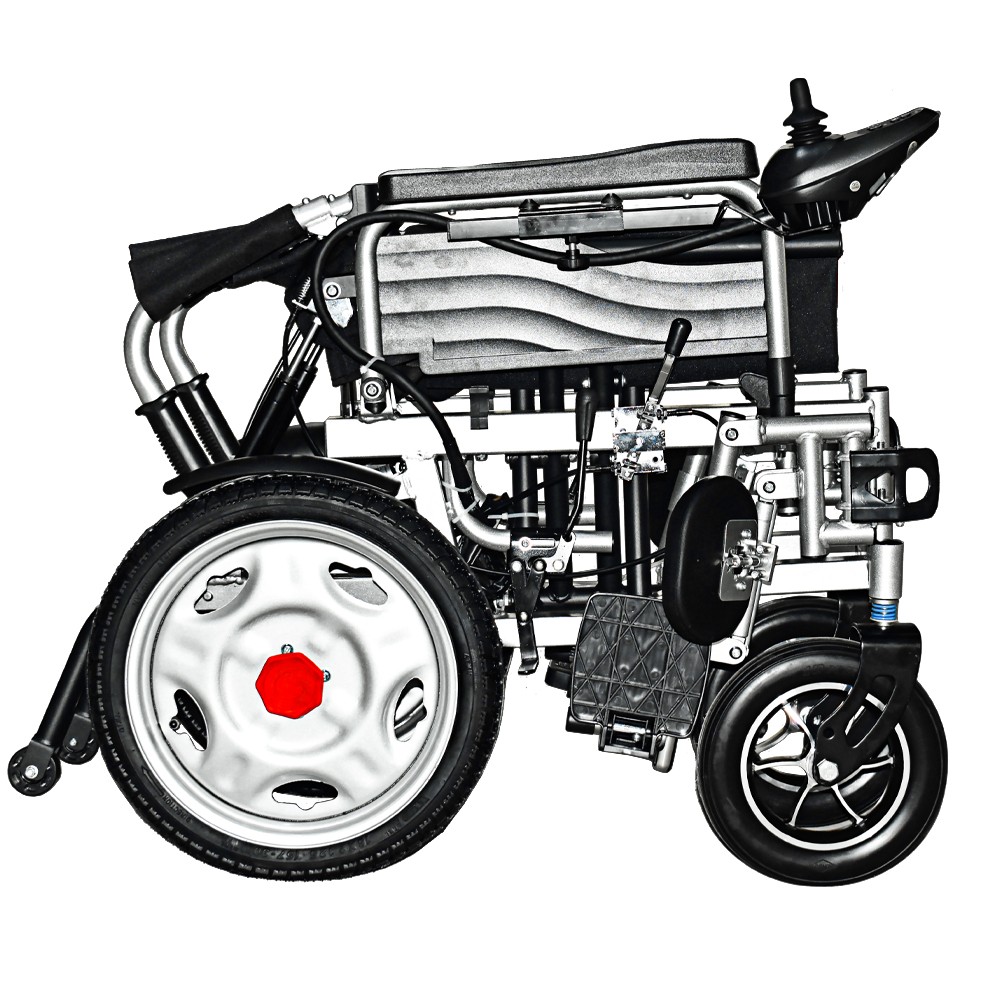
High-back electric wheelchairs cover a larger area of the back, offering assistance to users who have limited trunk stability, are prone to postural fatigue, or require extra support. When paired with appropriate headrests, lumbar support, and lateral supports, they can further improve seating stability.
However, a higher backrest does not automatically guarantee greater comfort. Discomfort can still arise if the backrest is too rigid, its contours do not match the user's body shape, or the headrest is incorrectly positioned. Therefore, the backrest height and support contours should align with the user's actual body measurements.
2. Improves Comfort During Prolonged Use
For users who need to sit in an electric wheelchair for several hours a day, maintaining the same posture for extended periods can lead to fatigue and localized discomfort. Some high-back power wheelchairs allow users to alter their body position through backrest recline or seat tilt functions, offering a wider range of adjustment options.
Actual comfort depends on factors such as cushion material, seat dimensions, weight distribution, and the usage environment. When purchasing, prioritize ensuring a proper fit rather than focusing solely on backrest height or the number of adjustment features.
3. Offering more options for pressure management
Maintaining a static seated position for extended periods can increase the risk of sustained pressure on areas such as the buttocks and ischial tuberosities. Seat tilt functions can shift body weight distribution between the seat and backrest, allowing some users to improve pressure management through appropriate postural adjustments.
It is important to emphasize that a high-back electric wheelchair alone cannot guarantee the prevention of pressure ulcers. Pressure-redistributing cushions, regular postural management, skin inspections, and professional care are equally vital. Users at high risk of pressure injuries should have a suitable seating management plan developed by rehabilitation or clinical professionals.
4. Supporting head, neck, and trunk stability for some users
Some high-back electric wheelchairs feature adjustable headrests, lateral supports, and pelvic positioning components, providing extra support for users with limited head control or insufficient trunk stability. However, these components must be positioned correctly and should not be added or adjusted arbitrarily. Users with significant trunk leaning or postural control issues should prioritize a professional seating assessment.
5. Alleviating some daily caregiving burdens
Features such as electric recline, seat tilt, and electric leg rests can reduce the need for caregivers to manually adjust seating positions and facilitate daily hygiene, rest, and caregiving tasks. However, an electric wheelchair cannot replace a nursing bed, nor can it automatically resolve all transfer issues. The product must still align with the user's care routine and actual environment.
What specifications should be considered when purchasing a high-back wheelchair?
Purchasing a high-back power wheelchair requires looking beyond price or advertised features. Users should focus on seat dimensions, weight capacity, battery range, and maneuverability; purchasers should also evaluate product reliability, maintenance costs, and the availability of spare parts.
| Specification | What to Check | Why It Matters |
| Seat Width | Commonly around 16–22 in (41–56 cm) | Helps match the user's body size |
| Seat Depth | Commonly around 16–20 in (41–51 cm) | Supports the thighs without pressing behind the knees |
| Backrest Height | Varies by model | Determines the available back and head support |
| Weight Capacity | Manufacturer's rated load | Ensures the chair suits the user's weight |
| Driving Range | Manufacturer's stated range | Actual range varies with load, terrain, and battery condition |
| Turning Radius | Check the full chair configuration | Important for narrow indoor spaces |
| Seating Functions | Fixed back, recline, tilt, leg rest | Should match the user's posture needs |
| Overall Dimensions | Width, length, transport size | Determines access through doors and storage spaces |
1. Seat Dimensions and Weight Capacity
A seat that is too narrow may compress the hips and thighs, while one that is too wide may compromise lateral support; a seat that is too deep may put pressure on the back of the knees (popliteal fossa), whereas one that is too shallow fails to provide adequate thigh support. Therefore, before purchasing, measure the user's hip width and thigh length, and determine the appropriate seat dimensions based on their actual sitting posture.
Additionally, verify the wheelchair's rated weight capacity to ensure it can support the user along with any items carried daily. For users requiring extra cushions, lateral supports, or other accessories, confirm whether these additions affect the effective seat dimensions.
2. Battery Range and Driving Performance
The actual range of an electric wheelchair is influenced by factors such as user weight, road surface, incline, speed, temperature, and battery condition; thus, the range figures specified by manufacturers do not necessarily equate to the distance covered in daily use. Users who primarily stay indoors should prioritize turning radius, low-speed control, and braking performance, while those who frequently travel outdoors should focus on tires, ground clearance, climbing ability, and battery range.
When purchasing, also verify battery replacement costs, charger specifications, and after-sales service options to minimize long-term maintenance risks.
3. Seat Adjustment Features and Ease of Operation
If the user needs to adjust their posture frequently, consider models with electric recline or tilt-in-space functions; if the chair is intended mainly for short-distance daily mobility, a fixed high-back wheelchair may suffice. When selecting a model, check the adjustment range, control logic, and safety limits, and ensure that the headrest, leg rests, and armrests can be adjusted to suitable positions.
Common Issues and Solutions for High-Back Electric Wheelchairs
Question 1: Why is it still uncomfortable to sit in a high-backed wheelchair?
Common causes include improper seat dimensions, a backrest curve that does not match the user's anatomy, incorrect headrest positioning, or insufficient cushion support. The solution is to re-evaluate seat width, depth, and body support points rather than simply switching to a taller backrest.
Question 2: Why does the body slide forward when the wheelchair reclines?
Reclining the backrest alone alters the angle between the backrest and the seat surface, which can cause the body to shift relative to the cushion. Suitability for the recline function should be assessed based on the user's physical condition; consider "tilt-in-space" (whole-seat tilt) if necessary, and have a professional check pelvic positioning and support configuration. Tightening the seatbelt cannot compensate for issues arising from poor seat design or a mismatch with the user's posture.
Question 3: Why are high-back power wheelchairs not suitable for every household?
Some multi-functional models are bulky and have large turning radii, making it difficult to navigate narrow doorways or maneuver within small bathrooms. Before purchasing, measure door widths, hallways, and primary activity areas to ensure the wheelchair can pass through easily.
Question 4: How can long-term maintenance costs be minimized?
Prioritize products with reliable after-sales service and stable spare parts availability. Regularly inspect the battery, tires, brakes, controller, and electric adjustment mechanisms. If you notice abnormal overheating, control malfunctions, braking issues, or a failure of the seat mechanism to lock properly, stop using the chair and contact a professional technician.
FAQ: Common Questions About High-Back Electric Wheelchairs
1. Who is a high-back electric wheelchair suitable for?
It is suitable for users who require extra back support, are prone to postural fatigue, or need specific postural adjustment functions. The specific model should be selected based on the user's body dimensions and postural control capabilities.
2. Is a high-back wheelchair necessarily better than a standard electric wheelchair?
Not necessarily. While high-back wheelchairs offer a larger area of back support, standard electric wheelchairs may be lighter and easier to maneuver. The choice should be based on actual usage needs.
3. What is the difference between electric recline and seat tilt?
Electric recline primarily changes the angle between the backrest and the seat surface; seat tilt (tilt-in-space) tilts the entire seat unit—seat and backrest together—while maintaining the relative angle between them. They affect body sliding and pressure distribution differently.
4. Can a high-back power wheelchair prevent pressure ulcers?
A high-back design alone cannot prevent pressure ulcers. Appropriate seat cushions, postural management, skin inspections, and professional care are equally important.
5. What are the most important specifications to consider when buying a high-back wheelchair?
Priority should be given to seat width and depth, rated load capacity, overall dimensions, turning radius, driving range, braking performance, and seat adjustment functions, while ensuring these specifications meet the user's actual needs.