

As assistive technology for rehabilitation evolves, electric wheelchairs have progressed from simple mobility aids to devices that support mobility, postural management, and rehabilitation. Standing electric wheelchairs, in particular, are attracting increasing attention from individuals who rely on wheelchairs for long-term use. Unlike standard electric wheelchairs, which are limited to a seated position during movement, standing electric wheelchairs feature an electric standing system. This system provides safe support to help users transition gradually from a seated to a standing position, thereby adding postural adjustment and standing capabilities to standard mobility functions.
Standing power wheelchairs can offer significant practical value for individuals with spinal cord injuries, paraplegia, certain neurological conditions, or those unable to stand independently for extended periods. However, they are not suitable for every patient with limited mobility. Selecting an electric wheelchair—especially a standing model—requires a comprehensive assessment of the patient's physical function, standing requirements, seating fit, home environment, and the device's safety features.
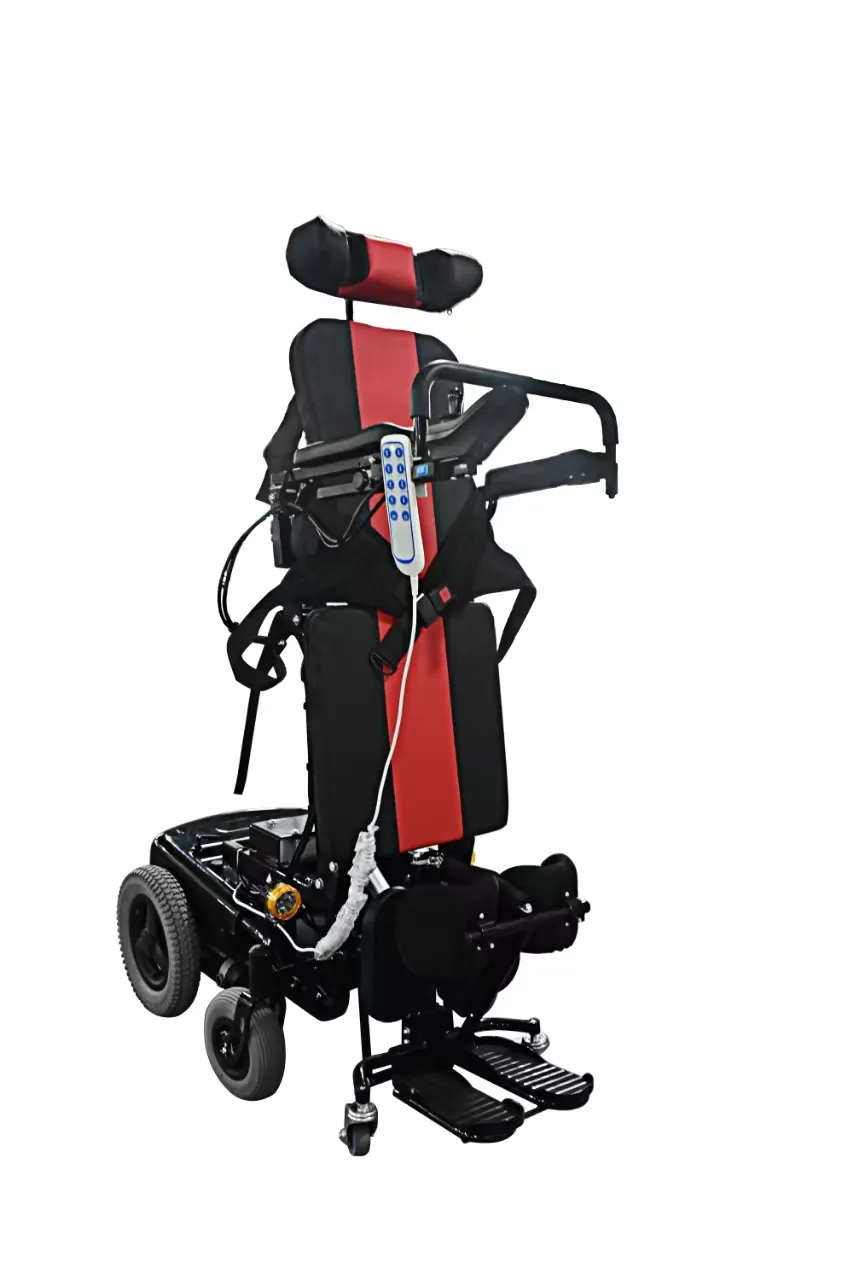
What is a standing electric wheelchair?
A standing electric wheelchair can be defined as a comprehensive electric wheelchair that incorporates an "assisted standing function" into the traditional design. Users sit normally and operate the chair—moving forward, backward, or turning—via a controller. When standing is required, an electric actuation system adjusts the seat, backrest, and leg and foot supports, allowing the body to transition smoothly from a seated to a standing position.
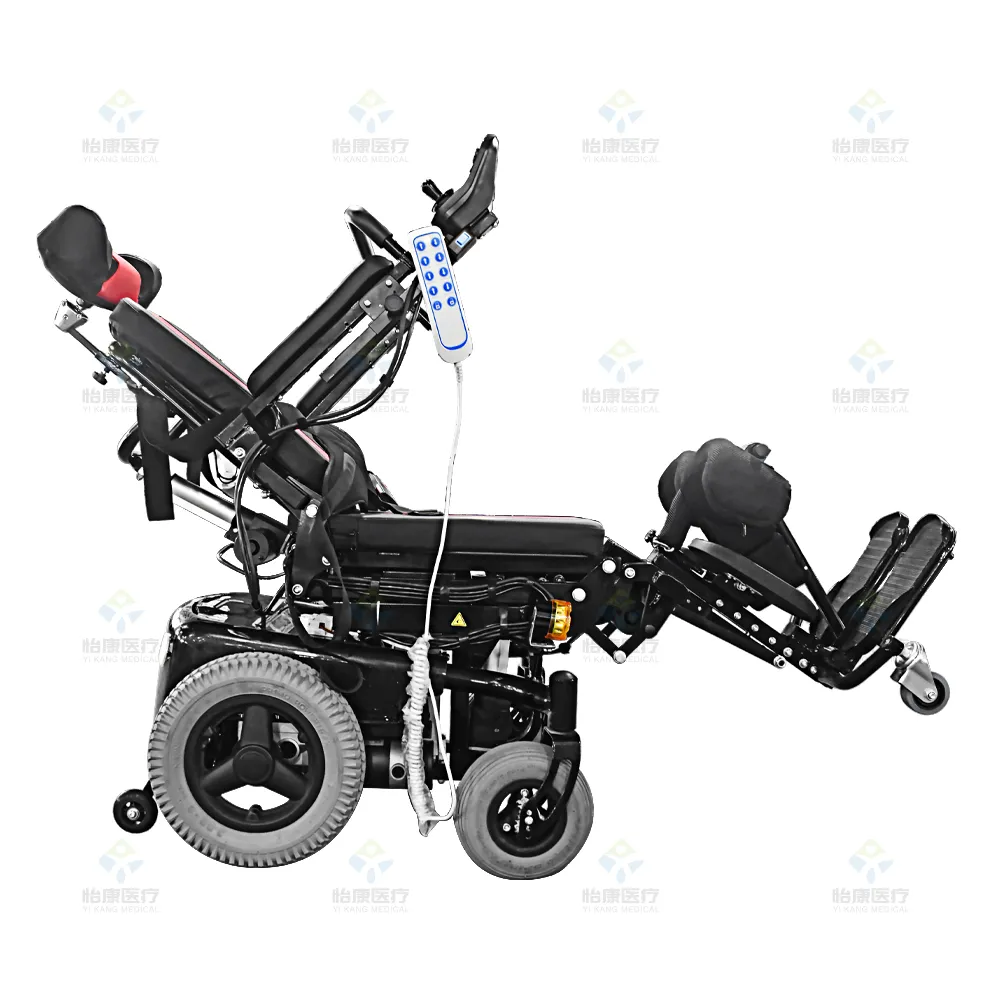
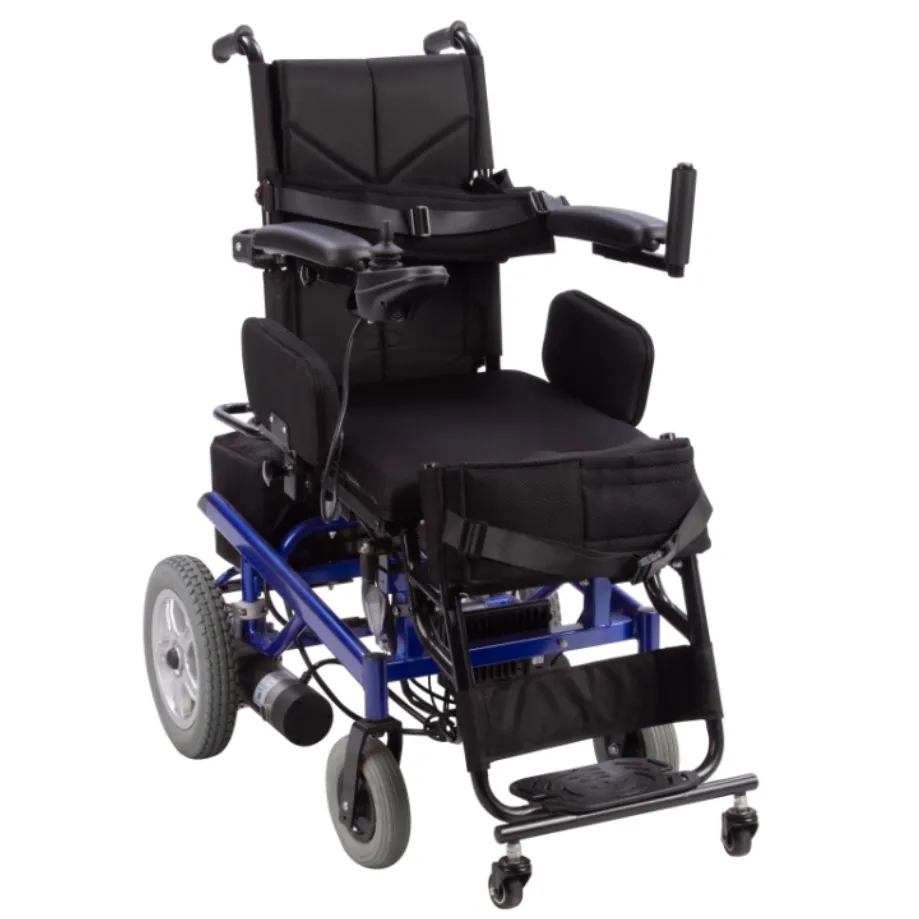
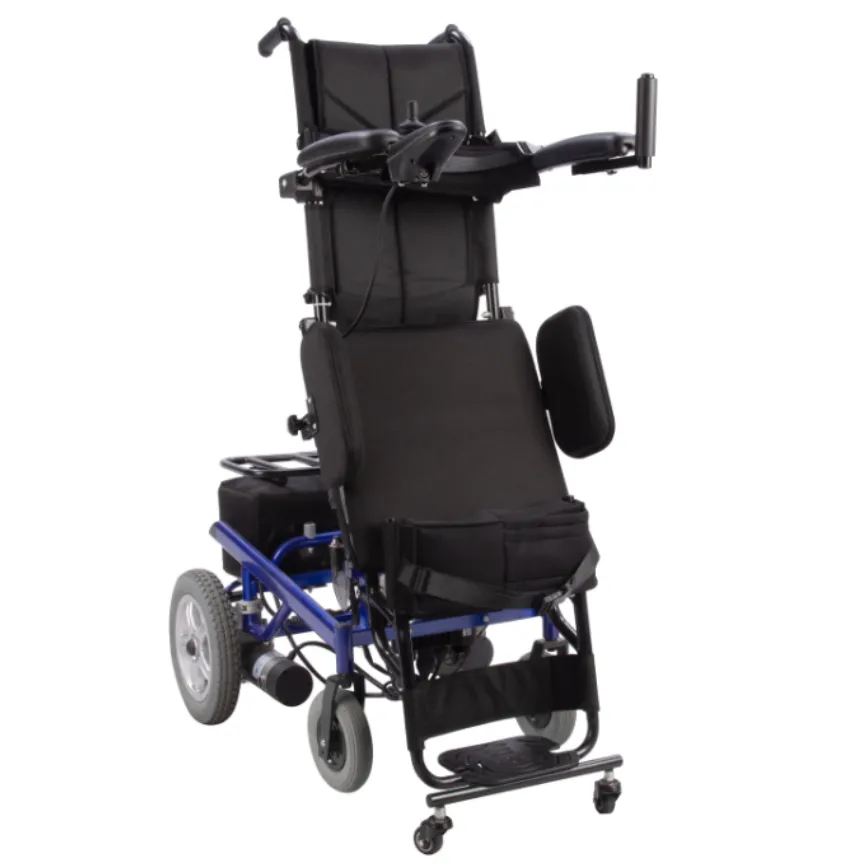
The core of a standing power wheelchair is not merely the addition of a motor, but an integrated system for body support and postural transition. Common features include electric lift mechanisms, seat tilt, backrest and leg rest adjustments, seatbelts, knee supports, foot supports, and chest or pelvic stabilization structures. Standing mechanisms vary by product; some achieve the standing position by tilting the entire seat forward, while others utilize multi-joint linkage structures. Therefore, when purchasing, one should look beyond the mere "standing capability" and consider factors such as the standing trajectory, support method, and maximum standing angle.
While some products offer standing angles of approximately 70° to 90°, there is no universal standard; actual specifications depend on the specific product manual. For users, stability while standing and adequate body support are more important than simply maximizing the standing angle.
Standing Electric Wheelchairs vs. Standard Electric Wheelchairs: What’s the Difference?
While standard electric wheelchairs primarily address mobility needs, standing electric wheelchairs go a step further by facilitating postural changes and providing assisted standing capabilities in addition to mobility.
Standard electric wheelchairs typically focus on factors such as the motor, battery, range, maneuverability, seat comfort, and terrain capability. In contrast, standing electric wheelchairs require attention to additional elements: the standing mechanism, body stabilization, knee and foot supports, and the shift in the user's center of gravity during the transition from sitting to standing.
For long-term electric wheelchair users, the ability to change posture is practically significant. A standing position alters weight distribution across the body and provides the user with a higher line of sight and greater reach for tasks. Research indicates that postures such as standing or reclining can reduce pressure on the seat surface; thus, the standing function can serve as an aid in pressure management, though it cannot replace specialized cushions, regular pressure relief routines, or proper skin care.
Therefore, a standing electric wheelchair is not merely an "upgraded version" of a standard electric wheelchair; it is an assistive device that requires specific ergonomic design and functional adaptation.
Which patients have a particular need for standing power wheelchairs?
1. Patients with spinal cord injuries and paraplegia
Patients with spinal cord injuries, paraplegia, and some forms of tetraplegia (quadriplegia) are key users of standing electric wheelchairs. Some of these patients cannot walk independently due to insufficient lower-limb strength but still require assistance with standing, postural adjustments, or the performance of daily activities.
Users of traditional wheelchairs who wish to engage in standing training often rely on standing frames or other transfer equipment, necessitating a transfer between the wheelchair and the standing device. This process can be challenging for patients with limited upper-body strength, poor balance, or a lack of available caregivers. Standing electric wheelchairs combine mobility with assisted standing, thereby reducing the need for certain transfers.
Studies have shown that some patients with spinal cord injuries can successfully perform sitting, standing, and mobility tasks using standing electric wheelchairs after training. However, due to limitations in existing research sample sizes and conditions, it cannot be assumed that all patients with spinal cord injuries will achieve the same results.
2. Individuals who rely on wheelchairs long-term and cannot stand independently
For those who use electric wheelchairs for extended periods daily, maintaining a static seated posture can increase localized pressure and lead to postural issues. Standing electric wheelchairs offer a wider range of postural options, allowing users to adjust between sitting, tilting, reclining, and standing based on their specific needs.
However, it must be emphasized that standing power wheelchairs are not equivalent to devices specifically designed for the prevention or treatment of pressure ulcers. If a patient already has severe skin damage, the shear forces generated during the transition to a standing position could actually increase risk. Therefore, factors such as skin condition, seat cushions, pressure relief methods, and the standing system itself must be considered holistically.
3. Patients with certain neurological conditions
Patients with conditions such as stroke, traumatic brain injury, cerebral palsy, or multiple sclerosis may experience lower-limb weakness, impaired balance, or severely limited walking ability. If a patient has a clear need for standing assistance or functional training, they may use a standing power wheelchair following a professional assessment.
However, a specific diagnosis does not automatically determine suitability. Assessments must consider factors such as joint contractures, abnormal muscle tone, insufficient trunk control, skeletal issues, and tolerance for postural changes.
What are the practical benefits of standing electric wheelchairs?
First, they facilitate postural changes. Users who spend long periods in wheelchairs can alter their body position as needed, reducing localized pressure caused by prolonged static sitting.
Second, they enhance the ability to perform certain daily activities. For instance, the height of kitchen counters, sinks, or shelves may be better suited for a standing position. For users with the necessary functional capabilities, a standing electric wheelchair can help extend their operational reach.
Third, they improve line of sight and social engagement. Standing changes the user's height, which can make communication, work, and family activities more convenient.
Fourth, they support standing training goals. For patients assessed by rehabilitation professionals as safe to stand, a standing electric wheelchair can serve as part of a rehabilitation support plan. However, it is not a substitute for rehabilitation therapy, nor should it be viewed simply as a medical device for treating the underlying condition.
What specifications should be considered when choosing a standing power wheelchair?
When selecting an electric wheelchair, one should not focus solely on motor power and top speed. For standing power wheelchairs, specific attention should be paid to the following parameters.
Weight capacity is a fundamental metric. Safe weight capacities for adult models vary significantly, ranging from 100 kg, 120 kg, and 150 kg to even higher. When selecting a model, one must consider not only the user's body weight but also the weight of clothing, cushions, and other assistive equipment, ensuring the choice aligns with the manufacturer's specified safe working load.
Seat width and depth directly affect comfort and stability. While common seat widths for adult electric wheelchairs range from 40 to 55 cm, the actual dimensions should be determined based on anthropometric measurements. A seat that is too wide reduces lateral support, whereas one that is too narrow may cause localized pressure points.
The standing angle and standing trajectory are key parameters that distinguish standing power wheelchairs from standard models. One should not merely compare the "maximum standing angle"; it is also crucial to observe whether the pelvis, knees, feet, and torso receive stable support throughout the standing process.
Overall width and turning radius are critical for home users. Due to their complex structures, standing electric wheelchairs are often heavier and bulkier than standard models. If a home's doorways are only 70–75 cm wide and the wheelchair's width approaches this limit, access to bedrooms, bathrooms, or elevators may become problematic.
Battery capacity and driving range also require attention. Manufacturer-stated ranges are typically based on specific test conditions; actual performance is influenced by factors such as user weight, road surface, incline, temperature, and driving style. Therefore, one should not judge a product solely based on the maximum range advertised in promotional materials.
What are the current pain points in the standing electric wheelchair industry?
A prominent issue in the current market is that consumers often equate "having many features" with "being the right fit for them."
The first issue is the lack of a standardized understanding of product specifications. Different manufacturers may use varying test conditions for range, climbing ability, weight capacity, and standing angles, making it difficult for consumers to make accurate comparisons based on a few figures alone.
The second issue is the excessive pursuit of a high number of features. A greater number of functions—such as electric lift, recline, tilt, and standing capabilities—does not necessarily mean the chair is suitable for everyone. Additional features often entail a more complex structure, increased overall weight, and higher maintenance costs.
The third issue is inadequate compatibility with home living spaces. Many users focus solely on the wheelchair itself before purchasing, failing to measure the dimensions of doorways, bathrooms, bedrooms, hallways, and elevators. This often leads to issues where the wheelchair can move forward but cannot turn or successfully complete the standing maneuver.
A fourth issue is the lack of professional fitting. Standing power wheelchairs involve considerations of body dimensions, postural control, and standing safety; relying merely on a salesperson to explain product features makes it difficult to achieve a truly personalized fit.
Professional Solution: Selection Based on the "Patient–Wheelchair–Environment" Framework
When purchasing a standing electric wheelchair, it is recommended to establish an assessment system covering three dimensions: the user, the wheelchair, and the environment.
First, consider the patient. Determine if there is a need for standing functionality and assess lower-limb muscle strength, joint range of motion, trunk control, upper-limb operational ability, skin condition, and tolerance for postural changes.
Next, consider the wheelchair. Select the seat width, seat depth, and support structure based on body dimensions, then compare specifications such as weight capacity, standing angle, standing trajectory, battery, range, turning radius, and safety features. For standing power wheelchairs, the suitability of chest, pelvic, knee, and foot supports is crucial.
Finally, consider the environment. Measure the widths of doorways, hallways, bathrooms, and elevators, as well as the space beside the bed; also, take into account floor gradients and indoor turning space. If the chair is primarily for indoor use, focus on width and turning radius; if it will be used frequently outdoors, prioritize range, climbing ability, tires, and chassis clearance.
FAQ: Common Questions About Standing Electric Wheelchairs
Q1: Which patients are suitable for standing electric wheelchairs?
They are primarily suitable for individuals with partial spinal cord injuries, paraplegia, or quadriplegia, as well as those who rely on wheelchairs long-term and require assistance with standing. Suitability must be determined through an assessment of muscle strength, joint range of motion, trunk control, and overall physical condition.
Q2: Can standing electric wheelchairs treat medical conditions?
They cannot be classified as medical treatment devices. They are primarily designed for mobility, postural adjustment, and assisted standing; while they can serve as an aid within certain rehabilitation programs, they cannot replace professional rehabilitation therapy.
Q3: What is the standing angle of a standing power wheelchair?
Product designs vary; some models can achieve a standing angle of approximately 70° to 90°, though specific figures depend on the product's technical specifications. When making a selection, stability during the standing process and body support are more important than the angle value alone.
Q4: Can standing power wheelchairs prevent pressure ulcers?
While standing can alter weight distribution on the body, it is not a substitute for pressure-relieving cushions, postural adjustments, or proper skin care. Patients with existing skin lesions should undergo a professional assessment first.
Q5: How do I choose between a standard electric wheelchair and a standing electric wheelchair?
If the primary need is daily mobility, a standard electric wheelchair may suffice; however, if there is also a clear need for assisted standing, postural management, or functional activity, a standing electric wheelchair should be considered.