
As the population ages—and with a growing need for post-operative rehabilitation, support for joint conditions, and assistance with daily mobility—canes have become a common assistive device. Among these, single-point canes and quad canes (four-point canes) are the most widely used options. Single-point canes are characterized by their lightweight, flexible, and portable nature, while quad canes utilize multiple contact points to expand the base of support, offering extra stability for individuals with compromised balance.
However, more contact points do not necessarily equate to greater safety. When selecting a walking stick, one must consider the user’s balance, upper-body strength, weight-bearing limitations of the lower limbs, the environment in which the cane will be used, and specific product specifications. This article explores how to choose between a single-point cane and a quad cane by examining their structural differences, target users, key parameters, safety considerations, and purchasing advice.
What Are the Differences Between Single-Point Canes and Quad Canes?
1. Single-Point Canes: Lightweight and Flexible for Daily Mobility
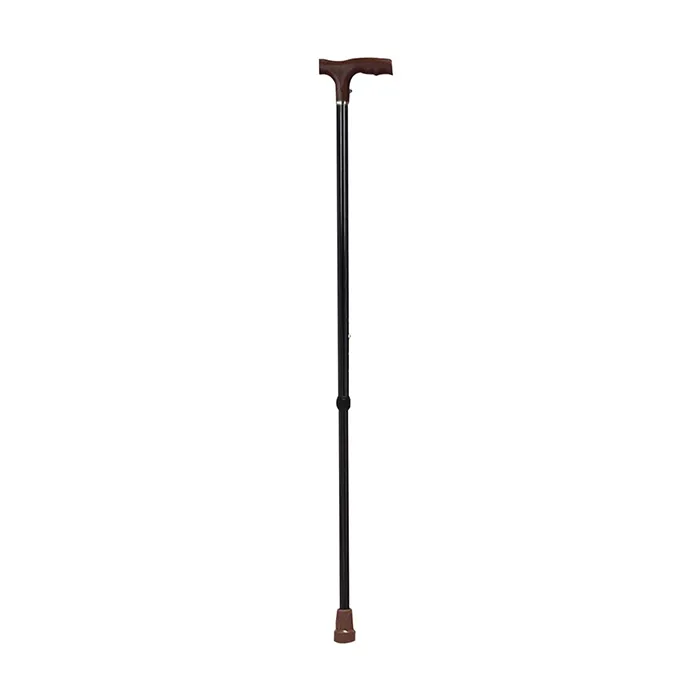
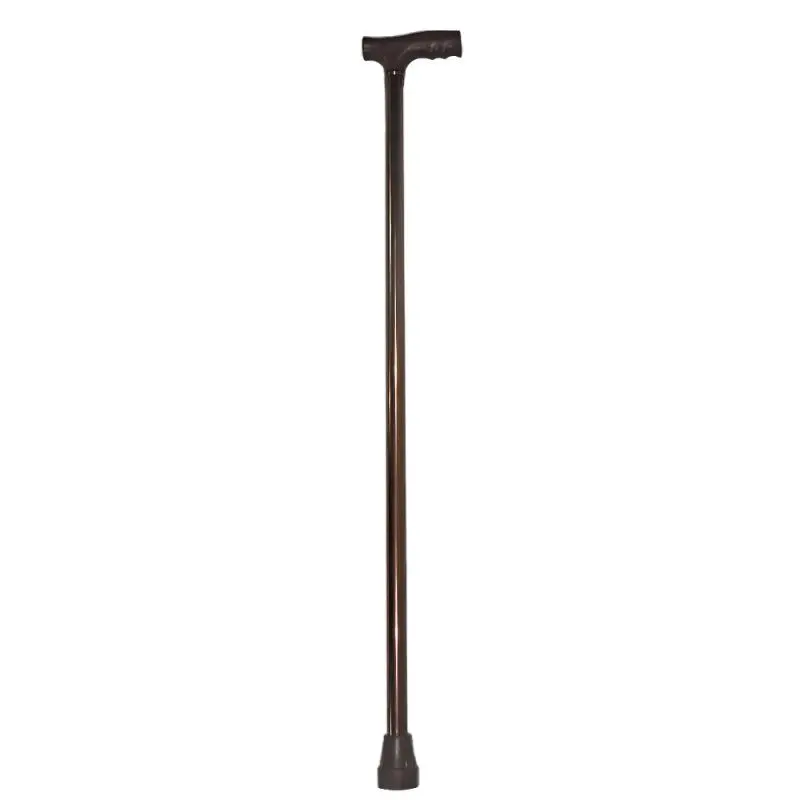
A single-point cane typically consists of a handle, a shaft, a height-adjustment mechanism, and a non-slip rubber tip at the base, which serves as the sole point of contact with the ground. Common types include adjustable aluminum walking sticks, folding walking sticks, and models with ergonomic handles.
Aluminum single-point canes are widely used in home care, for daily outings among the elderly, and in certain rehabilitation contexts due to their light weight, corrosion resistance, and adjustable height. Their simple design allows for easy movement and turning, making them well-suited for individuals who can walk independently but require some assistance with balance.
However, because a single-point cane has a limited base of support, it requires the user to have a certain level of physical coordination and control over their center of gravity. If a user frequently loses their balance or requires a higher degree of stability, a single-point cane may not be sufficient to meet their needs.
2. Quad Canes: A Wider Base of Support for Specific Balance Needs
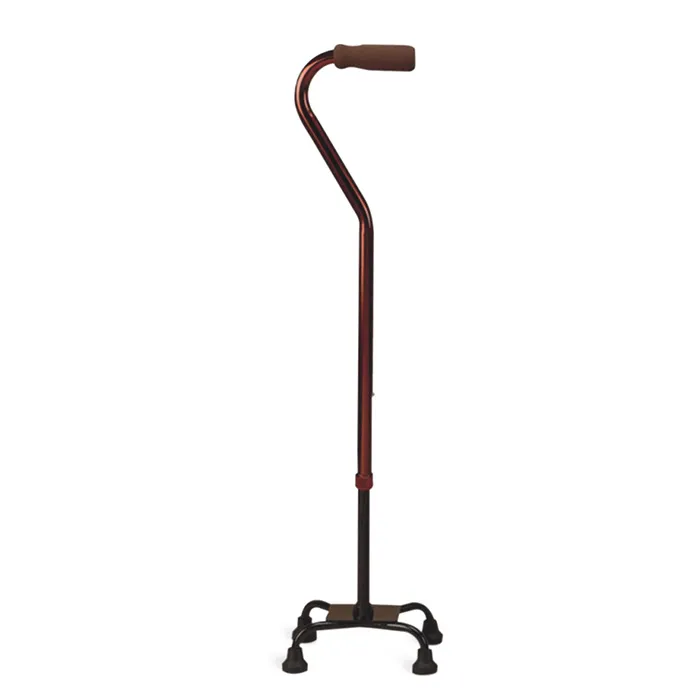
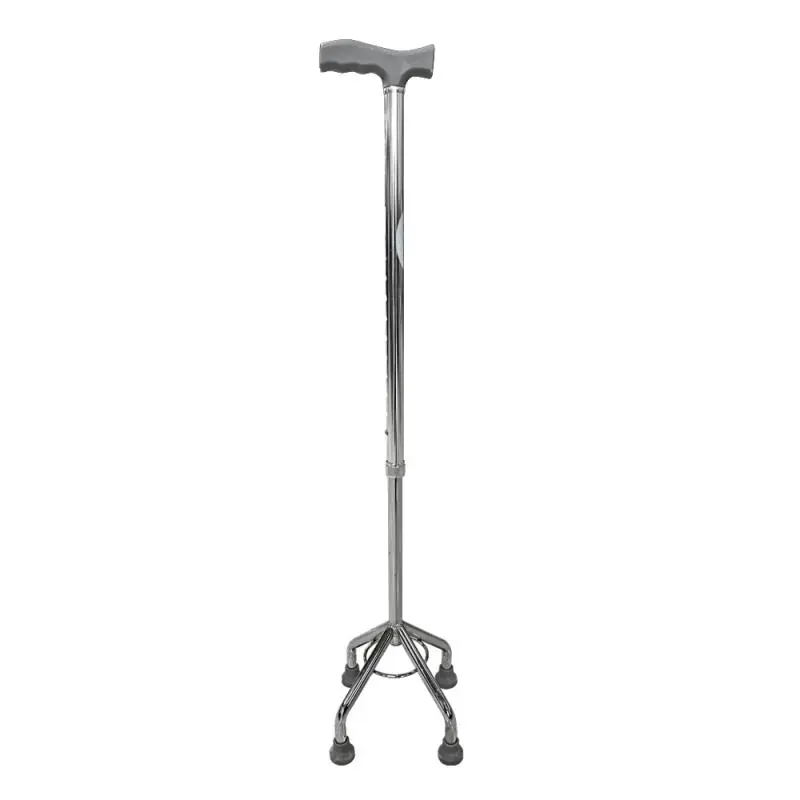
Quad canes—also known as four-point canes—typically feature a metal shaft attached to a base with four points of contact. Four support feet are distributed around the base, providing a wider support area on level ground compared to a single-point cane.
Four-point canes are commonly used by some elderly individuals, those with limited lower-limb function, and patients undergoing rehabilitation (following professional assessment). Certain models are designed to remain upright on their own when released, making it convenient for users to resume their grip after a brief pause.
However, because four-point canes typically have a wider base, the user must coordinate the placement of the base while moving. In narrow spaces, on complex terrain, or in environments requiring frequent turns, they may be less maneuverable than single-point canes. Therefore, when choosing a four-point cane, one should consider not only the number of support feet but also the dimensions of the base, the user’s physical capabilities, and the specific environment in which the walking stick will be used.
Single-Point Canes vs. Four-Point Canes: Key Differences
| Comparison Item | Single-Point Cane | Quad Cane |
| Support Structure | One main contact point | Four contact points |
| Support Base | Narrow | Wider |
| Weight | Generally lighter | Generally heavier |
| Walking Flexibility | Easier to maneuver | May require more careful positioning |
| Portability | Easy to carry and store | Bulkier base |
| Typical Use | Daily walking assistance | Additional support for selected users |
| Surface Requirements | Suitable for many everyday surfaces | Best used when all four feet can contact the ground stably |
| Main Limitation | Limited support area | Base may obstruct movement in narrow spaces |
In general, single-point canes prioritize portability and mobility, while four-point canes emphasize a larger support area. The actual performance of either type depends on its specific design, the user’s physical condition, and how it is operated.
Which type of walking cane offers better stability?
Assessing the stability of a cane requires distinguishing between static support and dynamic walking; one cannot draw conclusions based solely on the number of contact points.
In terms of static support, four-point canes generally hold an advantage. When a user is standing still or slowly shifting their weight, the wider base—provided all four feet are in stable contact with a level surface—offers a broader area of support.
In terms of dynamic walking, single-point walking sticks tend to be more maneuverable. During walking, a walking stick must be moved continuously in coordination with the user’s gait. The simple base structure of a single-point cane makes it easier to adjust where it is placed on the ground, whereas a four-point cane requires the user to actively manage the base’s position to ensure all feet land securely.
A small-scale gait study involving 19 healthy young participants found that when using a four-point cane with a small base, subjects exhibited slower walking speeds and lower cadence compared to when they used a single-point cane. While these findings—based on healthy young adults—cannot be directly generalized to all elderly individuals or rehabilitation patients, they highlight an important point: a larger support area does not necessarily equate to greater walking efficiency. Furthermore, structural stability is not the same as rated load capacity. The load a cane can support depends on factors such as the tubing material, wall thickness, structural joints, base design, and manufacturing quality. When purchasing, it is essential to check the maximum user weight specified by the manufacturer; one should not assume that a walking stick has a higher load capacity simply because it is made of aluminum alloy or features a four-point base.
Who is best suited for a single-point cane?
A single-point cane is appropriate for individuals who can perform most walking activities independently but require some assistance with balance, pain management, or support for one of their lower limbs.
First, older adults with relatively good balance may opt for a single-point cane. If a user can stand, turn, and control their center of gravity independently—but needs extra support when walking longer distances—a single-point cane is generally a more lightweight and practical choice.
Second, individuals experiencing knee or hip pain may use a single-point cane, provided they have received professional guidance. In cases of unilateral (one-sided) lower-limb pain, the cane is typically held in the hand opposite the affected side and moved forward in sync with the affected leg; this helps distribute weight away from the painful limb. However, if a patient experiences significant joint instability or has been prescribed specific weight-bearing restrictions by a physician, a professional assessment should be obtained first.
Additionally, a single-point cane is suitable for some individuals in the later stages of rehabilitation. As lower-limb strength, balance, and gait gradually improve, patients may—under the guidance of a doctor or physical therapist—transition from a mobility aid that offers a wider base of support to a single-point cane.
For those who frequently travel, a single-point cane is easier to stow in vehicles or on public transportation, and it is also more convenient to use in offices, shopping malls, and narrow passageways.
Conversely, if a user experiences frequent falls, cannot stand steadily, suffers from significant weakness in both lower limbs, or requires the use of both hands to support their body, they should not choose a single-point cane based solely on its portability; instead, they should explore other types of mobility aids.
Who is best suited for a four-point (quad) cane?
A four-point cane is suitable for individuals who require a larger base of support but still retain some ability to walk independently.
For older adults with diminished balance, a four-point cane can provide additional stability when walking on level surfaces. For some stroke patients in rehabilitation who experience weakness on one side of the body but retain enough control to use a walking aid for basic ambulation, a four-legged cane (quad cane) may be an option—provided it is used under the guidance of a healthcare professional.
Additionally, some users prefer a walking stick that can stand upright on its own when they are standing still or pausing briefly. The base design of a quad cane allows it to remain upright, sparing the user the inconvenience of having to bend down to pick it up if it were to fall over.
However, a quad cane is not suitable for all individuals with balance impairments. If a user cannot stand independently, requires both hands for support, or lacks the coordination to maneuver the base, a quad cane may not provide sufficient safety or stability.
In cases involving stroke, post-operative recovery from fractures, or other rehabilitation scenarios, the choice of a walking aid should be based on factors such as the functional capacity of the affected side, grip strength, coordination, and any weight-bearing restrictions prescribed by a physician—rather than relying solely on a medical diagnosis.
What are the most important specifications to consider when purchasing a cane?
When choosing between a single-point cane and a quad cane, consumers should focus on the height adjustment range, overall weight, maximum weight capacity, handle design, and the slip resistance of the base. The following points serve as general guidelines; please refer to the specific product manual for exact specifications.
| Parameter | Typical Reference | Selection Criteria |
| Adjustable Height | Approximately 70–100 cm for many models | Must fit the user's height |
| Elbow Flexion | Approximately 15°–30° | Allows a natural arm position |
| Single-Point Cane Weight | Approximately 0.25–0.6 kg for some lightweight models | Consider carrying comfort |
| Maximum User Weight | Manufacturer-specified | Must meet the user's needs |
| Handle Design | Standard or ergonomic | Match grip strength and hand comfort |
| Rubber Tip | Secure, intact, and wear-resistant | Check traction and replacement needs |
| Height Lock | Fully engaged and secure | Prevent accidental adjustment |
| Quad Cane Base | Stable, with all four feet intact | Check ground contact and clearance |
1. Proper height is essential
When adjusting the height of a walking stick, the user should stand naturally while wearing their usual walking shoes, with their arms relaxed and hanging at their sides. Ideally, the handle should be positioned near the crease of the wrist; when gripping the handle, the elbow should remain naturally flexed at an angle of approximately 15°–30°.
If the cane is too tall, the user may end up shrugging their shoulders or lifting their arm; if it is too low, it may cause the user to stoop, lean to one side, or develop an abnormal gait. Therefore, after purchasing an adjustable walking stick—whether single-point or quad—it should be properly fitted to the user before its first use.
2. Weight and handle design affect the user experience
Lightweight aluminum single-point canes are generally better suited for individuals who need to carry their walking aid frequently. For quad walking sticks, it is important to strike a balance between the stability of the base and the overall weight of the device. For individuals with weak grip strength or joint pain in their hands, choose handles that are easy to hold and feature a non-slip surface. Handles that are too thin may increase localized pressure, while those that are too thick may be difficult to grip securely.
3. Do Not Overlook Non-Slip Tips and Locking Mechanisms
Rubber tips that are worn, cracked, or loose can reduce a cane’s traction. For quad canes (four-legged canes), ensure that all four support feet are intact and make stable contact with the ground.
For adjustable (telescopic) models, verify that the adjustment buttons and locking mechanisms are fully secured to prevent the walking stick from unexpectedly retracting during use. Regular inspections help mitigate risks caused by wear and tear or structural looseness.
Selecting Between Single-Point and Quad Walking Sticks
When purchasing a cane, you may follow these steps:
1.Assess mobility: Determine whether the user can stand independently, turn, and control their center of gravity.
2.Identify support needs: Consider a single-point cane for mild balance assistance; consider a quad cane if a wider base of support is required.
3.Review product specifications: Check the height adjustment range, overall weight, maximum weight capacity, and handle design.
4.Test the device: Observe the user’s stability when starting to move, walking in a straight line, turning, and coming to a stop.
5.Inspect safety features: Ensure that locking mechanisms, non-slip tips, and the base are free of obvious defects.
6.Re-evaluate periodically: Adjust the mobility aid strategy as the user’s rehabilitation progresses or their physical capabilities change.
If a user experiences frequent falls, cannot stand independently, or requires both hands for support, consult a physician or physical therapist to determine whether a walker, crutches, or other, more appropriate assistive devices are needed.
Frequently Asked Questions (FAQ)
Q1: Which is better for older adults—a single-point cane or a quad cane?
Older adults with relatively good balance who only require mild support may consider a single-point cane, while those who need a wider base of support may benefit from a quad cane. The final choice should be based on the individual’s physical capabilities and the environment in which the cane will be used.
Q2: Are four-legged walking sticks necessarily safer than single-point walking sticks?
Not necessarily. While four-legged walking sticks generally offer a larger static base of support, their wider footprint can sometimes reduce maneuverability. Proper selection and correct usage are equally important.
Q3: How should the height of a walking stick be adjusted?
As a general guideline, the handle should be positioned level with the wrist crease when the arm hangs naturally at the side. When gripping the handle, the elbow should remain slightly flexed at an angle of approximately 15°–30°. Specific rehabilitation needs should be assessed by a healthcare professional.
Q4: Are four-legged walking sticks suitable for long-distance walking outdoors?
This depends on the user’s physical capabilities and the terrain. While four-legged walking sticks may work well on flat, even surfaces, extra caution is required on gravel, grass, slopes, or uneven ground to ensure that all four feet maintain stable contact with the surface.
Q5: Is it possible to switch from a four-legged cane to a single-point cane?
It is possible, but the transition should be based on an assessment of the user’s balance, gait control, and lower-limb function. Ideally, this change should be made under the guidance of a physician or physical therapist.