
For long-term electric wheelchair users, achieving a comfortable and safe seating position is a crucial yet often overlooked issue. When purchasing an electric wheelchair, many people focus heavily on performance metrics—such as motor power, battery capacity, range, weight capacity, and climbing ability—while rarely delving into the core factor of "seating pressure management." However, for individuals who rely on electric wheelchairs for six, eight, or even more hours of mobility each day, proper seating posture directly impacts physical fatigue, lower back health, skin condition, and overall long-term quality of life.
As the global population ages, an increasing number of seniors, individuals with mobility impairments, rehabilitation patients, and those requiring long-term care are adopting electric wheelchairs for daily mobility. Yet, a significant pain point remains in the industry: many standard electric wheelchairs address the need for "mobility" but fail to adequately address the challenges of "prolonged sitting." Users may easily navigate from the bedroom to the living room or move from indoor to outdoor environments, only to experience numbness in the buttocks, lower back pain, increased pressure on the thighs, or even a risk of skin damage caused by concentrated, localized pressure after just a few hours.
In reality, the human body is not designed to maintain a fixed sitting position for extended periods. When sitting on a standard chair, able-bodied individuals naturally shift their bodies—adjusting pelvic angles, moving their legs, or repositioning their backs. However, some electric wheelchair users—due to reduced muscle strength, impaired neurological control, or limited physical mobility—cannot frequently or actively change their posture, making them more susceptible to issues caused by concentrated pressure. Research in medicine and rehabilitation indicates that sustained pressure, shear forces, and a lack of postural changes over time are key factors contributing to discomfort in the ischial (sit-bone) area and the development of pressure injuries. Therefore, an electric wheelchair should be viewed not merely as a mobility aid, but as a support system that helps users maintain a healthy seating posture. Studies show that wheelchairs equipped with "Tilt-in-Space" and "Recline" functions can redistribute body weight, reduce pressure on the ischial area, enhance comfort, and assist users with pressure management.
So, which seating position in an electric wheelchair is most effective for relieving pressure? The answer lies not in simply reclining the backrest or remaining upright at a 90-degree angle, but in applying ergonomic principles—specifically "slight recline, dynamic adjustment, and moderate tilting"—to allow different parts of the body to take turns bearing the load. For most electric wheelchair users, a slight recline combined with periodic angle adjustments is a widely recognized method for relieving pressure.
Why is managing pressure related to sitting posture particularly important for electric wheelchair users?
Many assume that using an electric wheelchair reduces walking and therefore naturally lessens the physical burden on the body. In reality, however, electric wheelchair users face a different type of physical stress: pressure resulting from prolonged, static sitting.
When standing, body weight is distributed to the ground through the legs, placing relatively little strain on the buttocks, lumbar spine, and spinal column. Conversely, when seated in an electric wheelchair, body weight concentrates on specific key areas—including the ischial tuberosities (sit bones), soft tissues of the buttocks, the backs of the thighs, and the lower back. If the seat design, seating angle, or adjustment method is improper, these areas are subjected to significant, sustained mechanical pressure.
The ischial region is of particular concern, as it serves as the primary weight-bearing point when seated. While the average person can restore blood circulation by standing up or walking around after sitting for a long time, this type of active relief is not easily achievable for many electric wheelchair users. Consequently, leveraging the wheelchair's built-in functions to facilitate "passive posture adjustment" has become a key focus in the design of modern, high-end electric wheelchairs.
Another often overlooked issue is body slippage. When a user significantly reclines the backrest without a synchronized adjustment of the seat tilt angle, the buttocks may slide forward, creating shear forces between the skin and the cushion. Many users mistakenly believe that "reclining flatter equals greater comfort," but incorrect reclining techniques can actually increase physical instability. Therefore, effective pressure relief is not about maximizing the angle, but rather finding the right balance between comfort, safety, and pressure distribution.
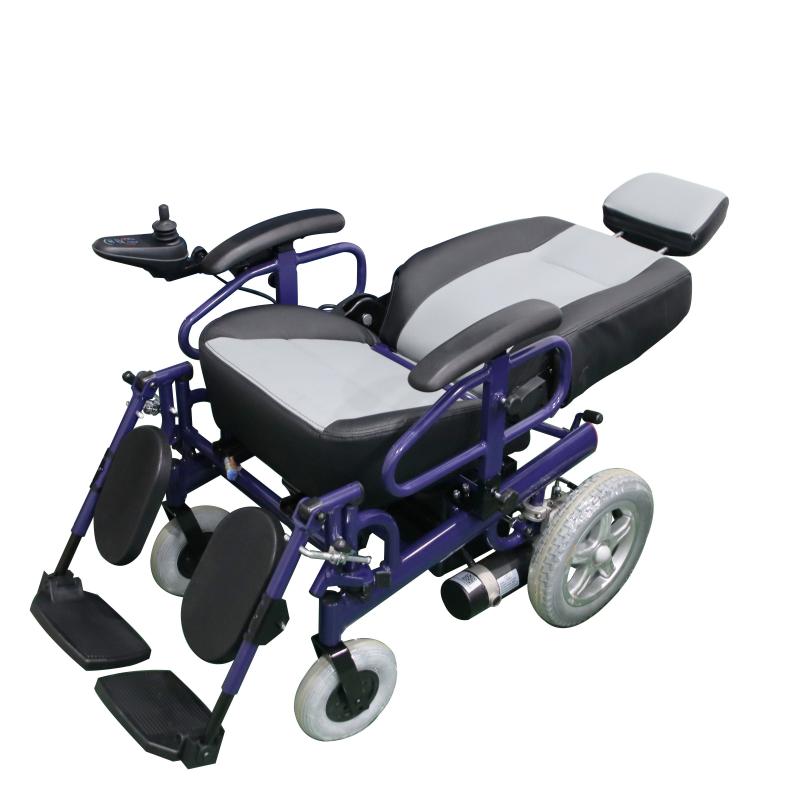
Modern electric wheelchairs increasingly prioritize dynamic posture management through features such as power tilt, power recline, power leg rests, and seat lift functions. The core objective of these designs is to enable individuals who cannot independently change their posture to adjust how weight is distributed across their bodies through simple controls. Research indicates that making frequent, small-scale postural adjustments is more effective at reducing discomfort than maintaining a single position for extended periods; the adjustable seating features of electric wheelchairs are designed specifically to meet this need.
The Most Recommended Posture for Pressure Relief: A Slightly Reclined Seating Position
If one had to choose a single posture best suited for daily electric wheelchair use, a slightly reclined position is usually the optimal choice.
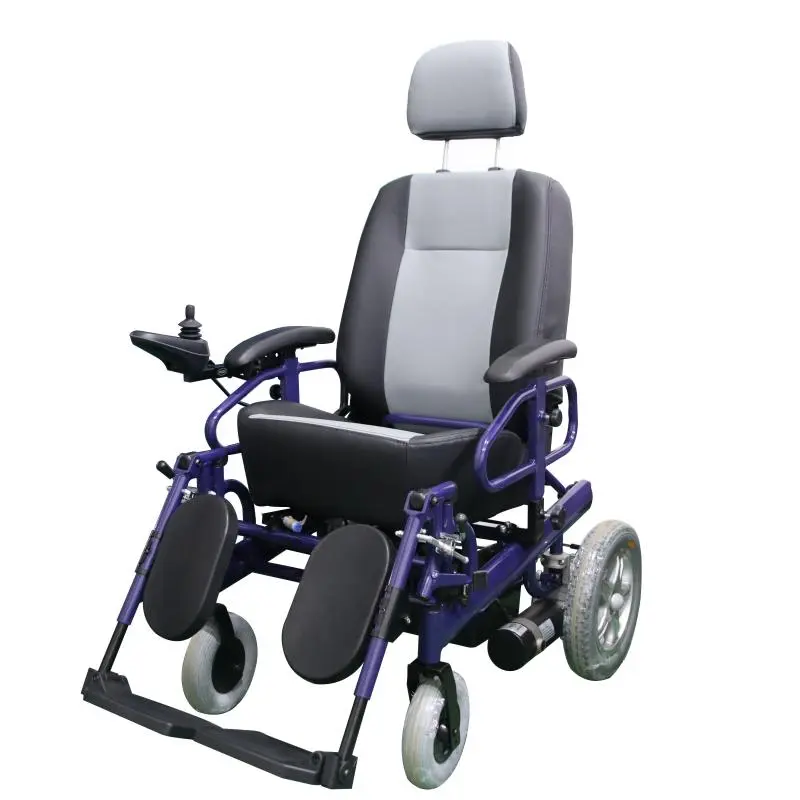
"Slightly reclined" does not mean fully flattening the backrest; rather, it involves providing more back support while maintaining body stability, thereby shifting some body weight from the buttocks to the backrest area.
A reasonable reference range typically includes:
•Backrest angle of approximately 100°–110°;
•Seat tilted slightly backward by about 10°–20°;
•Pelvis positioned close to the rear of the seat;
•Feet stably supported by leg rests;
•Adequate lumbar support.
Compared to sitting fully upright at 90 degrees, this posture reduces continuous pressure on the buttocks without significantly obstructing the user's line of sight or ability to operate the wheelchair controls. It is therefore ideal for daily activities such as watching television, chatting, shopping, and moving about outdoors.
For many electric wheelchair users, a common mistake is maintaining a "standard sitting posture" for too long. Although a 90-degree posture may appear ergonomic, remaining in that position for hours without change still places significant pressure on the ischial (sit-bone) area. Ergonomics emphasizes dynamic balance rather than maintaining a fixed angle indefinitely.
Studies show that even minor adjustments to the tilt and backrest angle can reduce pressure at the seat interface. Making frequent, small-angle adjustments helps prevent tissues from being subjected to prolonged mechanical compression from a single direction.
Therefore, elderly users or those with limited mobility are advised not to wait until they feel obvious soreness before making adjustments; instead, they should proactively use the wheelchair's features to vary their sitting posture.
Why is the tilt function effective for pressure relief?
Increasingly, high-end electric wheelchairs are equipped with "Tilt-in-Space" electric tilting capabilities—a crucial technology in the field of pressure management. The characteristic feature of the electric tilt function is that the entire seat tilts backward while the hip angle remains relatively stable. Unlike simply adjusting the backrest, the tilt function does not significantly alter the positional relationship between the user's body and the seat, thereby reducing the risk of the body sliding forward.
As the power wheelchair tilts, body weight gradually shifts from the hip area to the backrest, reducing pressure near the ischial tuberosities (sit bones).
For example:
When the user sits fully upright, the hips bear the majority of the pressure;
When the power wheelchair is tilted to approximately 15°–30°, the backrest begins to support some of the weight;
With a more pronounced tilt, pressure on the hips decreases further, helping to restore blood circulation to certain tissues.
A study involving elderly users examined the effects of various tilt and recline combinations on seating pressure. The results showed that, compared to an upright posture, various combinations of tilt and backrest recline could reduce pressure at the seat interface; specifically, combinations involving larger tilt angles and backrest adjustments were more effective at improving local blood flow.
However, it is important to note that large-angle tilting is not required at all times. For daily activities, frequent adjustments with smaller angles are often more practical. Large-angle tilting is better suited as a periodic pressure-relief measure—such as resting for a few minutes after prolonged sitting.
Therefore, an excellent power wheelchair design does not aim to keep the user in a single specific posture, but rather provides the ability to quickly switch between various postures.
In what situations is the power wheelchair's backrest recline function suitable?
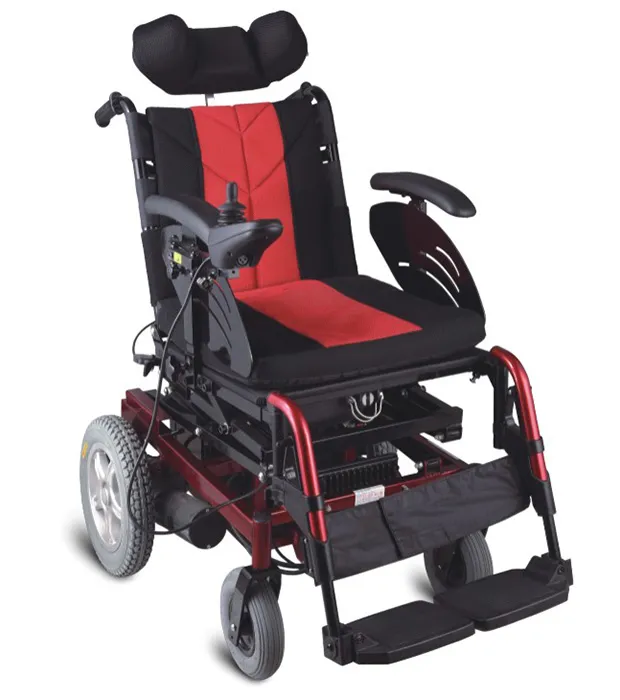
In addition to the tilt function, power recline is a key feature on many power wheelchairs.
The primary purpose of reclining the backrest is to increase the area of back support and allow the muscles of the lower and upper back to relax. Examples include:
•During a midday rest;
•After prolonged outdoor activity;
•When experiencing physical fatigue;
•When reading or resting.
However, the recline function must be used correctly.
If only the backrest is adjusted without changing the seat angle, three issues may arise:
First, the hips may slide forward. Body sliding increases friction and shear forces.
Second, the pelvic position changes. Prolonged incorrect posture can lead to increased pressure on the lumbar spine.
Third, leg support becomes inadequate. If the leg rest angle is incorrect, it may cause discomfort in the knee and thigh areas.
Therefore, with professional power wheelchairs, it is generally recommended to use "Tilt" and "Recline" functions in combination, rather than relying solely on reclining the backrest.
In short:
Daily activities: Slight tilt;
Pressure relief: Increase the tilt angle;
Rest and relaxation: Combine with backrest recline.
This combined approach ensures the body receives optimal support across different states.
How should power wheelchair positioning be adjusted based on specific areas of body pressure?
Users experience discomfort in different areas, so adjustment methods vary accordingly.
If significant pressure is felt in the buttocks, it often indicates that the ischial area has been bearing weight for too long. In this case, increasing the seat tilt angle can shift more body weight onto the backrest. Also, check the suitability of the seat cushion, as cushions that are too soft or too hard can lead to uneven pressure distribution.
If lower back fatigue is the primary issue, the backrest angle needs to be checked. Many users tend to lean forward, which reduces lumbar support and keeps the lumbar spine under constant strain. Increasing the backrest angle slightly to ensure the lower back rests against the backrest can usually improve comfort.
If numbness occurs in the back of the thighs, it may be related to seat depth. If the seat depth is excessive, it compresses the back of the thighs; if it is too shallow, it fails to provide adequate support. Therefore, selecting a power wheelchair with the right seat dimensions is crucial.
What kind of power wheelchair is best suited for long-term pressure management?
For individuals who use the wheelchair for extended periods daily, the choice should not be based solely on speed and battery range; ergonomic support design is far more important.
First, prioritize power wheelchairs equipped with a power tilt function. This is a vital tool for pressure management for users who cannot change their posture independently.
Second, choose a model with power backrest adjustment capabilities, as different daily activities require different postures.
Third, pay attention to cushion quality. High-density foam, gel cushions, and air-cell cushions can all help improve pressure distribution.
Fourth, opt for a design with adjustable dimensions. Features such as seat width, seat depth, armrest height, and leg rest angle should all be tailored to the user's specific physical characteristics. The future of electric wheelchairs is shifting from simple mobility aids to intelligent health-support devices. Future products may integrate pressure sensors, smart algorithms, and automatic posture reminders to offer adjustment suggestions based on changes in the user's sitting position.
Common mistakes when using electric wheelchairs for pressure relief
Many users own feature-rich electric wheelchairs but fail to achieve optimal results due to incorrect usage.
The most common issue is maintaining the same angle for extended periods. Some users find a comfortable position and remain in it all day. However, even the most comfortable posture can lead to localized pressure buildup if not changed over time.
A second mistake is adjusting only the backrest without adjusting the seat as a whole. Proper pressure management requires considering the distribution of force across the entire body, rather than altering just one component.
A third mistake is overlooking the seat cushion and sizing. A more expensive electric wheelchair is not necessarily suitable for everyone; only a design that matches the user's specific physical characteristics can be truly effective.
FAQ: Common Questions About Electric Wheelchair Postures for Pressure Relief
Q1: Is a 90-degree sitting posture the healthiest option?
No. A 90-degree posture is suitable for short-term activities, but maintaining it for long periods can lead to concentrated pressure on the buttocks. For those who use electric wheelchairs for extended periods, a slight recline with periodic angle adjustments is recommended.
Q2: Is it more comfortable to recline the backrest as far as possible?
Not necessarily. Excessive reclining can cause the body to slide and increase shear forces. The best approach is to adjust the position using a combination of "Tilt" and "Recline" functions based on the user's physical condition.
Q3: How often should the electric wheelchair posture be adjusted?
There is no universal standard, but it is generally recommended to avoid maintaining a fixed posture for several hours at a time. Users can make minor adjustments at intervals based on how their body feels. Users at high risk of pressure-related issues should follow professional rehabilitation advice.
Q4: What if a standard electric wheelchair lacks tilt functions?
Pressure can be reduced by adjusting sitting posture, using a suitable cushion, and changing body position periodically. However, for users who rely on electric wheelchairs for long periods daily, models with "Tilt" functions are generally better suited for long-term care needs.
Q5: Is the pressure relief function important when choosing an electric wheelchair?
It is very important. For short-term users, battery range and portability may be the primary concerns; however, for users who spend long periods each day in an electric wheelchair, pressure management features often directly impact long-term comfort, health, and safety.