
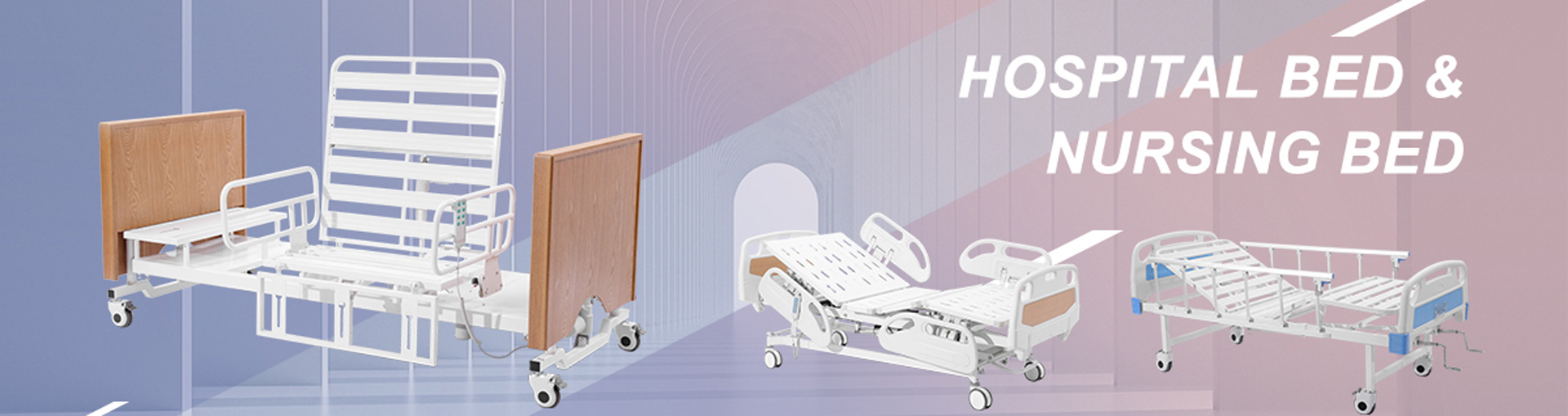
In hospital construction, ward renovation, and medical equipment procurement, the question of "what size hospital medical bed should be chosen?" seems basic, but it is often an underestimated systemic issue. Many procurement personnel focus first on the price, number of functions, materials, brand, and electric adjustment methods of hospital beds, easily overlooking the direct relationship between bed size and patient size, nursing procedures, ward area, medical equipment layout, transfer routes, and the risk of falls and bed falls.
An improperly chosen hospital bed size can, at best, make it inconvenient for patients to turn over, get in and out of bed, and for nursing procedures; at worst, it can affect the efficiency of nursing staff, increase the risks during patient transfers, and even force the hospital to rearrange the ward layout later.
This pain point is very typical in actual projects. For example, some hospitals purchase excessively wide hospital medical beds to improve patient comfort, only to find that the nursing space on both sides of the bed is significantly reduced. Some wards choose smaller hospital medical beds to save space, resulting in insufficient space for larger patients and making it more difficult for nursing staff to turn, change dressings, or transfer patients. Some procurement projects only compare the "bed width" and "bed length" without further checking the overall dimensions of the hospital bed, the structure of the headboard and footboard, the space occupied by the guardrails when extended, the location of the casters, and the operating range after raising and lowering the bed. Ultimately, this results in hospital beds that can fit into wards but cannot be properly integrated with bedside equipment, IV stands, mobile nursing carts, respiratory support equipment, and patient transfer channels.
Therefore, choosing the right size hospital medical bed cannot be simply understood as "finding a standard size." Truly professional hospital bed selection should establish a complete decision-making chain encompassing "patient needs—clinical use—bed size—ward space—nursing procedures—safety standards—long-term operating costs."
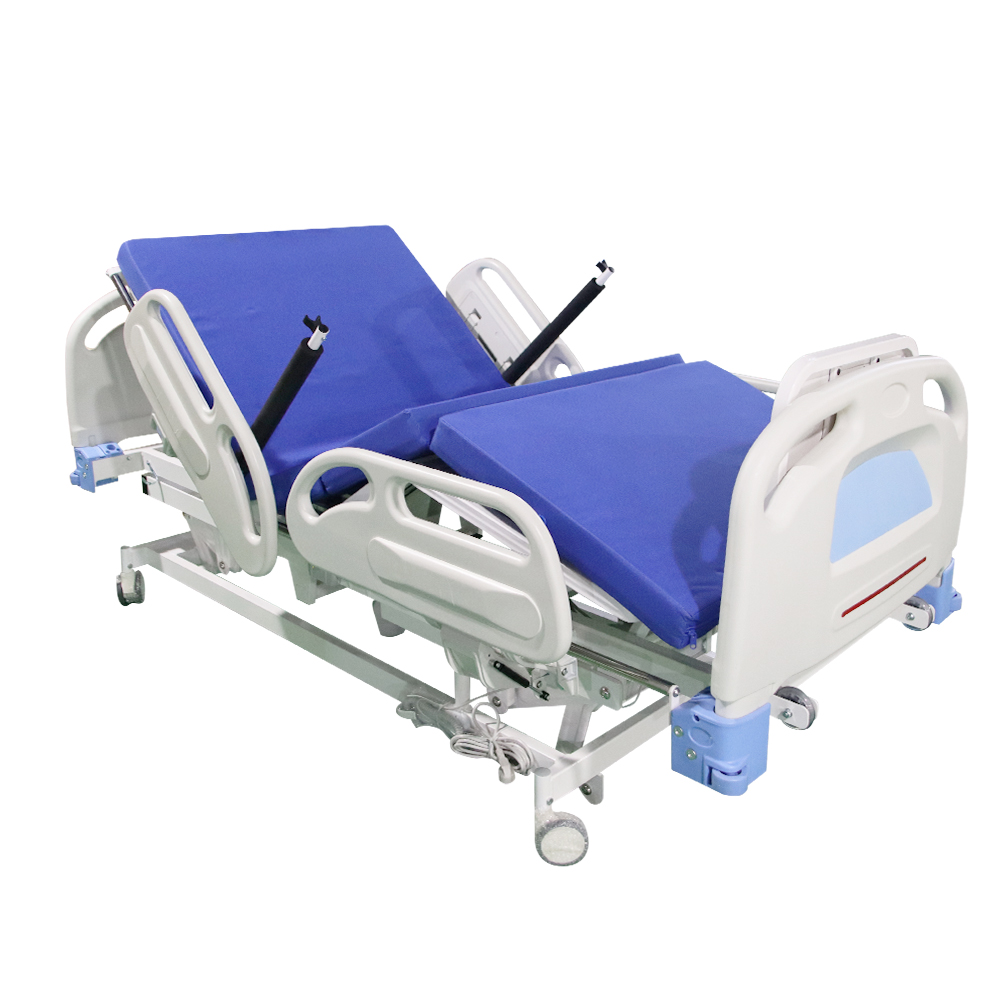
Hospital Bed Size: Which Parameters Should Be Considered?
When discussing hospital bed dimensions, it's crucial to distinguish between "bed surface dimensions" and "overall bed dimensions." This is a common point of confusion in hospital procurement.
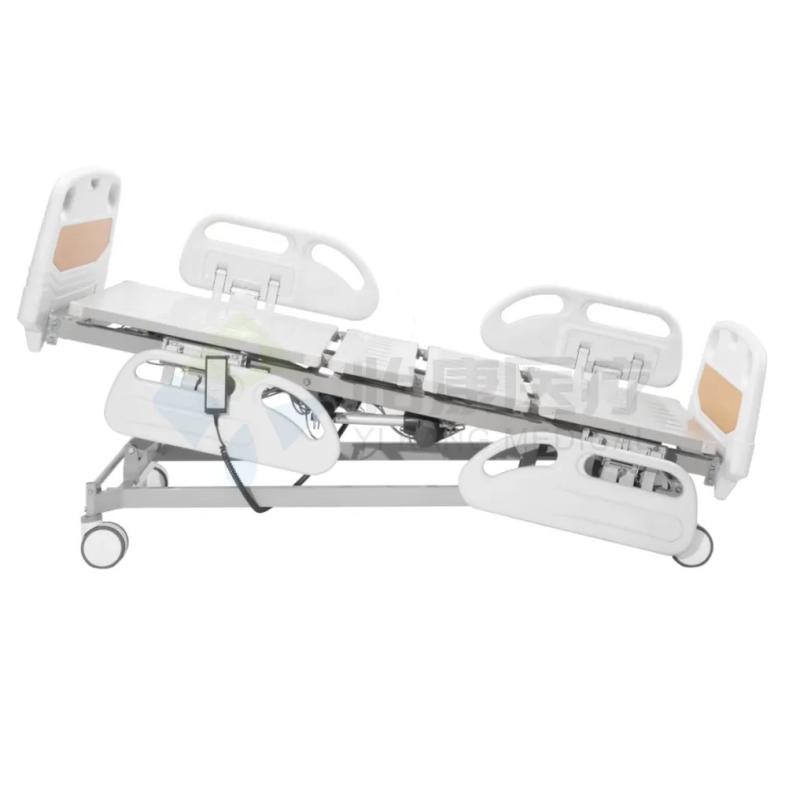
Bed surface dimensions typically refer to the length and width of the actual lying area for the patient. For example, a common adult hospital bed on the market has a bed surface dimension of approximately 91 cm wide and 203 cm long, or about 36 x 80 inches. Some industry sources also use 91 x 203 cm as a reference for standard adult hospital medical bed dimensions. However, this doesn't mean the entire hospital medical bed is only 91 x 203 cm, as the headboard, footboard, guardrails, casters, and other structural elements all contribute to the overall footprint.
Therefore, when procuring hospital beds, at least six dimensional parameters must be recorded simultaneously:
First, the bed surface width; second, the bed surface length; third, the overall width of the hospital bed; fourth, the overall length of the hospital medical bed; fifth, the minimum and maximum bed surface height; and sixth, the maximum possible overall dimensions after the guardrails, headboard, footboard, and accessories are installed. If hospital medical beds have features such as side-turning, extension, or other special structures, the dimensional changes during these movements should be further confirmed.
Why is bed width so important? Because it directly affects patient comfort, turning space, and operational space for nursing staff. For general adult wards, a bed width of approximately 90 cm usually strikes a balance between patient comfort and ward space utilization. However, this is just a general guideline, and not all patients or hospitals should use the same size. The requirements for hospital medical bed width may differ significantly for elderly patients, long-term bedridden patients, orthopedic patients, obese patients, and patients requiring frequent bedside procedures.
Bed length should not be ignored either. A length of approximately 203 cm can cover a considerable number of adult patients, but for taller patients, sufficient legroom needs to be considered. It is worth noting that the IEC 60601-2-52 document explicitly requires manufacturers to consider the risks associated with patients taller than 185 cm during risk management. This indicates that "patient height" is not a marginal factor in hospital bed size selection but rather an important variable that should be included in the risk management system.
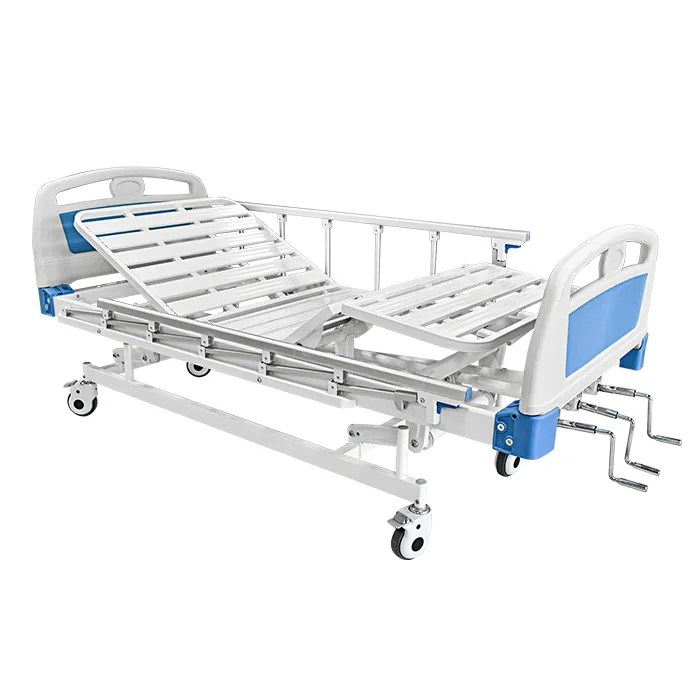
Why can't all wards use the same hospital bed size?
The working patterns of different departments within a hospital vary greatly, so the idea of "one size solves all problems" is not ideal. The requirements for hospital bed sizes are often completely different for general internal medicine, surgery, orthopedics, ICU, rehabilitation wards, geriatric wards, and long-term care facilities.
The core goal of general wards is usually to balance patient comfort, nursing efficiency, and space utilization. These wards have high patient turnover, and hospital medical beds need frequent cleaning, transfer, and maintenance. Therefore, common adult hospital medical bed sizes are often based on standard specifications, while emphasizing electric adjustment, guardrails, casters, mattress compatibility, and accessory expansion capabilities.
Orthopedic wards focus more on patient transfer and position changes. For example, patients undergoing lower limb, spine, or hip surgery often require nursing assistance to get in and out of bed and turn over. Therefore, the height adjustment range and bed stability of the hospital medical bed may be more important than simply increasing the bed width. For these patients, the bed size needs to serve the nursing process, not just pursue "more space to lie down."
ICU wards are even more complex. Critically ill patients typically require monitoring equipment, infusion pumps, respiratory support equipment, and other treatment devices. Hospital beds must not only accommodate the patient but also create a stable working area with the bedside equipment. In this context, simply pursuing larger bed sizes is insufficient, as a wider bed may mean less space on either side for equipment placement and nursing staff standing. Therefore, the key to selecting ICU beds is often a holistic match between bed size, bedside equipment, and nursing workflow.
Geriatric and rehabilitation wards require special attention to patients' independent mobility. For patients capable of getting in and out of bed independently, bed height and lateral space may be more important than bed length alone. AHRQ's hospital fall prevention materials emphasize that low bed positioning, brake locks, accessible call bells, and unobstructed ward passageways are all crucial components of fall prevention. Therefore, hospital bed size selection cannot be divorced from the patient's actual mobility.
How to Choose Hospital Bed Width? "Wider is More Comfortable" is Not Always Correct
Many people naturally assume that wider hospital medical beds are better because a larger bed surface means more space for the patient to move around. However, from the perspective of hospital architecture and nursing engineering, this judgment is incomplete.
Assuming a hospital medical bed has a surface width of approximately 91 cm, if the overall width of the bed reaches around 100 cm, then in a ward with limited width, the space between two oppositely arranged hospital medical beds, between the bed and the wall, and between the bed and cabinets will all be affected. If special beds of 110 cm, 120 cm, or even wider are used, patient comfort may increase, but the passage space in the ward will decrease accordingly.
This is the "marginal effect" in hospital medical bed size selection:
Adding 10 cm to the bed surface doesn't just mean an extra 10 cm of patient space; it may also affect the standing position of nursing staff, the movement of equipment, patient transfers, and operational space in emergencies.
For general adult wards, a bed surface width of approximately 90 cm can be used as a preliminary design reference; if the proportion of obese patients is high, then wider or dedicated hospital beds for obese patients should be considered. Industry data shows that widened hospital medical beds for obese patients often have a bed surface width of approximately 106 cm, 122 cm, or even higher. The specific dimensions should be determined based on the patient's weight, body type, transfer method, and the manufacturer's rated load-bearing capacity, rather than simply purchasing based on "wider."
More importantly, hospitals need to distinguish between "bed surface width" and "effective patient movement space." If the hospital medical bed is equipped with thicker guardrails, mattresses, and other accessories, the actual usable space may be smaller than the nominal bed surface size.
How to choose the length of a hospital bed? Focus on height and special patients
For adult hospital beds, length is generally more easily overlooked than width. A common standard bed surface length is approximately 203 cm, but for taller patients, 203 cm may not always be sufficient.
A simple preliminary assessment method is: the closer the patient's height is to the upper limit of the bed surface length, the more necessary it is to consider bed surface extension design. Especially for patients over 180 cm tall, hospitals should proactively confirm whether there is sufficient legroom in the mattress, bed frame, and foot area during procurement. For patients taller than 185 cm, greater attention should be paid to the manufacturer's risk assessment and extension features for taller patients. IEC requirements already incorporate risk management for patients taller than 185 cm, so hospitals do not need to wait until clinical problems arise before reassessing.
Some hospital medical beds offer bed extension features, such as adding approximately 10 to 20 cm of effective length through the footboard structure. For general wards, this design is often more economical than purchasing all beds in extra-long sizes, as hospitals can choose whether to extend the bed surface based on the actual patient height.
However, one issue must be carefully considered during procurement: bed extension is not simply lengthening the bed frame. The mattress must be compatible with the extension structure, and the bed rail positions must maintain a safe relationship. If mattress gaps, changes in guardrail protection, or instability in the footboard structure occur after the hospital medical bed is extended, new safety risks may be introduced. Therefore, when purchasing extendable beds, hospitals should request suppliers to provide complete bed frame, mattress, and guardrail compatibility solutions.
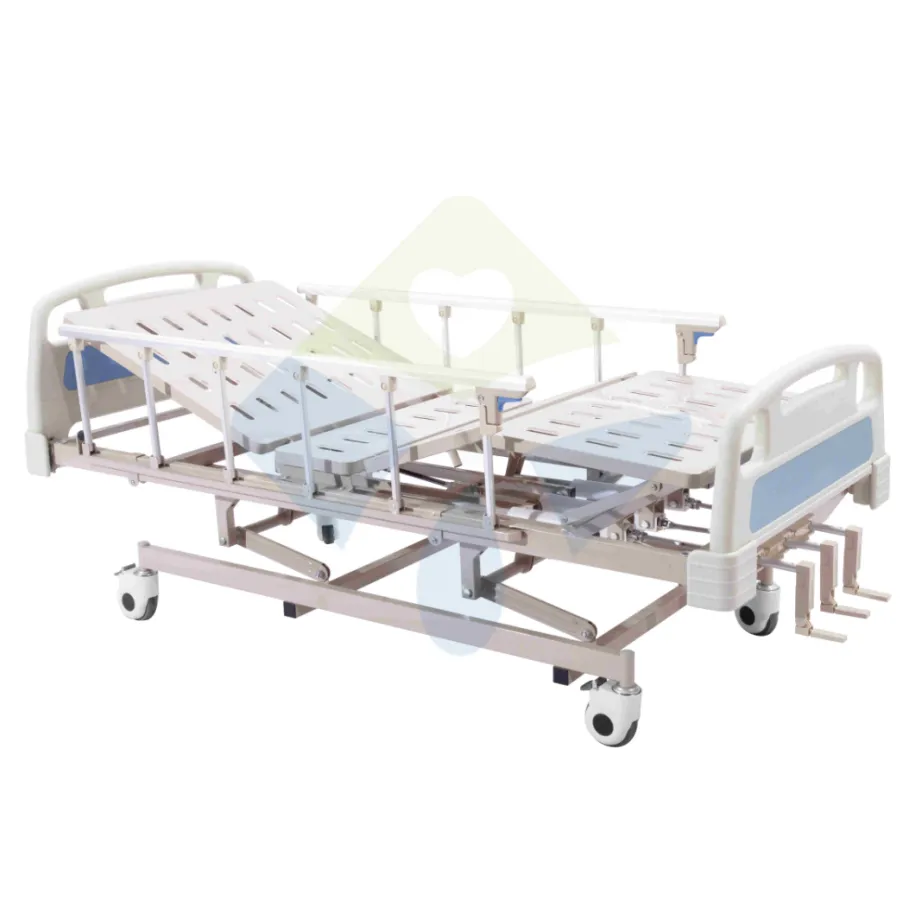
How should the size of different types of hospital beds be selected?
From a procurement perspective, hospital medical beds can be broadly categorized into general adult hospital beds, extended-size hospital beds, ICU beds, orthopedic hospital beds, pediatric beds, and special care beds.
General adult hospital beds are suitable for most comprehensive wards. An initial reference can be a bed surface width of approximately 90 cm and a bed surface length of approximately 200 cm, with the final specifications determined based on specific products and hospital standards. Their core focus is on versatility and space efficiency.
Extended-size hospital medical beds are primarily designed for larger or obese patients. These beds typically require a wider bed surface, a higher rated safe working load, and a more stable bed frame. It's crucial to note that "bed width" and "load-bearing capacity" are not synonymous. An extended-size bed with insufficient rated load-bearing capacity is unsuitable for obese patients. Therefore, when purchasing, at least the maximum patient weight, safe working load, and mattress load-bearing capacity should be considered simultaneously.
ICU hospital beds, on the other hand, emphasize equipment compatibility, positioning management, patient transfer, and nursing procedures. ICU bed sizes should not simply be large; instead, emphasis should be placed on the operating space around the bed, the connectivity of headboard equipment, and transport efficiency.
Orthopedic hospital beds require greater consideration of traction, position changes, and patient transfer. For patients requiring long-term bed rest, compatibility between mattress size and pressure injury prevention systems should also be considered.
Children's hospital beds cannot directly adopt adult hospital bed sizes. The new version of IEC 80601-2-52:2026 clearly states that its scope of application is mainly for adult medical beds, while children's medical beds and adult patients with special body types fall under other applicable scopes or standard systems. Therefore, when purchasing children's beds, hospitals should select models separately based on the child patient's height, weight, age, and risks such as trapping and falling from the bed.
Hospital Bed Size Selection FAQ
FAQ 1: What are the common sizes of general hospital medical beds?
For adult general hospital medical beds, the most common bed surface size on the market is approximately 91 × 203 cm, or about 36 × 80 inches. This dimension can serve as a basic reference for hospital procurement, but specifications vary between manufacturers, countries, and clinical uses. Furthermore, the bed surface dimensions differ from the overall bed dimensions. Therefore, it is essential to review complete technical drawings during actual procurement, rather than relying solely on approximate figures like "90×200 cm."
FAQ 2: Is a wider hospital bed always better?
No. While wider hospital beds typically provide patients with more room to move around, they also occupy more ward space, reducing bedside aisle space and nursing care area. General wards should strike a balance between patient comfort and space efficiency, while wider hospital beds may be considered for obese patients or those requiring special care. The true criterion should be whether the patient's body size, clinical purpose, and ward space are compatible.
FAQ 3: How long of a hospital bed is needed for patients taller than 180 cm?
A bed surface of approximately 200 to 203 cm typically accommodates a large number of adult patients, but taller patients require further evaluation of legroom. For patients taller than 185 cm, hospitals are advised to prioritize hospital medical beds with extended bed surfaces and require suppliers to provide risk assessments for tall patients. IEC requirements for medical beds have also explicitly required manufacturers to consider the risks associated with patients taller than 185 cm in their risk management.
FAQ 4: Is a lower minimum bed height always safer?
Not necessarily. For patients at high risk of falls, low beds can reduce the fall height after an accidental exit from the bed, and are therefore usually of significant value; however, for tall, frail patients who are capable of independent movement, a consistently extremely low bed height may actually increase the difficulty of standing and getting out of bed. AHRQ guidelines also emphasize that adjustments should be made based on the specific risk level of the patient, rather than simply applying a "one-size-fits-all" bed height requirement.
FAQ 5: What dimensions are most easily overlooked when hospitals purchase hospital beds?
The most easily overlooked dimensions are the overall bed dimensions and the dimensions in motion. Many purchasing personnel only look at the length and width of the bed surface, neglecting the additional space occupied by the headboard, footboard, guardrails, casters, and other accessories. For hospitals with limited ward space, the actual space requirements of hospital medical beds in their highest position, with the backrest raised, and in a mobile transport state should also be tested.