
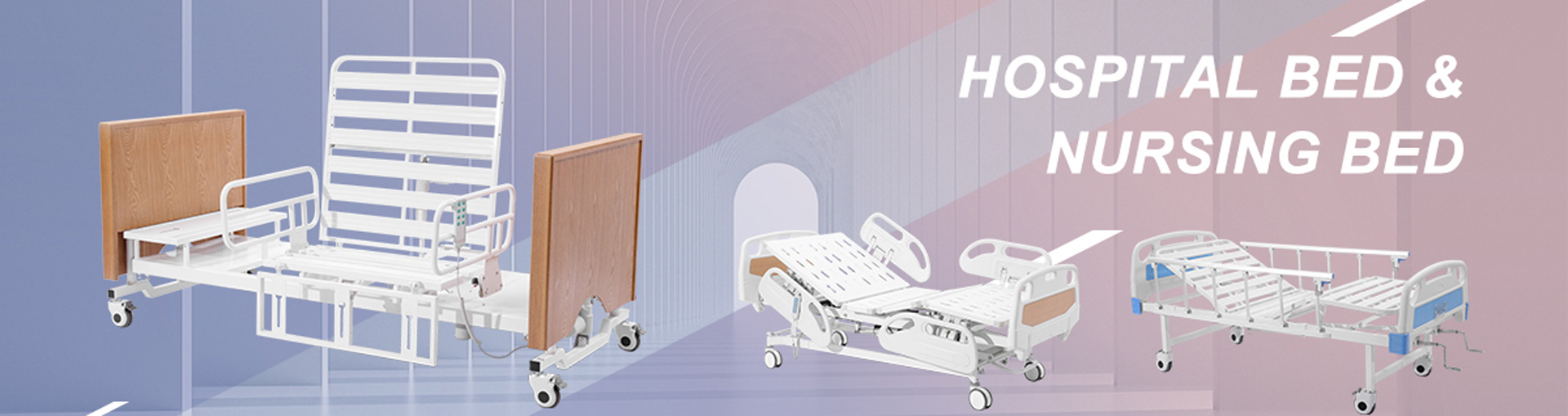
With the aging population and the growing demand for home-based elderly care and post-operative rehabilitation, the use of hospital-style beds has expanded from clinical settings—such as hospitals and nursing homes—into ordinary households. For the elderly who are bedridden long-term, patients recovering from surgery, individuals with limited mobility, and those requiring long-term care, a suitable home hospital bed not only enhances comfort but also alleviates the burden on family caregivers during tasks such as turning the patient, helping them sit up, cleaning, and changing sheets.
However, faced with the wide variety of hospital-style beds on the market, many families are unsure how to choose the right one. Common products include manual and electric hospital beds, as well as two-function, three-function, and multi-function models; these differ in terms of adjustment mechanisms, functional features, weight capacity, dimensions, and price.
So, how exactly should one select a home hospital bed? What is the difference between two-function and three-function models? How do you choose between manual and electric versions? What key specifications should be prioritized? The following analysis addresses these questions based on practical home care needs.
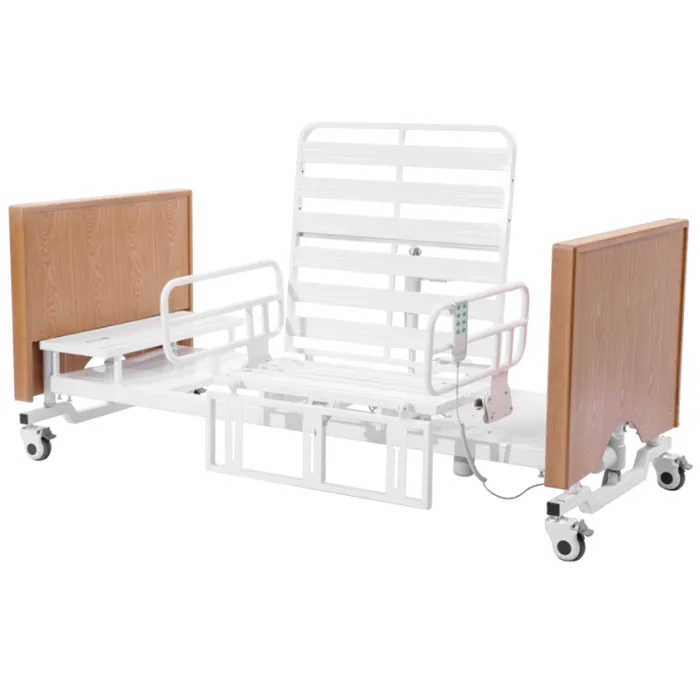
Which households need a home hospital bed?
While standard household beds are primarily designed for sleeping, hospital-style beds are engineered to facilitate patient positioning and caregiving. Consequently, not every elderly person or patient requires one.
For individuals who can get out of bed and walk normally without requiring long-term caregiver assistance, a standard bed usually suffices. However, a home hospital bed offers significant practical value for patients who are bedridden long-term, struggle to sit up, have significantly reduced mobility, or require frequent daily care from family members.
Typical users include patients who are bedridden long-term, those with spinal cord injuries, individuals with reduced mobility following a stroke, patients recovering from orthopedic surgery, the elderly with limited mobility, and those with chronic illnesses requiring long-term care.
The primary advantage of a hospital-style bed is its adjustability—allowing the backrest, leg section, and overall bed height to be modified. This helps the patient maintain a comfortable and appropriate posture while making it easier for caregivers to perform tasks such as feeding, washing, changing dressings, and changing bed linens.
For long-term bedridden patients, a hospital-style bed is not merely a "more comfortable bed" but a piece of assistive care equipment. Therefore, before making a purchase, it is important to clarify the patient's specific care needs rather than simply comparing product prices.
What are the main types of hospital-style beds for home use?
1. Manual Hospital Beds
Manual hospital beds rely on mechanical mechanisms—such as hand cranks or handles—to adjust the angle of the backrest or leg section; they do not use electric motors.
Their advantages include a relatively simple structure and easy maintenance; they are also generally less expensive than electric models. If the patient requires only occasional position adjustments and family members are available to assist with operation, a manual bed can meet basic care needs.
However, the disadvantages are also clear: adjustments require manual effort. If the patient needs to change positions frequently throughout the day, the caregiver must repeatedly operate the cranks, which increases the workload over time.
Therefore, when choosing a manual bed, one should carefully consider the frequency of use and the caregiver's physical capabilities.
2. Two-Function Hospital Beds
Two-function hospital beds typically offer two primary adjustment features—such as backrest elevation and leg section adjustment—though definitions of "function count" may vary by manufacturer; always refer to the product manual for specifics.
These beds are suitable for households with basic care requirements—for instance, where the patient needs assistance sitting up, elevating their legs, or adjusting their lying position, but does not require frequent adjustments to the overall bed height.
If the patient retains some mobility and the burden on the caregiver is relatively light, a two-function bed is usually sufficient to meet basic needs.
3. Three-Function Hospital Beds
Three-function hospital beds add the feature of overall bed height adjustment to the standard backrest and leg section adjustments.
For home care, the ability to adjust the bed's height is highly practical. Caregivers can raise the bed to a comfortable level when washing the patient, changing sheets, or performing other care tasks, thereby reducing the need to bend over for extended periods.
The bed height can also be adjusted to facilitate getting in and out of bed.
Consequently, for patients who are bedridden long-term and require frequent care, a three-function bed is generally more convenient than basic models.
4. Electric Multi-Function Hospital Beds
Electric hospital beds use motors to adjust the backrest, leg section, and overall bed height, typically controlled via a handheld remote.
For patients who require frequent position adjustments throughout the day, electric hospital beds can significantly reduce the need for manual effort. If the patient retains normal upper-body mobility, they may be able to make some postural adjustments independently.
However, the more functions an electric hospital bed has, the more complex its structure tends to be, leading to higher costs and increased maintenance requirements. Therefore, families should not blindly prioritize the number of features but should instead make a choice based on the patient's specific needs.
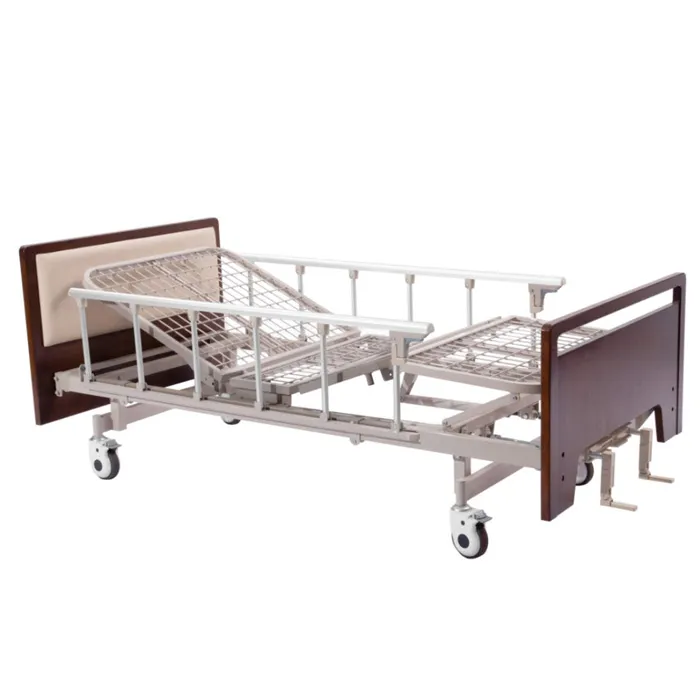
How do you choose between manual and electric hospital beds?
This is a common question for families purchasing a hospital bed.
If the bed is used infrequently, family members are available to assist with adjustments, and there is a preference for lower purchase costs and structural simplicity, a manual hospital bed is a suitable choice.
If the patient requires frequent daily adjustments to the backrest, leg section, or bed height, or if it is inconvenient for caregivers to operate the bed manually, an electric hospital bed offers greater convenience.
In short, you can make your choice based on the following criteria:
Low-frequency care + convenient for family operation: Consider a manual hospital bed.
Long-term bed rest + high-frequency care: Consider an electric hospital bed.
Patient can operate the bed independently: The convenience of an electric hospital bed is particularly advantageous.
Limited budget + simple functional needs: A basic manual hospital bed can meet these requirements.
It is important to note that the choice of a hospital bed should not be based solely on price. For long-term users, ease of operation, structural stability, and after-sales maintenance are equally important.
What key specifications should be considered when choosing a home hospital bed?
1. Bed surface dimensions
The width of an adult hospital bed surface is typically around 90 cm, and the length is approximately 200 cm, though dimensions vary by model.
When purchasing a home hospital bed, do not measure only the mattress size; consider the overall width, including side rails, the bed frame, and casters.
This is especially important for families living in older homes, small apartments, or homes with limited bedroom space; measure doorways, hallways, elevators, and the bedroom itself before purchasing to ensure the bed will fit.
2. Weight capacity
Weight capacity is a crucial specification for hospital beds. Safe working loads vary by model, ranging from around 100 kg to 150 kg or even higher.
Do not base your choice solely on the patient's body weight. For example, a patient weighing 90 kg does not necessarily mean a bed with a 100 kg rated capacity is suitable for long-term use; factors such as bedding, assistive equipment, and dynamic loads during use must also be considered. Therefore, it is important to check the manufacturer-specified Safe Working Load (SWL).
3. Bed Height Adjustment Range
If the hospital bed features a height-adjustment function, caregivers can adjust the bed surface height based on their own stature and the specific care tasks being performed.
A low position makes it easier for patients to get in and out of bed, while a high position facilitates caregiving.
Consequently, the height-adjustment function is often highly valuable for patients requiring long-term care from family members.
4. Bed Weight and Casters
If the home hospital bed needs to be moved frequently, both the total weight of the bed and the quality of the casters must be considered.
Casters should roll smoothly and feature reliable braking mechanisms. They should generally be locked during caregiving to prevent the bed from moving while the patient is getting in or out, or during care procedures.
FDA safety guidelines for hospital beds also emphasize the importance of bed stability and caster locking.
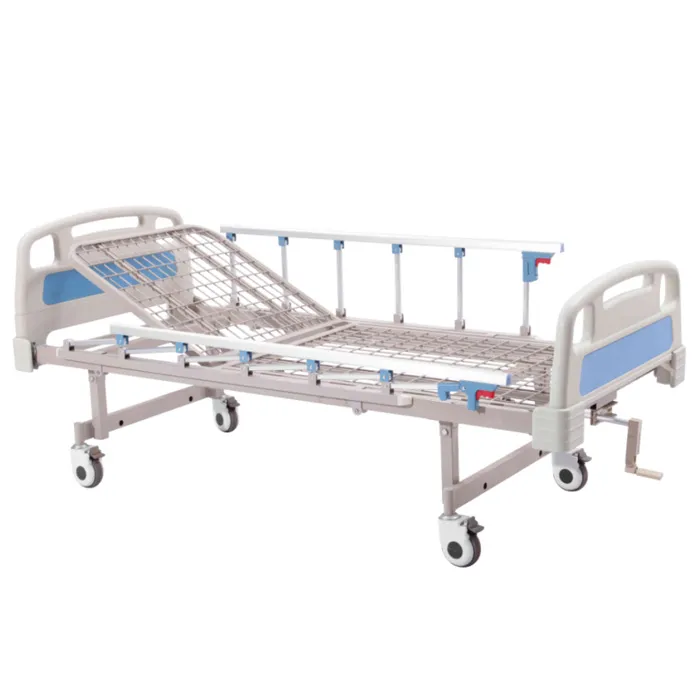
Are higher side rails on home hospital beds safer?
Many families assume that higher side rails equate to greater safety, but this is not necessarily the case.
While side rails can help reduce the risk of falls and provide support for the patient, improper design, installation, or use can create risks of entrapment.
FDA data shows that between 1985 and 2013, the agency received 901 reports of incidents involving patients being caught, trapped, entangled, or strangled by hospital beds, resulting in 531 deaths. These risks apply not only to hospitals but also to nursing homes and home care environments.
Therefore, when selecting a home hospital bed, one should not focus solely on rail height; attention must also be paid to the rail structure, locking mechanism, and the compatibility between the rails, mattress, and bed frame.
Safety assessments tailored to the specific situation are particularly important for patients with cognitive impairments, those who are agitated, or those prone to attempting to climb over the rails.
How should a mattress for a home hospital bed be selected?
The mattress is just as important as the bed itself when purchasing a home hospital bed.
Standard household mattresses are not necessarily suitable for all hospital beds. For beds with adjustable backrests and leg sections, the mattress needs to be flexible enough to accommodate these movements and must match the dimensions of the bed surface. If the mattress is too small, dangerous gaps may form; if it is too thick or too firm, it may interfere with the bed's mechanical functions.
For patients who are bedridden for extended periods, the mattress choice should also be based on the patient's weight, mobility, and risk of pressure injuries.
Options such as high-density foam mattresses, zoned-support mattresses, or air mattresses can be selected based on specific needs; however, one should not simply assume that "being bedridden means the softest mattress is best."
The FDA also advises that the bed frame, mattress, and side rails be considered as an integrated system, as dimensions and compatibility between components affect safety.
What are the current pain points in the home hospital bed industry?
As the demand for home hospital beds grows and the market offers an increasingly wide range of products, consumers still face several significant issues during the purchasing process.
First is the homogenization of features. Many products advertise "two-function," "three-function," or "multi-function" capabilities; consumers often assume that more functions are better, overlooking whether the patient actually needs them.
Second is a lack of transparent specifications. Some products highlight selling points like "thickened steel tubing" or "high load-bearing capacity" without clearly stating critical parameters such as safe working load, bed surface dimensions, elevation range, and motor configuration.
Third is the failure to consider the home environment. Once a hospital bed is placed in a home, it is subject to constraints imposed by doorways, elevators, hallways, and bedroom space. Without pre-purchase measurements, one may easily encounter problems where the bed cannot be moved inside or, once placed, prevents proper patient care.
Fourth is the issue of accessory compatibility. Accessories such as side rails, mattresses, IV poles, and overbed tables are not universally compatible across all models. It is crucial to verify that items—especially mattresses and side rails—match the specific hospital bed model.
Fifth is inadequate after-sales service. While manual hospital beds have relatively simple structures, electric models involve motors, controllers, and wiring, which may require maintenance over time. Therefore, when purchasing, one should not compare prices alone but also consider the availability of spare parts and the quality of after-sales support.
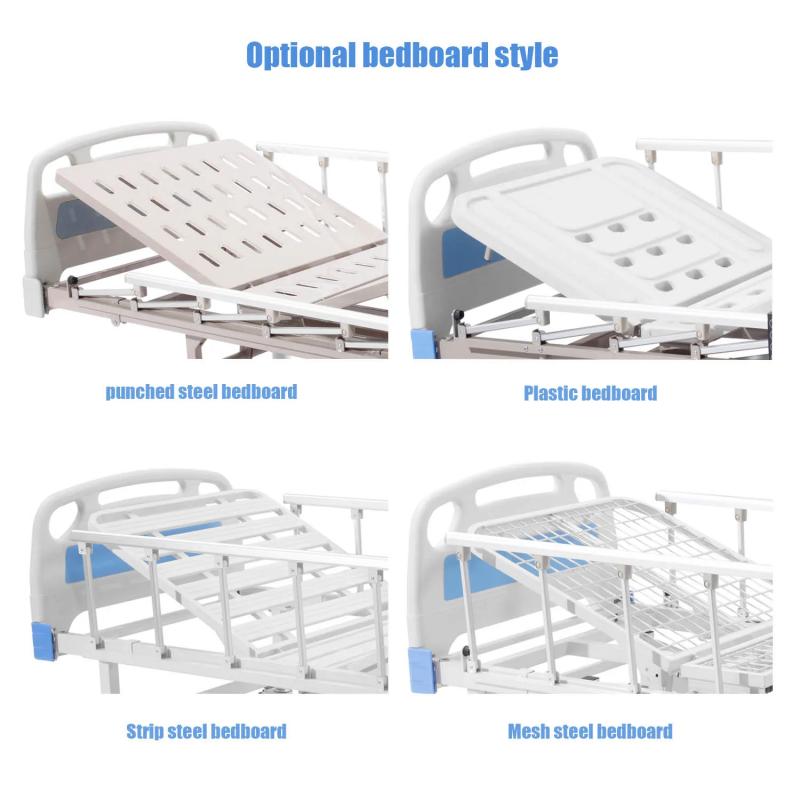
How do you choose a hospital bed suitable for home use?
Selecting a hospital bed for home use professionally can be done by following a three-step process: "Patient Needs – Product Functions – Home Environment."
First, consider the patient. If the bed is intended only for short-term post-operative recovery, extensive functionality may not be necessary; however, for patients who are bedridden long-term, key considerations include ease of caregiving, bed height adjustment, side rails, and the mattress.
Next, consider the functions. If the primary needs are sitting up and elevating the legs, a two-function hospital bed may suffice; if frequent caregiving is required, a three-function bed is a good option; and if the patient needs frequent position adjustments, an electric multi-function hospital bed should be considered.
Finally, consider the home environment. Before purchasing, measure doorways, hallways, elevators, and the bedroom space to ensure the bed can be brought in and used properly, while also ensuring there is enough space on both sides for basic caregiving activities.
For long-term bedridden patients, special attention should also be paid to the mattress, side rails, and pressure management.
FAQ: Common Questions About Home Hospital Beds
Q1: Should I buy a home hospital bed for an elderly person with limited mobility?
If the elderly person can get out of bed and walk normally, a standard bed usually meets their needs. However, if they are bedridden long-term, have difficulty getting up, or require frequent care from family members, a home hospital bed offers greater convenience.
Q2: Which is better for home use: a manual or an electric hospital bed?
It depends mainly on the frequency of caregiving. If care needs are simple and family members can easily operate the bed, a manual model is a suitable choice; if the patient is bedridden long-term and requires frequent position adjustments throughout the day, an electric model is preferable.
Q3: What is the difference between two-function and three-function hospital beds?
Specific functions vary by manufacturer. Generally, a two-function bed offers basic backrest and leg-rest adjustments, while a three-function bed typically adds the ability to adjust the bed's overall height.
Q4: What is the typical weight capacity of a hospital bed?
This varies significantly by model; common products often have a safe working load of around 100–150 kg or higher. You should refer to the manufacturer's technical specifications for exact figures.
Q5: Can I use a standard mattress with a home hospital bed?
Using a standard mattress directly is not recommended. You should verify that the mattress's length, width, thickness, and flexibility are compatible with the hospital bed—especially for electric adjustable models.