

Among all specialized wheelchairs, sports wheelchairs are designed to be the lightest, most agile, and most performance-oriented category. Whether in wheelchair basketball, tennis, racing, or other athletic pursuits, the weight of a sports wheelchair directly impacts an athlete's speed, acceleration, agility, and overall handling experience. Consequently, the question "How much does a sports wheelchair weigh?" has become one of the primary concerns for those preparing to engage in wheelchair sports, purchasing professional equipment, or simply seeking to understand athletic gear.
The standard answer is: Most sports wheelchairs weigh approximately 15 kg.
Depending on the specific structure, materials, configuration, and intended sport discipline, the weight may vary slightly—typically ranging between 10 kg and 18 kg—but overall, they remain an exceptionally lightweight category of athletic equipment.
This article will provide an in-depth analysis of this topic, enabling you to fully understand why the weight of a sports wheelchair is so critical, the factors that contribute to its weight, how weight varies across different sports disciplines, the significance of lightweight design, and practical advice for users making a selection.
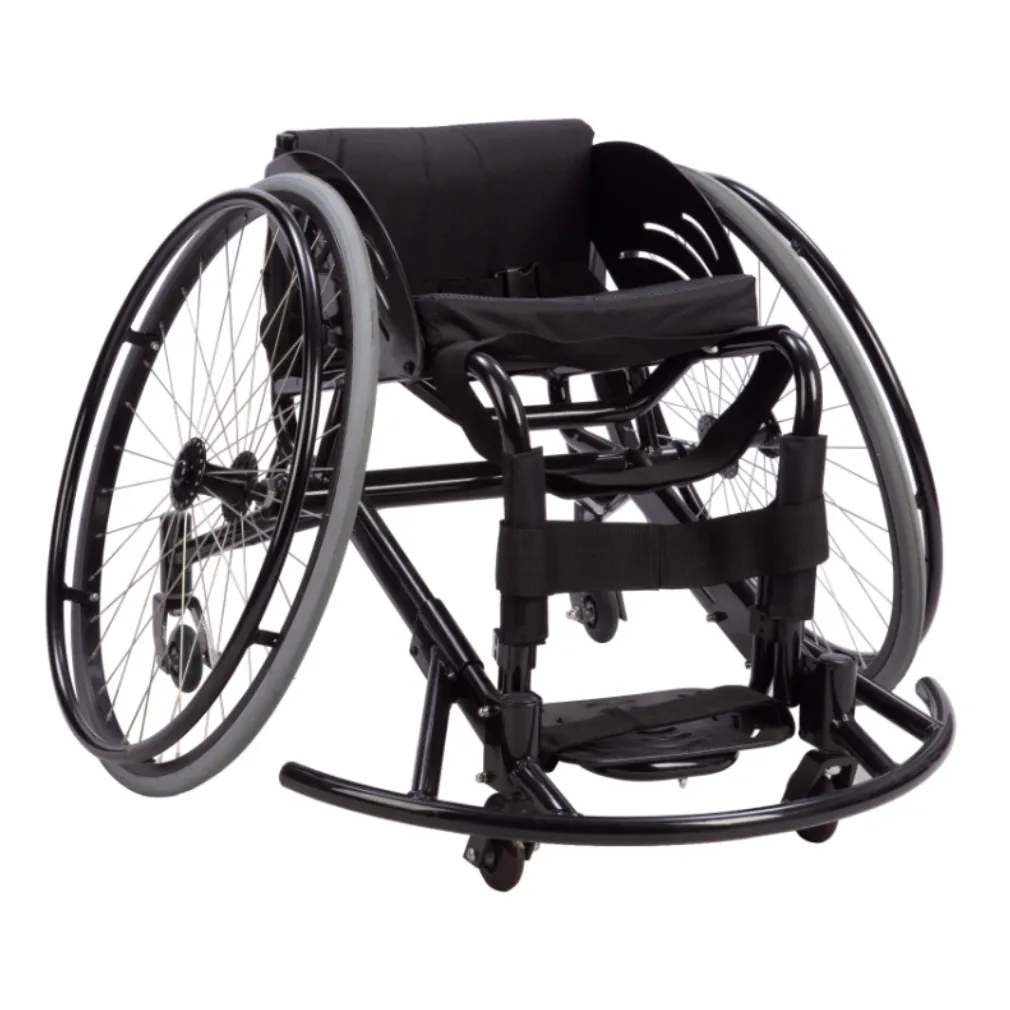
What is the Weight of a Sports Wheelchair?
Why Do Sports Wheelchairs Typically Weigh Around 15 kg?
The fact that most sports wheelchairs are designed to hover around the 15 kg mark is primarily driven by the following design rationale:
1. Lightweight Design Enhances Speed and Agility
Sports competitions are intense, requiring rapid propulsion, sudden stops, and quick directional changes; the lighter the wheelchair, the less physical effort is required to maneuver it.
2. Ensuring Structural Stability and Strength
While lightweight design is a priority, sports wheelchairs must withstand significant forces—such as impacts and sudden deceleration—during use; therefore, they must maintain sufficient structural integrity and strength.
3. Compliance with Equipment Regulations for Most Sports
Although various sports associations do not necessarily mandate a single, uniform weight standard, industry-wide design experience has established a mainstream specification of approximately 15 kg.
4. The Balance Point Between Materials and Cost
Utilizing lightweight metals—such as aluminum alloys or titanium alloys—effectively reduces overall weight while keeping manufacturing costs within a reasonable range.
Thus, the "approximately 15 kg" weight of a sports wheelchair represents both the collective technical achievement of the industry and the optimal balance between performance and economic feasibility.
What Components Contribute to a Sports Wheelchair's Weight?
Although the overall weight averages around 15 kg, every single component of a sports wheelchair contributes to—and influences—the total weight.
The weight of a sports wheelchair is determined by the following components:
1. Frame Material and Structure
•Aluminum alloy
•Titanium alloy
•High-strength steel
•Carbon fiber (found in select high-end models)
The frame constitutes the largest source of weight in a sports wheelchair and is the most critical element in its lightweight design.
2. Wheels and Rims
•Rear wheels (large wheels) typically range from 24 to 26 inches in diameter.
•Front wheels (small wheels/casters) typically range from 3 to 6 inches in diameter.
•Rim material significantly impacts weight (e.g., aluminum vs. carbon fiber).
3. Footrests and Side Guards
Depending on the materials used, the weight difference for these components can range from 0.5 to 1 kg.
4. Seat Cushions and Backrest Systems
Sports wheelchairs typically utilize lightweight foam or fabric cushions, making them lighter than standard daily-use wheelchairs.
5. Specialized Sports Accessories
Different sports—such as basketball, tennis, and rugby—require specific accessories, including:
•Impact-resistant structures
•Anti-tipping devices
•Seat angle adjustment systems
All of the aforementioned components contribute to the final weight of the sports wheelchair.
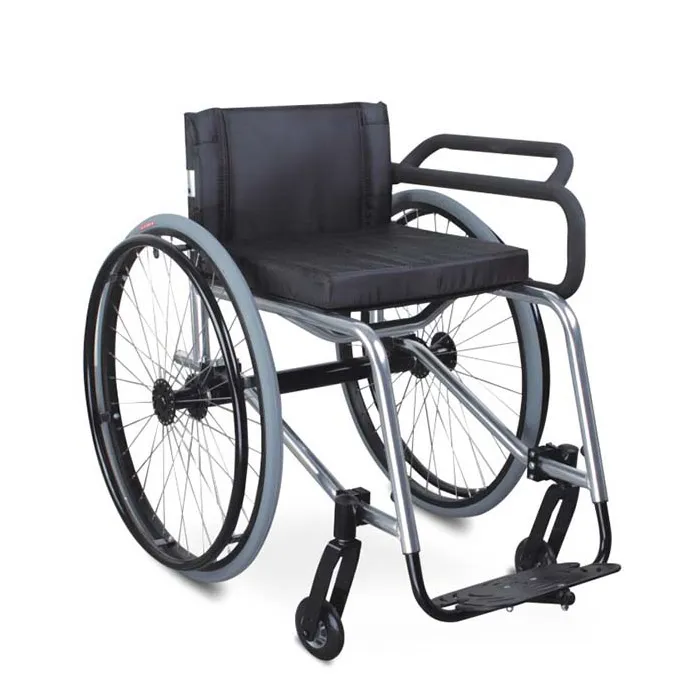
How Does Wheelchair Weight Vary Across Different Sports?
Different sports impose distinct requirements on wheelchairs; consequently, their weights vary slightly:
1. Wheelchair Basketball
•Features reinforced lateral structures and impact protection.
•Utilizes a larger wheel camber (outward tilt) for enhanced stability.
•Weight typically ranges between 14 kg and 17 kg.
2. Wheelchair Tennis
•Requires rapid lateral (side-to-side) movement.
•Features a lightweight frame and highly responsive steering.
•Weight typically ranges between 12 kg and 15 kg.
3. Wheelchair Racing (Track/Road)
•Demands the absolute lightest possible weight.
•Features a streamlined, aerodynamic design with three or four wheels.
•The total weight of the chair can be kept under 10 kg.
4. Wheelchair Rugby
•Involves extremely high-impact physical contact.
•Features a heavily reinforced, exceptionally robust frame.
•Weight typically ranges between 15 kg and 18 kg.
As is evident, the weight of a sports wheelchair reflects the intensity, pace, and physical nature of the specific sport.
What Are the Key Factors Influencing Sports Wheelchair Weight? Why do some sports wheelchairs weigh more or less than 15 kg?
The weight variations found in sports wheelchairs are primarily determined by the following factors:
1. Materials Used
•Aluminum Alloy: The mainstream choice—lightweight yet sturdy.
•Titanium Alloy: Lighter and more corrosion-resistant, but comes at a higher cost.
•Steel: Robust, but the heaviest option.
•Carbon Fiber: The lightest option, but extremely expensive.
Differences in materials alone can account for a weight variance of 2–5 kg among sports wheelchairs.
2. Complexity of Frame Design
•The more complex the structure, the greater its impact resistance—and the heavier the chair becomes.
•Minimalist designs are frequently utilized in racing disciplines.
3. Camber Angle Design
A larger camber angle enhances stability but adds weight to the components.
4. Degree of Customization
Personalized structural modifications may involve the addition of extra accessories, thereby increasing the overall weight.
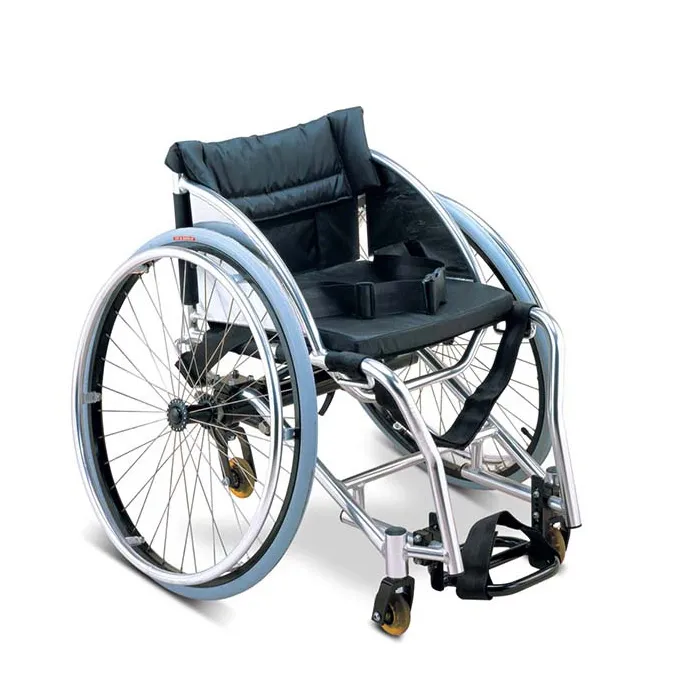
Why is lightweight design essential for sports wheelchairs? What benefits does it offer?
Lightweight design is a core element in enhancing the performance of sports wheelchairs, as it delivers the following advantages:
1. Faster Acceleration
Competitive sports require rapid starts and quick changes in speed; a lighter weight significantly reduces resistance.
2. More Agile Steering
The lighter a sports wheelchair is, the more responsive its steering becomes—making it better suited for intense, physical competition.
3. Reduced Physical Exertion for the Athlete
During prolonged training sessions or competitions, a lightweight design helps to minimize athlete fatigue.
4. Enhanced Control Precision
Athletes are able to control their movement distance and the rhythm of their actions with greater accuracy.
5. Ease of Transport and Portability
Lightweight sports wheelchairs are much easier to load into vehicles, carry, or store.
These advantages make sports wheelchairs the category with the most stringent weight requirements among all types of wheelchairs.
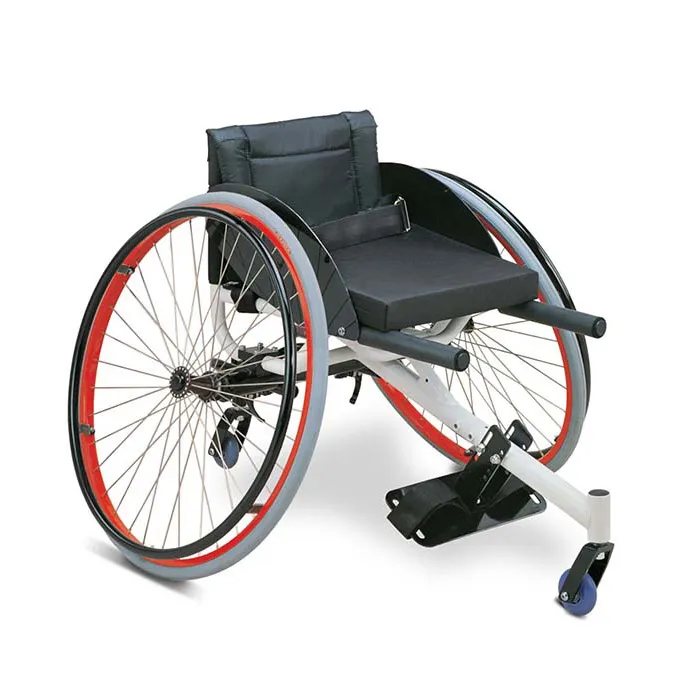
How do you choose a sports wheelchair with the right weight?
1. What weight range is best for beginners?
For most beginners, a sports wheelchair weighing between 12 kg and 16 kg is the optimal choice, for the following reasons:
•It is not too heavy, making it easy to push.
•It is not too light, which helps minimize control difficulties.
•It strikes a good balance between stability and durability.
2. Should professional athletes opt for lighter sports wheelchairs?
Professional athletes often opt for lighter sports wheelchairs (10–14 kg), as they place higher demands on:
•Handling precision
•Propulsion efficiency
•Competitive pace
However, the lighter a sports wheelchair is, the more stringent the requirements become regarding materials and manufacturing processes—resulting in a corresponding increase in cost.