
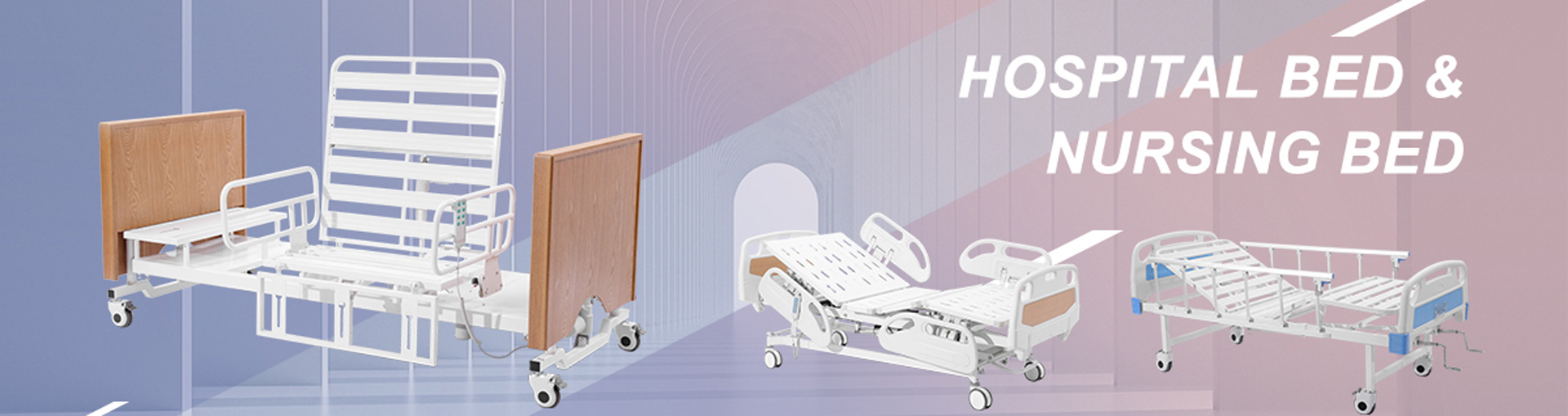
Compared to standard fixed hospital beds, the primary advantage of electric medical beds lies in their motorized systems, which assist patients in adjusting their body positions—such as raising the backrest, elevating the legs, or altering the overall bed height. These features help alleviate the physical strain associated with prolonged bed rest and improve caregiving efficiency. However, during the procurement and usage process, a crucial yet often overlooked question has gained attention: can the height of the bed rails be adjusted?
When selecting electric hospital beds, many users focus on factors such as the number of motors, weight capacity, adjustment angles, and remote control functions, while neglecting the vital role side rails play in patient safety. In reality, bed rails are not merely simple protective barriers; they serve multiple functions, including preventing falls, assisting patients in rising, facilitating caregiving tasks, and enhancing overall stability. If the rail design is inadequate, even a bed with advanced positioning capabilities may fail to meet long-term care requirements.
The healthcare industry currently faces a significant challenge: patient needs regarding safety and protection vary widely. For patients with good mobility who are undergoing rehabilitation, rails need to lower easily so as not to obstruct getting in or out of bed. Conversely, for patients with impaired consciousness, reduced muscle control, or a tendency to roll over during the night, the rails must provide sufficient height for protection. Relying on rails with a fixed height makes it difficult to satisfy such diverse needs. Consequently, modern electric hospital bed designs increasingly prioritize rail versatility, utilizing folding, vertical-lift, segmented, and adjustable rail systems to enhance adaptability. Some models now feature side rails that can be adjusted vertically or folded down, allowing caregivers to make quick adjustments based on the patient's condition.
So, can the rail height on electric medical beds actually be adjusted? What adjustment mechanisms are used on different types of beds? How does one select bed rails that ensure safety and suitability for long-term care? This article provides a detailed analysis from the perspectives of medical safety, structural design, ergonomics, and practical application.
Why is increasing importance being placed on electric hospital bed rails?
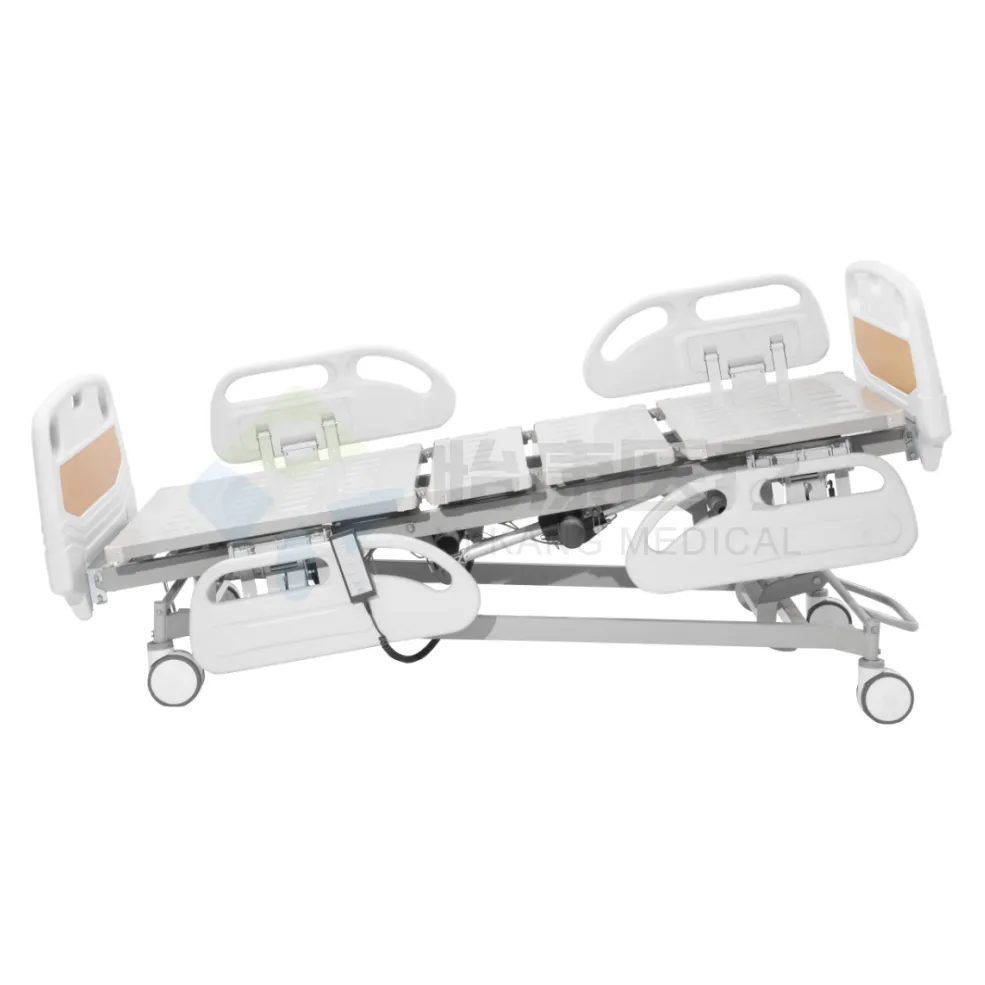
Traditional hospital bed designs were relatively simple, primarily aiming to provide a flat, safe sleeping surface, with side rails serving merely as auxiliary structures to prevent falls. However, as healthcare models have evolved, modern nursing care has shifted from purely clinical treatment to a greater emphasis on patient safety, comfort, and the rehabilitation experience; consequently, design requirements for electric medical beds have become increasingly sophisticated.
For patients confined to bed for extended periods, the risk of falling is a primary concern in caregiving. Elderly patients, those with neurological disorders, post-operative patients, and individuals with limited mobility may—due to impaired physical control—drift toward the edge of the bed while sleeping, turning over, or shifting positions. Without effective side protection, falls can occur.
However, simply making side rails as high as possible is not the ideal solution. While many assume that higher rails equate to greater safety, this is not entirely accurate. Medical care prioritizes "safety protection tailored to the patient's needs" rather than merely imposing restrictions. For instance, a patient undergoing rehabilitation might rely on side rails to sit up, transfer, or adjust their body position; if the rails are too high or cannot be lowered quickly, it hinders the patient's ability to move independently and complicates tasks for caregivers.
Therefore, modern electric hospital beds place greater emphasis on the flexibility of side rails. An excellent side rail system must meet three criteria: first, it must provide stable protection while the patient rests; second, it must allow for quick clearance of space during caregiving procedures; and third, it must be adjustable based on the patient's physical condition.
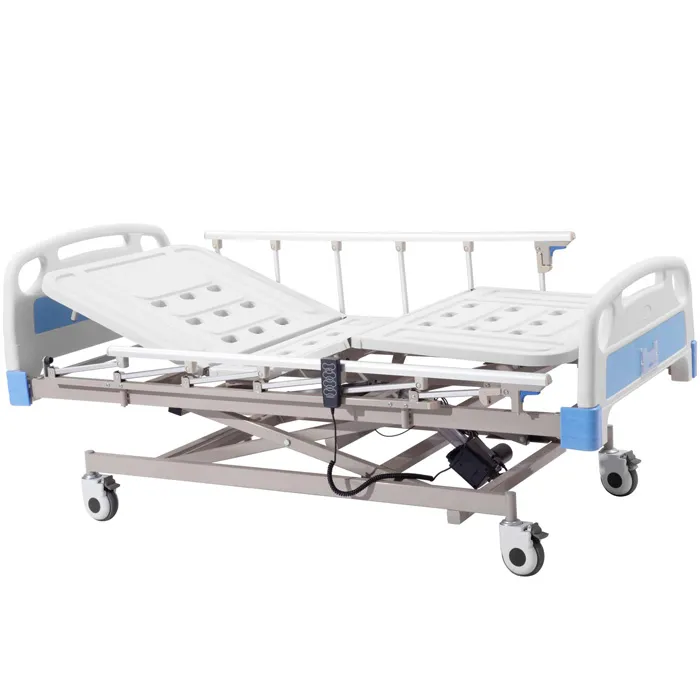
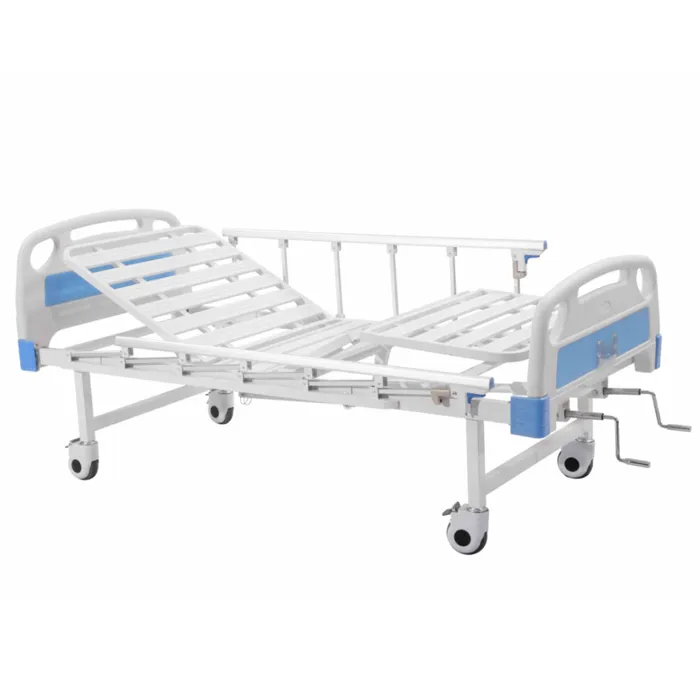
Electric hospital beds currently on the market typically feature continuous, segmented, or folding side rails. For example, some three-function electric hospital beds utilize a continuous side rail design that can be easily raised or lowered, ensuring patient safety while facilitating transfers for caregivers.
Can the side rail height on electric medical beds be adjusted?
Strictly speaking, the answer is: some electric medical beds allow for side rail height adjustment, but the specific method depends on the product's structural design; not all electric hospital beds feature motorized height adjustment for side rails.
Current methods for adjusting side rails on electric hospital beds generally fall into a few categories:
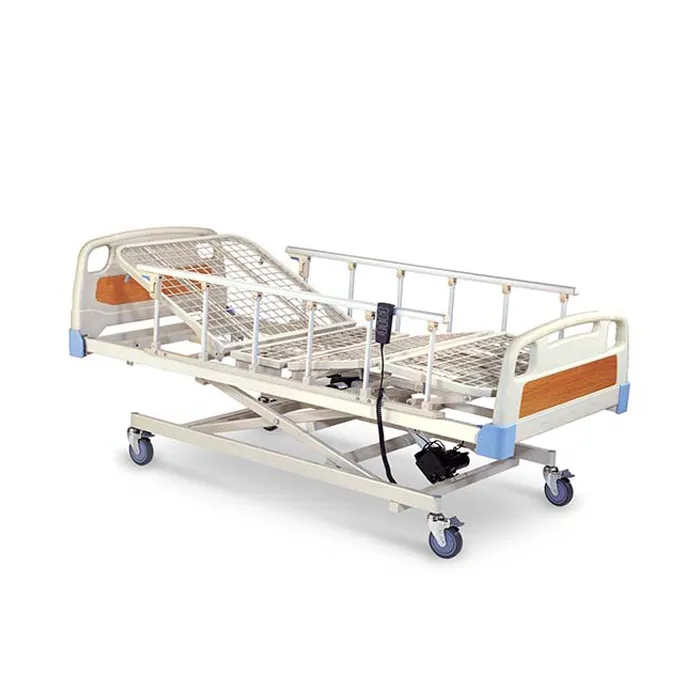
The first type is the manually operated side rail. This is a widely used design, typically employing mechanical sliding rails, locking mechanisms, or rotating assemblies to adjust the height. Caregivers can raise the side rails to provide protection based on the patient's condition, or lower them to facilitate getting in and out of bed or performing caregiving tasks.
The primary advantage of this design is its reliable structure and ease of maintenance. Since the rails do not require a dedicated motor, the failure rate is low, making them ideal for long-term use in hospitals, nursing homes, and home care settings.
The second type consists of folding or flip-down side rails. These designs do not necessarily alter the rail's actual height but instead change the area of protection through a folding mechanism. For instance, the rails can be fully extended to provide a protective barrier while the patient rests, yet quickly folded down against the side of the bed when a caregiver needs access to the patient.
Many electric hospital beds currently feature segmented folding rails—with independently controlled front and rear sections—allowing patients to grip the rails when rising while giving caregivers easier access. Some models even feature side rails that synchronize with the movement of the backrest, enhancing safety when the patient sits up.
The third type features rails with truly adjustable height. Typically found on high-end electric hospital beds, this design allows the rail height relative to the mattress surface to be adjusted based on mattress thickness, the patient's physique, and specific care requirements.
This design is particularly valuable for long-term care. For example, many patients use thick anti-decubitus (pressure-relieving) mattresses to prevent bedsores. If a bed has fixed-height rails, adding a thick mattress reduces the effective protective height; adjustable rails solve this problem.
However, products featuring independent electric height-adjustable rails remain relatively rare on the market due to their complex construction, which requires additional motors, control systems, safety locks, and anti-pinch mechanisms. Consequently, most high-quality electric medical beds still utilize a combination of mechanically adjustable rails and an electrically adjustable bed frame.
Why does the height of electric medical bed rails need to be adjusted based on the patient's condition?
Different patients have varying needs regarding rail height, a crucial factor in the design of electric medical beds.
For patients confined to bed for long periods, the rails serve primarily as a safety barrier. These patients often have limited mobility and cannot quickly reposition themselves, necessitating stable side protection. The rail height should be sufficient to cover the side of the patient's body, thereby minimizing the risk of falling while turning over. For patients in the rehabilitation stage, bed rails serve primarily as an aid. Patients may need to use the rails to sit up, move to the edge of the bed, or support their bodies. If the rails are too high, they may actually restrict movement. Therefore, these users are better suited to electric hospital beds featuring rails that can be quickly lowered or adjusted in increments.
For home care users, the importance of rail adjustability is even more pronounced. While hospital environments have professional staff to operate the bed as needed, home care is typically performed by family members. Complex rail mechanisms can hinder care efficiency and make usage difficult. Consequently, when selecting an electric hospital bed for home use, priority should be given to rail designs that are easy to operate and feature reliable, secure locking mechanisms.
What parameters should be considered regarding electric medical bed rail height?
When choosing an electric hospital bed, one should not focus solely on the presence of rails; it is also crucial to consider the relationship between rail height, mattress thickness, and the bed surface's adjustment range.
First, consider mattress thickness.
This is a factor many users overlook. Modern care beds are often paired with standard foam mattresses, medical-grade pressure-relief mattresses, or air mattresses, and the thickness can vary by several centimeters or more. If the rail height is fixed, adding a thicker mattress effectively reduces the height of the protection provided to the patient.
Second, consider the bed surface height adjustment range.
Modern electric medical beds usually feature height adjustment capabilities. For instance, some models allow the bed surface height to be adjusted within a range of approximately 40 cm to 70 cm to accommodate both the patient's needs for getting in and out of bed and the caregiver's operational requirements.
A lower bed position reduces the risk of injury from falls and facilitates transfers to and from wheelchairs, while a higher position makes it easier for caregivers to perform tasks such as dressing changes, cleaning, and daily care.
Third, consider the rail locking mechanism.
Safe electric medical bed rails must not only be adjustable but also capable of being securely fixed in place. If a rail were to accidentally lower while a patient is turning over, it could pose a serious safety hazard. Therefore, high-quality products typically employ mechanical locking structures that require a deliberate action to release. Some medical-grade electric beds feature anti-accidental operation mechanisms to prevent patients from lowering the rails themselves and creating a risk.
FAQ: Frequently Asked Questions about Adjusting the Handrails of Electric Hospital Beds
Q1: Can the handrail height be adjusted on all electric hospital beds?
No. Some electric hospital beds feature fixed side rails, while many others utilize folding, drop-down, or mechanically adjustable rails. It is important to verify the specific product design before purchasing.
Q2: Can the side rails of electric hospital beds be raised or lowered automatically via remote control?
Currently, the remote control functions on most electric hospital beds primarily manage bed height, backrest angle, and leg section angle, while side rail adjustments are usually manual or mechanical. However, some high-end models may offer smart side rail controls.
Q3: Are higher side rails on electric hospital beds safer?
No. The appropriate side rail height depends on the patient's physical condition, mattress thickness, and specific care requirements. Rails that are too high may hinder patient movement and reduce caregiving efficiency.
Q4: Should side rails be a consideration when choosing an electric medical bed for home care?
Yes. In a home care setting, side rails directly impact patient safety at night and the ease of caregiving for family members; therefore, it is best to choose a design that is easy to operate and features a reliable locking mechanism.
Q5: What type of side rails are best for patients who are bedridden for extended periods?
Patients who are bedridden long-term are generally better suited to continuous-style or high-security protective rails. These should be used in conjunction with features such as pressure-relieving mattresses, adjustable bed height, and positional adjustment capabilities to optimize overall care outcomes.