
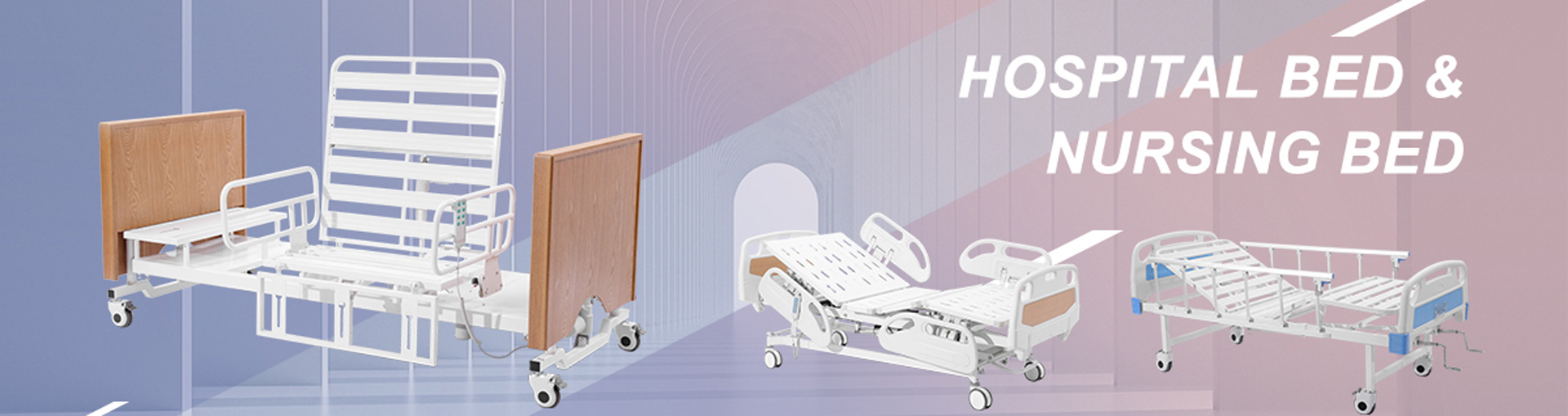
The global ageing population and rapid development of home care and smart elderly care markets have greatly expanded the usage range of electrically adjustable hospital beds outside hospital intensive care and rehabilitation units, so now more elderly care homes, nursing homes, and homes are using these devices for long-term patients. By comparison, electric hospital beds can not only offer various nursing functions such as bed height adjustment and backrest/leg height adjustment, but also overall tilting.
This reduces the work load for the nurses and, at the same time, can significantly increase the comfort level and quality of life for the bedridden patients over a long time period, leading to an increasing demand in the markets.
According to published industry data, medical bed market has been stable with growth in recent years where electric bed type was among the fastest-growing product segments largely due to their smarter technology and improved nursing efficiency.
With more electrically adjustable hospital beds being used, the issue about disassembly of the bed frame has drawn public attention. Many users feel that if the product can be assembled by the factory then one must be able to disassemble it.
But the truth is that although electric beds do incorporate modular design features for easier handling, storage, and assembly by professionals, no disassembly of such beds by individuals is advisable. In fact, a wrong disassembly attempt may cause serious troubles such as structural and/or electrical system problems that could pose safety hazards.
For example, in some cases users disassemble the bed frame in order to facilitate transport and then later find out the bed is wobbly and unstable; in other cases they removed the control unit to replace the motor, but in doing so they disconnected various components from their original places and the whole control system became disorganized;
and there are even cases that users mistakenly took away parts from the bed structure that could not have been removed, resulting in the bed becoming permanently deformed and presenting safety issues.
Not only do these incidents cause higher maintenance costs but more importantly, the patients' safety may be in jeopardy. As a matter of fact, the issue concerning bed dismantling for bed users is actually not whether it can be done but more so about what parts can be disassembled, who are the persons allowed to carry out the disassembly, and how the disassembly can be performed safest.
This article is going to do an in-depth analysis of this hot industry issue to give hospital procurement, nursing home managers, and home care customers more expert, professional-level references from different aspect such as product structure, safety risks, right methods of maintenance, and procurement recommendations.
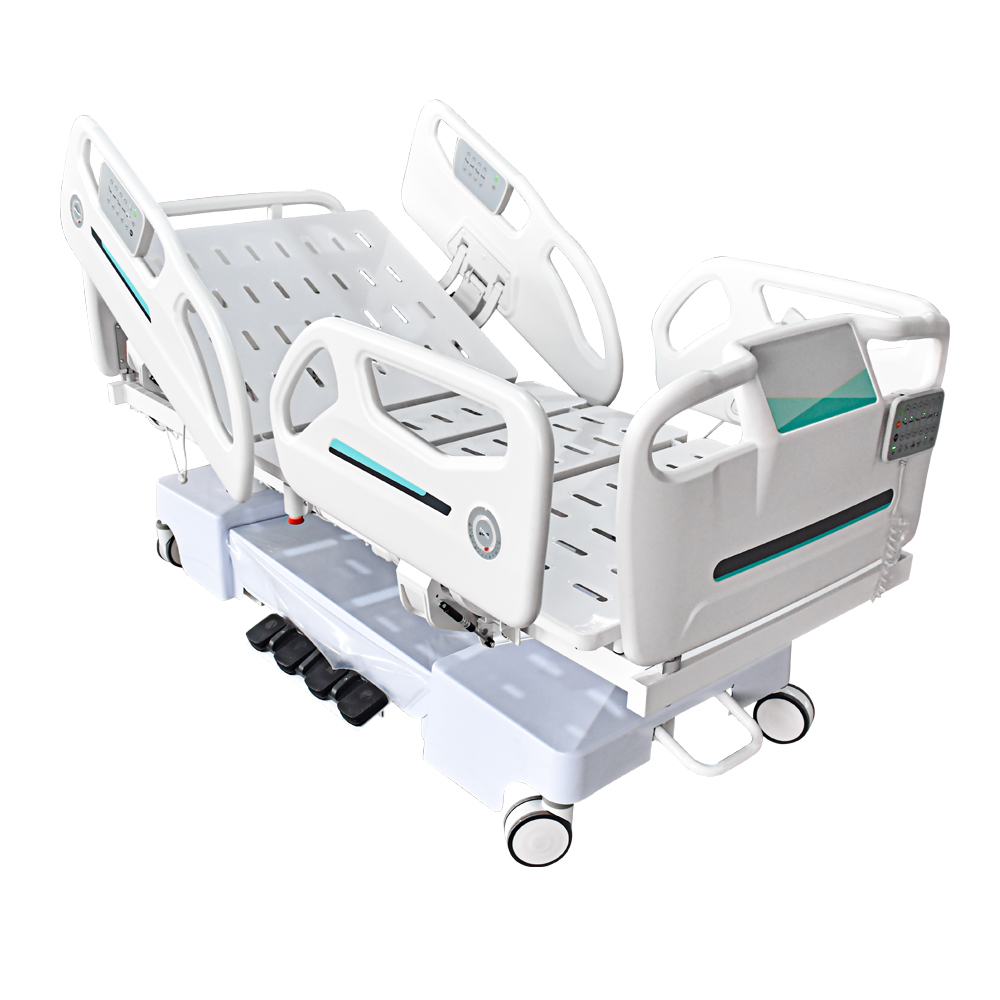
Can the frame of an electrically adjustable hospital bed be disassembled?
First of all, we take a product structural viewpoint, it is common that the reputable electric bed manufacturers have incorporated some degree of modular design into their products, primarily to meet the demands of logistics, export packing, warehouse and on-the-spot installation.
Most common items such as the bedhead, bedfoot, side rails, wheels and mattress, are often removable and reattachable, but this is usually done on the installation site by trained professionals. So the fact that many users, who only see the product being installed from one side without disassembly of the entire bed frame, assume that they can readily disassemble the bed frame entirely themselves is quite natural.
Disassemble, however, in the industrial context means something rather different from the general public's understanding of DIY (do it yourself), and the modular design was originally intended for the assembly and maintenance of product by manufacturers and their representatives, rather than the end-users. In fact, during disassembly and reassembly process, besides following the product documentation step by step, the installers are also duty-bound to check that each joint reaches the designated torque, verify that the direction of the running of the motor is correct, test the control system to confirm that all functions are in working order, and do the final inspection about the overall safety of the machine.
In fact, nowadays the bed frame of electric adjustable hospital beds is far not just a steel frame anymore, as it includes many parts such as electric actuators, transmission, load-bearing structure, control system and even the safety system, which together form the complete unit. If any of these parts is not properly assembled, it can result in instability of the entire system so from a technical point of view, electric hospital beds can, of course, be professionally disassembled and reassembled, but it is strongly against the common interest that individual users dismantle and disassemble the entire bed frame themselves.
Why is non-professional disassembly of bed frames and other parts of electrically adjustable hospital beds not advised?
There are several reasons for that:
1. The bed structure is not only the frame but also the supporting framework
Several users think that the entire frame consists of a few straight steel pipes simply welded together, and that they can just re-tighten the screws once the disassembly is done and things are back to order.
Actually, the electrically adjustable hospital beds were subjected to overall stress analysis in their design, and the position, angle, as well as fixing method of every joint in the bed have an impact on the maximum load it can carry.
The typical safe working maximum weight a mainstream electric hospital bed can carry is usually at a level of 170kg to 250kg. Some heavy-duty models go up to even above 300kg while the capacity of the whole frame to bear the weight should naturally be far beyond the weight of the user that they are holding.
Such load-carrying capability is not simply achieved from a single part but by the entire frame of the bed working together. If the bed owner just uses their manufacturer's manual and carries out a bit of disassembly/reassembly work at home, there is definitely a possibility that even a single connector that is not fully seated and tightened, if left unchecked through the life span of the bed, may cause uneven stress in the bed frame, resulting ultimately in the problem of bed shaking, the increasing level of abnormal bed noise, structural change and the welding areas being affected by fatigue damage due to longterm usage, etc.
Most importantly, these are the kind of bed problems that will almost certainly not appear at the beginning of bed ownership or at a very small number of users' beds, but develop slowly over some period in which they will affect multiple other factors and hence make it very difficult for many of the users to timely identify the risks of such problems.
2. Electronic control systems are not just that, far more complex ones than ordinary furniture
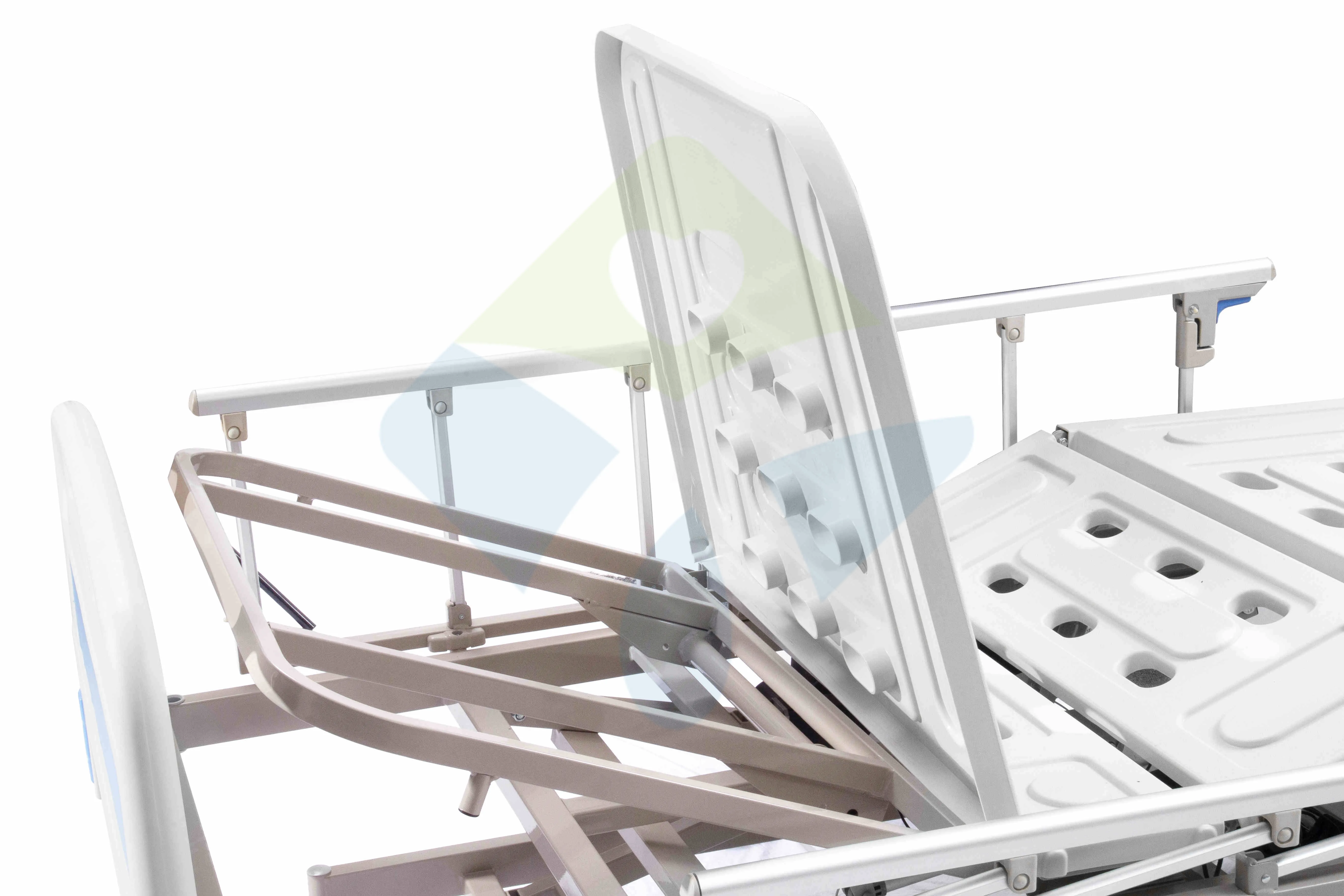
Electrically adjustable hospital beds are nowadays the classic products of mechatronics that comprise of several electric actuators, control boxes, power systems, wiring harnesses, protection against limit, and modules for synchronous control. Different kinds of configurations are used between different models but most products have at least several motors for the headrest, the leg rest, and the height of thebed to be changed. Some top models also come with extra functions such as a Trendelenburg (head-down, feet-up), a Reverse Trendelenburg (head-up, feet-down), automatic reset one-button and a CPR quick leveling.
Each of these motors work together and are controlled by a central control system. It is quite likely that a disconnected cable from the motor, plugging a motor into an incorrect port, or a squeezed harness from disassembly, could lead, in the worst-case scenario, to the motor being completely out of synchronization with the rest of the system or, perhaps, even burning out the control module. Since electrically adjustable hospital beds involve not replacing parts only, more than that they include also more electronic control systems in case of their repair and disassembly. Consequently, any such work shall be done only by trained technicians.
3. Safety Protection Functions May Fail
Modernelectrical adjustable beds are not just providing the patient with care functions but they also have to do the important job of patient safety protection.
In order to lower nursing risks, various models are equipped in addition with safety measures like anti-pinch structures, the locking ofguardrails, overload motor protection, an emergency power-off protection, and a way of fixing the wiring.
Although these functions may appear minor and almost negligible at the initial stages, their importance gradually becomes apparent during long-term care situations.
If the frame is moved just slightly when a bed is reinstalled, certain safety safeguards could stop functioning as expected. For example, an un-lockedguardrailwould increase thepossibilityof patients falling. A change in the position of the wiring fixation might cause the cables to wear. And if the motor installation angle is misaligned it may affect the overall stability of operation. Therefore, it is clear from the perspective of ensuring patient safety that disassembling of an electric hospital bed yourself will have risks you have to live with.
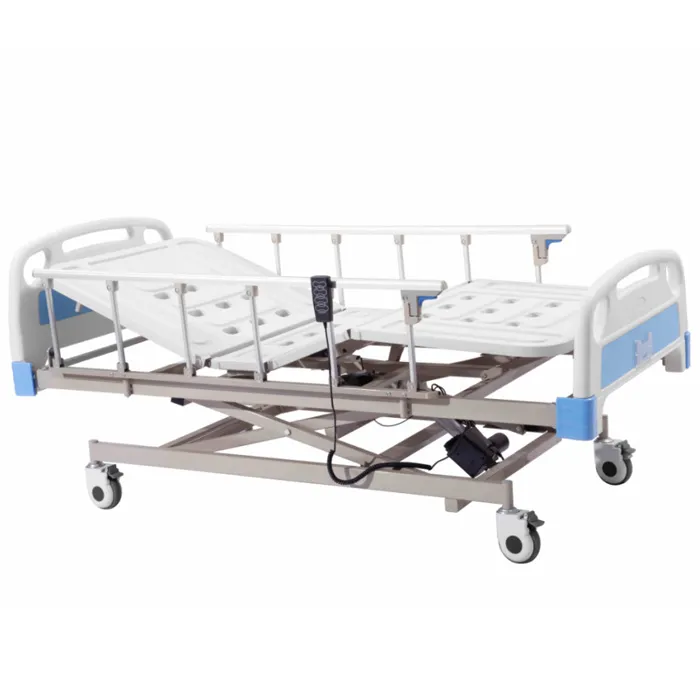
The question is, which parts of an electrically adjustable hospital bed can be disassembled and reassembled at home?
Usually the parts that can be easily put in and taken out such as headboard, bedfoot, rail, IV pole, folding table, caster, etc. are detachable accessories that the users can change their position depending on the instruction booklet which is mostly to facilitate transportation, cleaning or replacement of the accessories.
Apart from external items, there are also parts that make up the basic structure of the bed (such as the major load-bearing bed frame, the electrically driven actuator mounting base, the controller, the power system, the lifting mechanism, the synchronous transmission system, and the chassis structure), which are really the core parts of such a bed. Therefore, ordinary people cannot just casually take them apart. Disassembling these parts will not only lead to a breakdown in the mechanical and load-carrying capacities of the bed but would also be a problem in the calibration of such a large bed as it will be an overall adjustment of the safety systems of the machine.
Actually, the rule is that when it comes to the question of whether something can be taken apart you have to consider this: the moment you get anything that relates either directly or indirectly with load-bearing, power systems or electrical control systems is the time to stop and get out the tools of professional after-sales personnel. This is not a time to rely on one's experience alone.
If it is indeed necessary to move an electrically adjustable hospital bed, what is the correct method?
In actual fact, moving, the hospital renovation, or the change of equipment at an institutional care facility of an elderly person may indeed involve the need to move an electrical adjustable hospital bed. In such instances, it is not the bed owner who disassembles it, that is not the proper method but rather the original service provider who disassembles it after being told what support can be available in terms of the modular dismantling, etc.
Technicians will usually have a standardized way of doing the dismantle like disconnecting electric supply and securing moving parts first followed by dismantling any separate modules or the removable parts. Then they will mark down connecting wires, separate out, and package all the components and also make preparations for shockproof of the product during transport. After the bed arrives at its new location it is reassembled according to standard procedures and all the functions of the bed are thoroughly tested such as the lift function, the guardrail lock, the break system, the motor synchronization and the control system. It is not until all the items are found to be satisfactory to all the requirements that the device can be put back into clinical use.
Taking one instance, compared to moving other normal furniture, such an operation involves more work, but it will ensure both the safety and life expectancy of the product, which at present is what major medical institutions are following and it has become standardized practice.
How to decrease the subsequent need for maintenance and disassembling/ reassembling of electrically adjustable hospital beds?
The most effective strategy is to carry out good regular maintenance and to avoid disassembling at least for a long while if possible. For a medical centre, the nursing home or the customer who has the patient in the family home a system of professional and continuous monitoring will result in not only savings on repairs but also a more efficient utilization of the equipment.
Daily visual inspection is necessary that one of bed frame connections is loosened, then, check that one can properly lock and unlock theguardrail, confirm that one's brakes are working on a wheel and check whether cable gets worn.
Apart from that, it is advisable to maintain dry, clean operational environment and avoid prolonged overloading for your electric hospital bed. Medical institutions can arrange a specialized check-up every 3 to 6 months for high-use scenarios; whereas at home care level a complete servicing can be carried out every 6 to 12 months or depending on a particular situation.
The moment any of abnormal noises, unusual lifting, and controller alarms, and structural deformation of bed occurs, it is advised to immediately get in touch with the after-sales service of the manufacturer's instead of trying to diagnose it yourself by dismantling the bed.
More attention is needed when purchasing electrically adjustable hospital beds to the bed's frame quality and after-sales service.
A lot of purchasing managers when making choices for electrically adjustable hospital beds concentrate more on such characteristics as price, appearance, and number of features, but overlook the most crucial factors that decide the product's longevity i.e., bed structure, strength of welding, stability of motor, and after-sales service.
High performance medical beds not to mention that are able to carry great loads with a minimum of movement but even the more technically advanced ones are those that feature a mature modular design, standardized quality control and comprehensive support system.
Precision components, product consistency and quality and after-sales support system become very important to customers, especially in those situations and environments where usage frequency and longevity will be both very high so, the purchase criteria should be a bit different from just looking for features or adding a few functions; it may even be more worth it.
Thus, when procurement process is to be made, one would better pay more attention toward the production capabilities, quality management systems, product certifications, and the after-sales responsiveness of a manufacturer, besides the price factor.
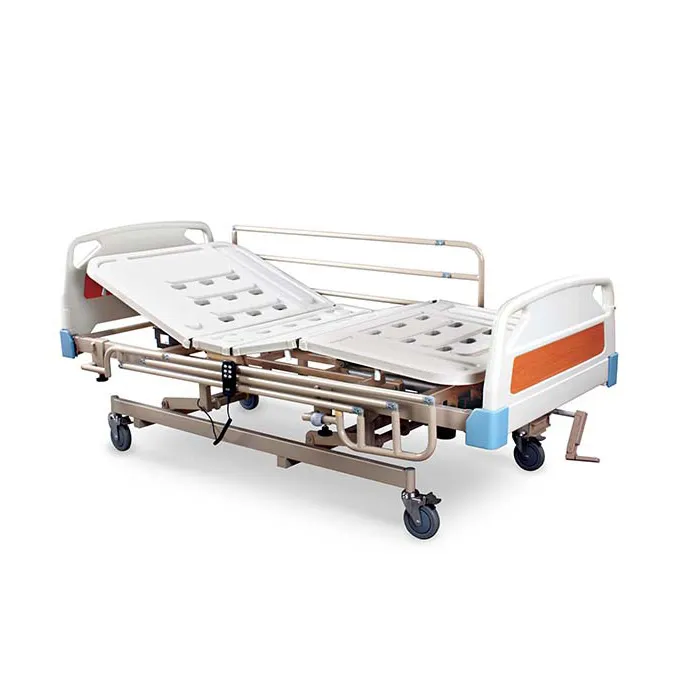
Yikang Medical® Provides Reliable Support for Electrically Adjustable Hospital Beds
As a company which specialized in R&D and manufacturing of medical and nursing devices for over many years, Yikang Medical has always emphasized the research on stable products and long-term service, which has resulted in rich experiences in electrically adjustable beds, manual beds, homecare beds as well as rehabilitation assistive devices. Founded in 2010, the company currently has a production base of approximately 30,000 square meters, over 100 employees, more than 150 production machines, and multiple automated welding robots, continuously improving product consistency and structural reliability through automated manufacturing and standardized processes.
Regarding quality and management, Yikang Medical is the company which has set up a fairly complete system of quality control which is supported by certificates such as ISO9001 and ISO13485 of quality management system standards. A few medical bed models are compliant with the CE directive standards and the business entity of the company in the United States is also registered or filed under FDA regulations. Every electric hospital bed must be disassembled first and then be carefully reassembled, and the functional tests of the whole product including the lifting, load-bearing, and electrical systems must all be conducted after completion of such processes in order to secure the reliable operation of the product.
In addition to the products offered, the company also emphasizes the after-sales technical support. When it comes to installation, maintenance and repair of electrically adjustable healthcare beds Yikang Medical encourages you constantly to follow the instructions of the manual and also to listen to the professional advice. Any maintenance involving the basic components such as bed frame, motor system and control module must be entrusted to professional technicians to prevent the product from losing its original design functions and even the safety standards being lowered due to unprofessional disassembly and assembly. This principle of providing a long time service of product together with standardizing the maintenance work will definitely help the customer to lower down the total life-cycle maintenance costs of an equipment.
FAQ
Can the electric hospital bed restore stability to its original state after being dismantled?
Provided that the bed is handled by authorized technicians to the standard, and then, as a part of the overall procedure, the machine undergoes a final test and is certified as being safe, it will be possible to regain all features and characteristics of the bed. However, in the case of a private individual carrying out a disassembly-reassembly procedure at home, if connections are wrongly tightened or wires wrongly connected, the overall stability of the bed could be affected.
How frequently do you maintain an electrically adjustable hospital bed?
If hospitals choose to perform maintenance and check up the beds at their care facilities every 3 to 6 months depending on the frequency of usage is very common, on the other hand, the family members or people living in home who are caring for the patient with assistance from a bed should plan in advance for a check up every 6 to 12 months as well as regularly doing the visual inspection that includes the safety of bed guards, wheels, electrical system and so on.
Is it possible to continue using an electrically adjustable hospital bed on its own?
In case the bed starts making noises, moving with a rocking motion or operating not very smoothly that is to say, the machine is behaving in abnormal ways, the correct thing to do is to stop using it right away and get through the hotline of the manufacturer to a repair person who has the necessary know how and equipment.
Never try running it any longer or you will be breaking the rules and you are not the only one who is at stake; a whole family may be endangered if this happens. In other words, the machine will not work as intended and there might be no way to get it back to its normal state, even after a repair.
How can you tell the manufacturer of electric adjustable hospital beds is worth cooperating with?
One should consider various factors as the company's production scale, quality management system, international certifications and research capabilities, after-sales service and industry experience, it is not recommended, to be limited one way or the other. A well-defined product quality system together with continuous support to customers on the technical level will surely give an assurance to customers on long-term stable operation of their equipment.
What is the Yikang Medical®’s main line of medical and nursing equipment?
Yikang Medical® has the capacity to manufacture electric adjustable beds for hospital and rehabilitation facilities, home care beds, nursing beds, as well as wheelchairs, walkers, toilet chairs etc., which are the medical and rehabilitation assistive products. Its products have been widely accepted and used by hospitals, elderly care and rehabilitation centers for many years in addition to home use settings. As a professional equipment product manufacturing and supplier company, Yikang Medical® continues to offer world-class support and service to its customers, wherever they are based.