
"Can people with cerebral palsy use wheelchairs independently?" This is a question many parents, caregivers, and even some wheelchair professionals ask. Some believe that if a person with cerebral palsy is in a wheelchair, it means they need a parent or caregiver to push them; others believe that with a lightweight, manual wheelchair, the patient can drive themselves like a normal user. In fact, both understandings are overly simplistic.
Cerebral palsy (CP) is a group of neurodevelopmental disorders affecting movement, posture, and balance, with significant functional differences among patients. The U.S. Centers for Disease Control and Prevention (CDC) points out that cerebral palsy is one of the most common motor disorders in childhood, and its symptoms and severity vary from person to person. Some patients can walk independently, while severely affected patients may require long-term reliance on assistive devices or even 24/7 care.
Therefore, the real answer to the question "Can patients with cerebral palsy use wheelchairs independently?" should be: some patients with cerebral palsy can use wheelchairs independently, some can only use them under certain conditions, and some need to be pushed or assisted by others; moreover, the same patient may adopt completely different modes of movement indoors, outdoors, and in long-distance and short-distance scenarios.
This is also the real problem that the "cerebral palsy wheelchair" industry needs to solve today: not simply manufacturing a wheelchair "suitable for patients with cerebral palsy," but rather, based on the patient's motor abilities, muscle tone, trunk control, upper limb function, cognitive abilities, and actual living environment, making the wheelchair a tool for patients to achieve mobility, learning, social interaction, and participation in daily life.
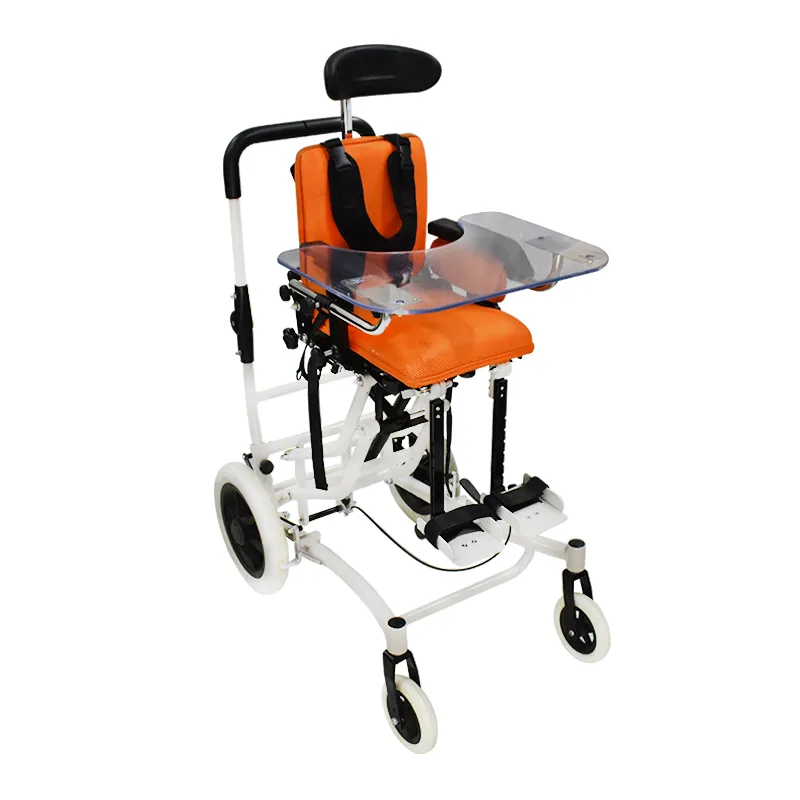
Do patients with cerebral palsy really need wheelchairs?
—The answer may be more complex than imagined.
First, it is necessary to correct a common misconception: using a wheelchair for cerebral palsy does not mean that the patient cannot walk at all.
According to US monitoring data released by the CDC, among 8-year-old children with cerebral palsy included in the monitoring in 2010, approximately 58.9% could walk independently, 7.8% could walk with the help of handheld mobility aids, while 33.3% of the children had limited or no walking ability. This means that there are significant differences in mobility within individuals with cerebral palsy.
For patients who can walk short distances, wheelchairs may serve the functions of "energy saving" and "long-distance mobility." For example, a child with cerebral palsy can walk from their bedroom to the living room at home, but if they need to walk several hundred meters to school, spend extended periods in a shopping mall, or participate in outdoor activities, continuous walking may lead to significant fatigue. In this case, a wheelchair for cerebral palsy is not a "replacement for walking," but rather a supplement to walking ability.
This distinction is crucial.
Modern rehabilitation concepts increasingly emphasize "functional mobility" rather than simply pursuing "the necessity of walking." International clinical practice guidelines indicate that for children and adolescents with GMFCS levels III-IV, functional goals should be combined with assistive devices, technologies, and environmental adaptations to improve independence, participation, and task completion speed, while reducing energy consumption and caregiver burden. For patients with GMFCS level IV, independent mobility should primarily consider adaptive devices, including powered wheelchairs.
Therefore, "walking" and "using a wheelchair for cerebral palsy" are not mutually exclusive options. A person with cerebral palsy may very well "walk and use a wheelchair," and this combination may even be more in line with their actual needs than relying solely on walking.
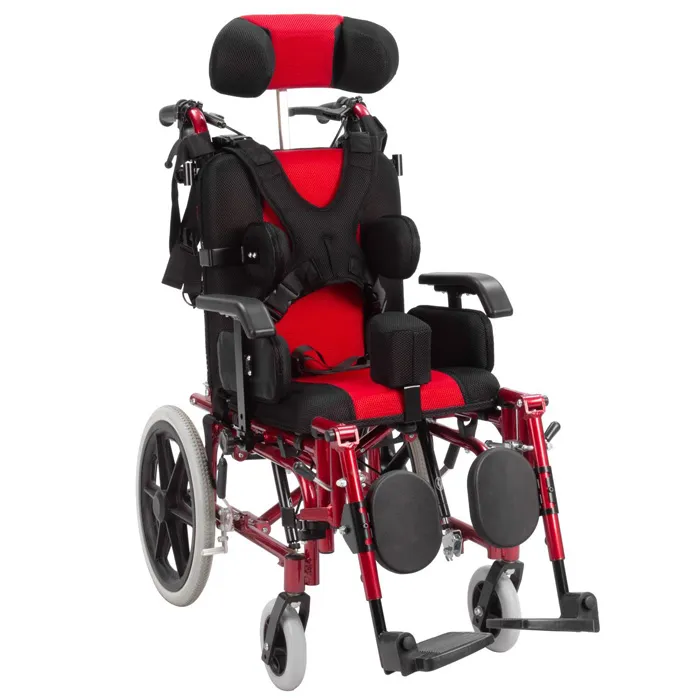
Which cerebral palsy patients can use wheelchairs independently?
Determining whether a cerebral palsy patient can use a wheelchair independently cannot be based solely on the diagnosis or simply on whether they can walk.
In clinical and rehabilitation fields, the GMFCS (Gross Motor Function Classification System) is frequently used to classify the gross motor function of children with cerebral palsy into levels I-V. The higher the level, the more pronounced the motor function limitation usually is. It is crucial to emphasize that the GMFCS primarily describes the patient's gross motor performance in everyday environments, rather than simply assessing "muscle strength."
Generally, patients with GMFCS grade I can walk independently and may not need a wheelchair as their primary means of mobility, but may still use it for long distances, outdoors, or in situations of fatigue. GMFCS grade II patients can usually walk, but their mobility may be limited on complex terrain, over long distances, and in outdoor environments. GMFCS grade III patients typically need to use handheld mobility aids and may begin to rely heavily on wheelchairs for community mobility. GMFCS grade IV patients typically have significantly limited independent walking ability and need to consider adaptive mobile devices such as powered wheelchairs. GMFCS grade V patients typically require a high degree of reliance on assistive devices and assistance from others.
However, GMFCS is only the first level of indicator for assessing the need for a wheelchair for patients with cerebral palsy.
Whether a patient can truly "operate a wheelchair independently" also depends on whether they have sufficient active control in their upper limbs, good hand grasping ability, visual ability to support obstacle avoidance, cognitive and comprehension abilities to allow for learning and manipulation, sufficient trunk control, and the presence of severe involuntary movements.
In other words, "can they walk independently" and "can they operate a wheelchair independently" are two different questions.
Research data provides a valuable answer: Some children can indeed move independently
A study of 562 children with cerebral palsy found that approximately 29% used wheelchairs indoors. Of the 165 children using wheelchairs for indoor mobility, 61 could move independently. Among manual wheelchair users, about 30% could drive themselves, while 70% still required adult assistance. Meanwhile, about 83% of powered wheelchair users could operate them independently.
The study also found a significant correlation between wheelchair use and GMFCS level: approximately 4% of GMFCS level II children used manual or powered wheelchairs indoors, about 48% of level III children, and 84% of level IV-V children. Notably, most children using wheelchairs at GMFCS level III could achieve some degree of independent mobility.
Another study with a larger sample similarly found that among children with cerebral palsy using wheelchairs indoors, the proportion using manual wheelchairs was significantly higher than that using powered wheelchairs. Among manual wheelchair users, only about 28% could drive themselves, while about 66% of powered wheelchair users could drive independently.
These data illustrate a crucial industry issue: whether a patient with cerebral palsy can "use a wheelchair independently" depends not simply on whether they need a wheelchair, but is highly correlated with the suitability of the wheelchair type.
For some patients, a manual wheelchair may not be the best solution. While they may possess the cognitive and control abilities required to operate a powered wheelchair, insufficient upper limb muscle strength, abnormal muscle tone, or insufficient fine motor skills in the hands make pushing a manual wheelchair extremely difficult. In such cases, insisting that "they must push the manual wheelchair themselves" may actually increase the patient's energy expenditure rather than helping them achieve independence.
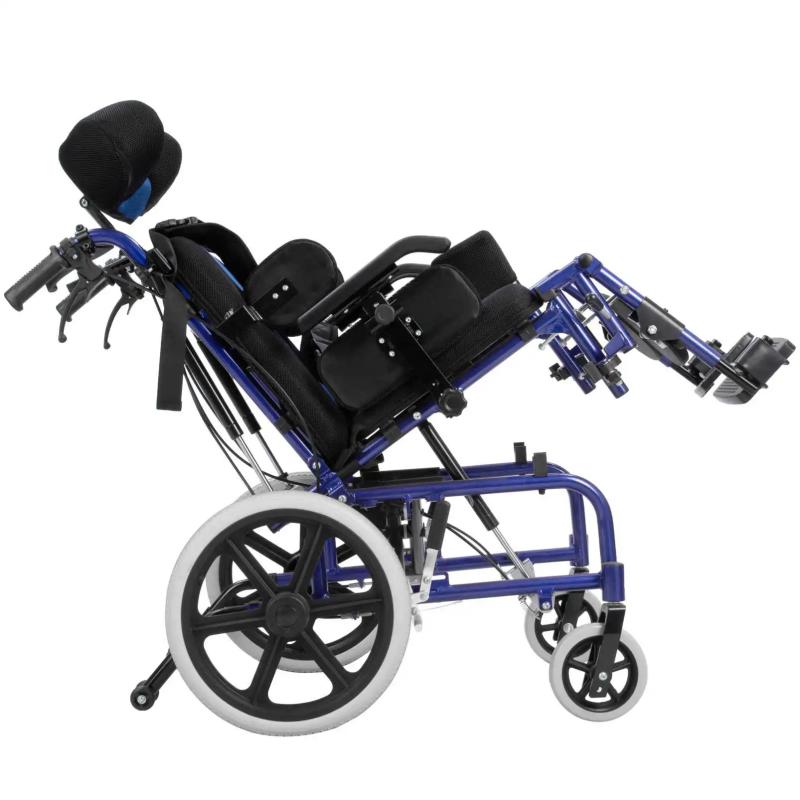
Why might "pushing a wheelchair themselves" be difficult for patients with cerebral palsy?
Many people believe that a manual wheelchair simply involves pushing two large wheels, a simple action. However, for patients with cerebral palsy, this action can involve very complex motor control.
First, there is abnormal muscle tone.
Some patients with cerebral palsy experience spasticity, which may prevent their arms from completing the pushing motion with a stable, continuous trajectory; others have involuntary movements, making it difficult for their hands to accurately contact the wheel rims.
Second, there is upper limb coordination.
Even if a patient has arm strength, poor hand-eye coordination can lead to uneven wheelchair movement, causing one hand to push faster than the other, resulting in the wheelchair veering off course.
Thirdly, there's trunk stability.
When pushing a manual cerebral palsy wheelchair, the body needs to maintain a stable posture. If the patient lacks trunk control, repeatedly leaning forward, sideways, or backward not only reduces drive efficiency but also increases the risk of falls.
Fourthly, there's fatigue.
Walking and movement may require more energy from children with cerebral palsy. A study on children with cerebral palsy indicated that even those at a functional level capable of walking may tire more easily than typically developing children. Recent research on early independent wheelchair movement also specifically points out that one reason some children with cerebral palsy who can walk use wheelchairs is to conserve energy.
Therefore, a qualified cerebral palsy wheelchair cannot simply emphasize "lightness"; it also needs to consider drive efficiency, seat posture, wheelbase, center of gravity, rear wheel position, and the patient's actual operational ability.
The Biggest Pain Point in the Cerebral Palsy Wheelchair Industry: Mistaking "Being Able to Sit" for "Being Usable"
Currently, the cerebral palsy wheelchair market faces a significant problem: many products are still designed with the logic of "providing a stable seat."
However, for cerebral palsy patients, sitting stably is just the starting point, not the end.
What patients truly need is: Can they see ahead while sitting in a cerebral palsy wheelchair? Can they reach for things? Can they communicate with classmates? Can they move to the dining table independently? Can they go to the toilet? Can they enter the classroom? Can they make independent movements over a certain distance in their community?
This necessitates upgrading cerebral palsy wheelchairs from simple "seat products" to "mobility assistance systems."
For example, for patients with insufficient trunk control, cerebral palsy wheelchairs may need to provide better lateral support and pelvic stability; for patients with significant spasticity, greater attention needs to be paid to posture symmetry and pressure distribution; for patients who can operate a powered wheelchair but have weak hand control, different joysticks, control methods, or other input methods need to be considered.
Therefore, the real question the industry needs to answer is not "Does this cerebral palsy wheelchair have a backrest, armrests, and footrests?" but rather "Can it help this specific patient achieve their mobility goals?"
Cerebral Palsy Wheelchairs Don't Make Patients "Give Up Walking," But Make Mobility More Efficient
"If my child uses a wheelchair, will they become even less able to walk?" This is a common concern among parents.
From the perspective of modern rehabilitation concepts, this absolute understanding that "wheelchairs will prevent children from walking" is inaccurate. What truly needs to be avoided is allowing wheelchairs to completely replace appropriate gait training and functional training for the patient; at the same time, patients should not be forced to walk in all situations just to maintain their ability to walk.
International clinical practice guidelines clearly state that gait training can be conducted for GMFCS I-III patients if the goal is to improve walking speed and endurance; while for GMFCS III-IV patients, it is recommended to combine functional goals with equipment, technology, and environmental adaptation.
For example, a GMFCS Level II child can walk short distances at school during the day, while using a cerebral palsy wheelchair for longer distances; a GMFCS Level III child can undergo standing and walking training during rehabilitation while using a wheelchair on campus; a GMFCS Level IV patient may primarily rely on a powered cerebral palsy wheelchair for independent movement, while also undergoing standing, transfer, and other functional training based on individual circumstances.
Therefore, a more accurate concept is that wheelchairs serve functional goals, not oppose walking training.
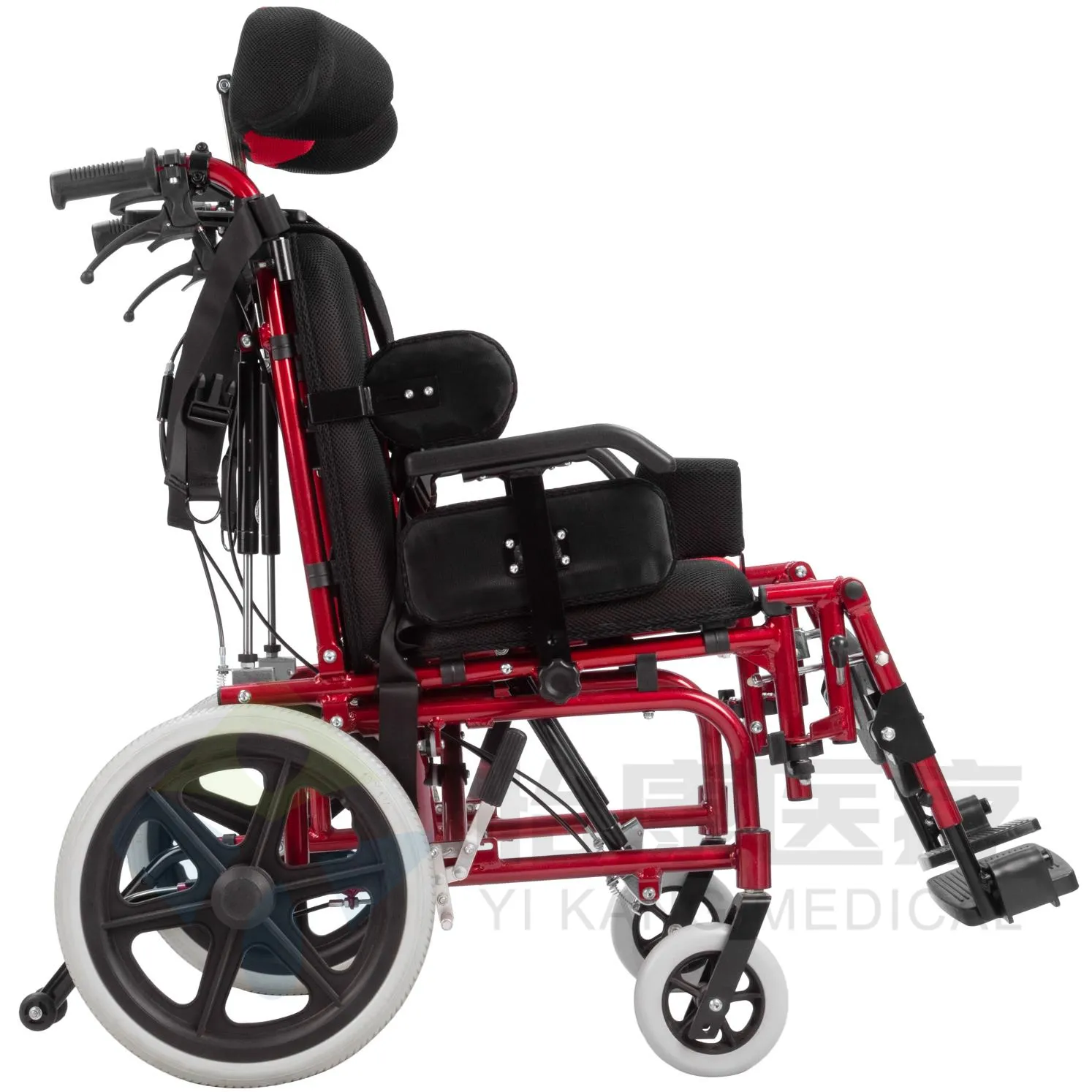
FAQ: Some of the Most Common Questions about Cerebral Palsy Wheelchairs
Q1: Do all cerebral palsy patients need a cerebral palsy wheelchair?
No. The motor abilities of cerebral palsy patients vary greatly. Some patients can walk independently and do not need a wheelchair as their primary means of transportation; others can walk but tire easily over long distances and therefore need a cerebral palsy wheelchair. Whether a wheelchair is needed should be determined based on actual function and living environment.
Q2: Can a child with cerebral palsy push a manual wheelchair themselves?
Yes, but it depends on upper limb strength, hand control, trunk stability, muscle tone, and coordination. Studies show that only a portion of manual wheelchair users among children with cerebral palsy are able to drive independently, therefore age alone cannot be used to determine this.
Q3: If I can't push a manual wheelchair myself, does that mean I can't use a wheelchair independently?
No. Some patients, while unable to effectively push a manual wheelchair, can use a powered wheelchair independently using controls such as joysticks. Studies have found that the proportion of independent operation among powered wheelchair users is significantly higher than among manual wheelchair users.
Q4: Will using a wheelchair for children with cerebral palsy cause them to become increasingly unable to walk?
This is not a simple matter. Wheelchairs for children with cerebral palsy can be used in conjunction with gait training. For patients who can walk, gait training can be conducted according to rehabilitation goals, while using a wheelchair for long distances or in situations of fatigue. International guidelines also support combining functional training with assistive devices and environmental adaptation.
Q5: Which GMFCS level requires the use of a wheelchair for children with cerebral palsy?
It cannot be simply stated that "a certain level must use one." Patients with GMFCS levels I-II may primarily rely on walking, but some require a wheelchair for long-distance travel; wheelchair needs become more common starting with GMFCS level III; GMFCS levels IV-V typically rely more on wheelchairs or other mobility aids. Ultimately, however, it is still necessary to make a judgment based on individual abilities and life goals.