

With the increasing prevalence of electric assistive devices, electric wheelchairs have evolved from a niche medical device into an essential mode of transportation for tens of millions of people with mobility impairments worldwide. For the elderly, patients with neurological diseases, post-operative recovery patients, and those with long-term mobility disorders, electric wheelchairs are not only a means of transportation but also directly related to their ability to live independently, their daily social efficiency, and their sense of psychological security.
Especially against the backdrop of accelerating aging, the electric wheelchair market is continuously expanding. According to global medical device industry research data, the global electric wheelchair market size exceeded $6.5 billion in 2025 and is projected to surpass $10 billion by 2030, maintaining a compound annual growth rate of over 8%. This means that more and more users are relying on electric wheelchairs for shopping, commuting, medical visits, and daily life.
However, with increased usage, a seemingly simple yet extremely real pain point is constantly being raised by users: Can an electric wheelchair still be pushed when the battery is dead?
This question is important because it involves more than just the simple question of "can it be pushed?" Many users focus on range, motor power, and seat comfort when purchasing electric wheelchairs, but overlook a crucial scenario: what happens when the battery suddenly runs out, the controller malfunctions, or the electronic system loses power? Can the wheelchair still be pushed like a regular manual wheelchair? If not, how can one escape? For elderly people living alone or outdoor users, this could even become a safety risk.
In reality, this situation is not uncommon. For example, when using an electric wheelchair in shopping malls, hospitals, airports, or community streets, if the remaining battery power is misjudged, or if the battery experiences a sudden voltage drop due to aging, it may suddenly lose power. Worse still, some users mistakenly believe that the electric wheelchair can still be pushed after a power outage, only to find that the wheels are locked by electromagnetic brakes, and the entire wheelchair remains motionless. This kind of emergency not only causes anxiety but can also lead to delays or even secondary injuries.
Therefore, understanding the drive structure, power outage logic, and emergency mechanisms of power wheelchairs is crucial for every user, caregiver, and dealer. This article will focus on the core question, "Can an electric wheelchair still be pushed when the battery is dead?" It will delve into the mechanical structure of different types of power wheelchairs, their actual performance after battery failure, emergency handling methods, and how to reduce risks through proper selection and maintenance.
First, the conclusion: Most electric wheelchairs cannot be pushed directly by default after the battery is dead. However, the vast majority of legitimate electric wheelchairs are designed with a "manual release mode" or "clutch device," allowing for manual pushing after release.
The reason many electric wheelchairs cannot be pushed after a power outage is primarily because their drive systems typically use a motor structure with a gearbox and are equipped with an electromagnetic braking system. Under normal power conditions, the controller supplies power to the motor and simultaneously releases the electromagnetic brake, allowing the wheels to rotate freely. When the battery is dead, the electromagnetic brake automatically locks to prevent the wheelchair from rolling on ramps. This is for safety, not a design flaw.
From a mechanical perspective, modern electric wheelchairs generally include the following core components: battery pack, motor, controller, drive wheels, reduction gear, and braking system. The braking system is the most critical of these. Many mid-to-high-end electric wheelchairs employ a fail-safe braking design, meaning that the brakes lock immediately upon power loss. This design is very common in medical devices because it effectively prevents accidental slippage.
This explains why users often encounter situations where the electric wheelchair, despite showing a small amount of battery power, suddenly becomes immobile; subsequent attempts to push it by a family member prove futile. In reality, the wheels are not broken; the brakes have entered a protective locking state.
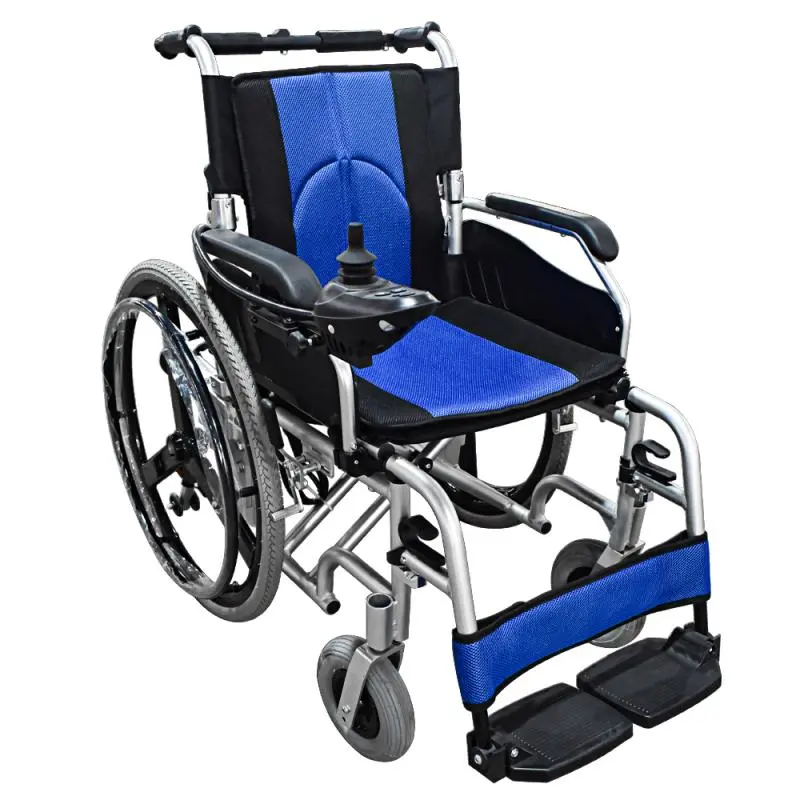
Under what circumstances can a power wheelchair still be moved after the battery is dead?
This depends on whether the wheelchair has a manual mode switch. Most reputable brand power wheelchairs have a mechanical lever or clutch near the drive wheels to switch between "electric mode" and "manual mode." When the lever is switched to manual mode, the drive wheels are disengaged from the motor gearbox, allowing the wheels to roll freely, enabling caregivers to push the wheelchair from behind.
The typical operating procedure is as follows: First, ensure the wheelchair has come to a complete stop, avoiding operation on slopes; then locate the clutch lever near the drive wheels; next, switch the lever from Drive to Freewheel mode; after confirming both sides are unlocked, attempt to push. Note that some dual-motor electric wheelchairs have a clutch mechanism on each side; releasing only one side will still prevent smooth pushing.
According to industry after-sales data, approximately 78% of after-sales inquiries about "electric wheelchairs being unable to be pushed" are not due to hardware malfunctions, but rather because users do not know how to switch to manual mode. This indicates that user education remains a significant weakness in the electric wheelchair industry.
In addition, another point needs special mention: not all electric wheelchairs are suitable for frequent manual pushing.
Heavy-duty electric wheelchairs, in particular, can weigh 45–90 kg. In contrast, a typical manual wheelchair usually weighs only 12–20 kg. This weight difference means that even with the brakes released, pushing a heavy-duty electric wheelchair still requires considerable force. Assuming an electric wheelchair weighs 65 kg net weight, plus a passenger's weight of 70 kg, the total load reaches 135 kg. While rolling resistance is relatively low on flat ground, the difficulty of pushing an electric wheelchair increases significantly on slopes, carpets, or uneven surfaces.
This is why the industry is increasingly emphasizing the importance of "lightweight electric wheelchairs." Technologies such as aerospace-grade aluminum alloy frames, carbon fiber structures, and brushless lightweight motors are becoming mainstream because they not only improve battery life but also significantly enhance the manual control experience after a power outage.
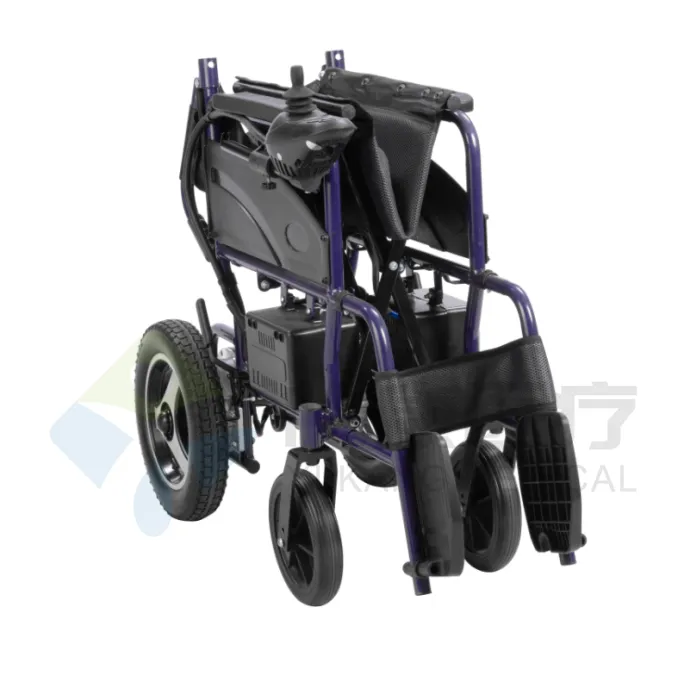
From a battery perspective, a power wheelchair "running out of power" can manifest in several ways:
The first is a true battery depletion. For example, when a lithium battery's SOC (State of Charge) approaches 0%, the controller automatically shuts off power due to low voltage protection. In this case, the system is usually still intact and can be restored simply by charging.
The second is voltage drop due to battery aging. This is particularly common with lead-acid batteries older than three years. While it may appear to have 30% charge, the voltage can drop instantly to the protection threshold when climbing hills or accelerating, causing the controller to shut off power. Users often mistakenly believe the wheelchair has "suddenly broken down," when the root cause is actually a decline in battery health.
The third is wiring or controller malfunction. Even if the battery has power, the wheelchair may behave as if it's "out of power." This could be due to a blown fuse, a loose connection, or a malfunctioning controller board.
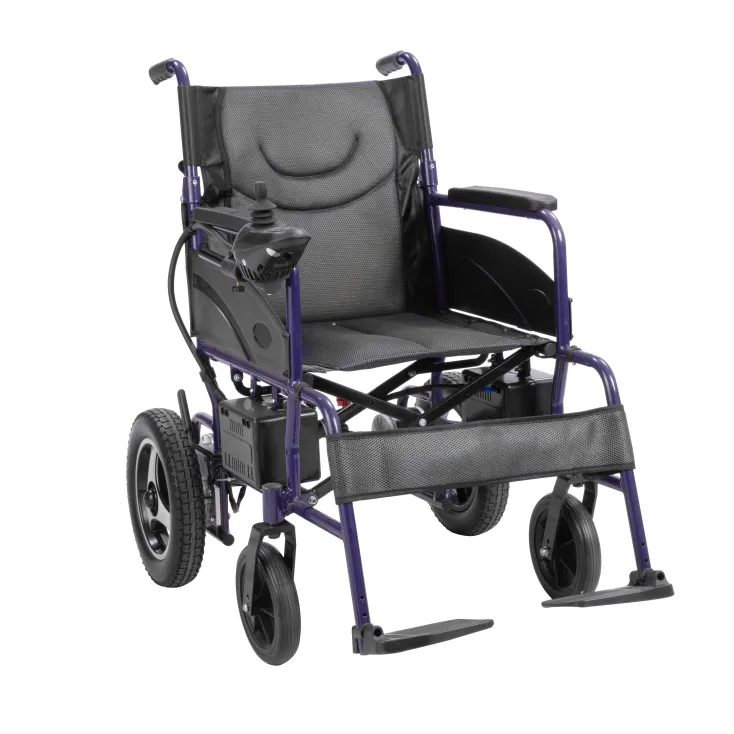
How to prevent your power wheelchair from suddenly running out of power in a critical moment?
First, develop a regular charging habit.
For lithium-ion power wheelchairs, it's recommended to charge them promptly when the remaining charge is below 20%, avoiding prolonged deep discharge. Deep discharge accelerates cell aging and shortens battery life. Data shows that users who consistently discharge their lithium batteries to 0% experience an average reduction in battery cycle life of over 25%.
Second, pay attention to range degradation.
Many users mistakenly believe that the range of a powerc wheelchair is always stable. For example, a advertised range of 20 kilometers doesn't mean it will still travel 20 kilometers after three years of use. In reality, battery capacity degrades every year. High-quality lithium batteries typically degrade by 5-10% annually, while low-quality batteries can degrade by more than 15%.
Third, regularly check the brake and clutch systems.
The manual release mechanism of an electric wheelchair may become stuck if it's not used for a long time. If you only discover the lever is stuck in an emergency, the problem will be magnified.
Fourth, it is recommended to choose an electric wheelchair with intelligent power management.
Modern high-end electric wheelchairs have begun to adopt a BMS (Battery Management System), which not only displays the remaining power but also monitors cell balance, temperature anomalies, and charging/discharging status, significantly reducing the risk of sudden power outages.
In industry practice, some leading manufacturers have begun to address these pain points from the product design stage. For example, Yikang Medical®, a company specializing in rehabilitation assistive devices and mobility solutions, emphasizes not only battery life and power in its power wheelchair product development but also user safety in extreme scenarios. Features such as more accessible manual release mechanisms, clear operating labels, lightweight frame design, and a stable electronic control system all help users reduce the risk of being unable to escape when the battery runs out.
It is worth noting that this advantage is not only reflected in high-end configurations but also in the design logic. Truly mature electric wheelchair manufacturers do not only consider "how the wheelchair can go further" but also "what happens to the user when it can no longer move." This is precisely the biggest difference between medical assistive devices and ordinary consumer electronics.
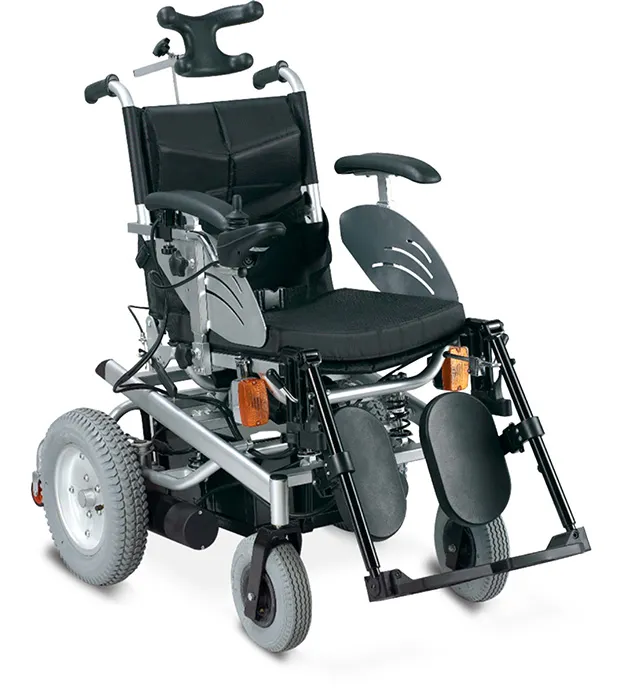
FAQ: Frequently Asked Questions about Electric Wheelchair Power Outages
Q1: Will a power wheelchair automatically brake when the battery is dead?
Most power wheelchairs will. Many products use a power-off locking braking system, which automatically locks the wheels after a power outage to prevent slippage.
Q2: Can all electric wheelchairs switch to manual mode?
Not all, but the vast majority of reputable power wheelchairs have a manual release mechanism. It is recommended to check if this function is available before purchasing.
Q3: Does a wheelchair that won't move always mean it's out of power?
Not necessarily. It could be due to brake lock-up, clutch not disengaging, controller malfunction, or motor abnormality.
Q4: How long do power wheelchair batteries typically last?
Lead-acid batteries typically last 1-2 years, lithium batteries typically last 3-5 years, and high-quality lithium batteries can last even longer with proper maintenance.
Q5: How do I know when a powerc wheelchair battery needs replacing?
If the battery life decreases significantly, charging time becomes abnormally short, climbing performance weakens, or there are frequent low-voltage power outages, the battery health should be checked.