

As the demand for home-based elderly care, post-operative rehabilitation, and long-term bedridden care grows, home care beds have become an essential piece of equipment for family-based caregiving. However, for households with limited bedroom space, several questions often arise when considering a purchase: Will the bed actually fit? Will it obstruct daily movement? Will caregivers have enough room to assist the user with turning, sitting up, or transferring?
In reality, it is entirely possible to use a home care bed in a small bedroom—the key lies in carefully selecting the right dimensions, features, and placement. Even in a bedroom measuring only 8–12 square meters, an optimized layout can often accommodate essential care needs. That said, floor area alone is not the only factor; one must also consider existing furniture, the space required for bedside care, the width of doorways, and the user’s level of mobility.
This article explores the feasibility of using a home care bed in a small bedroom, covering aspects such as sizing, spatial layout, functional configuration, and safe usage, while offering practical advice for making a purchase.
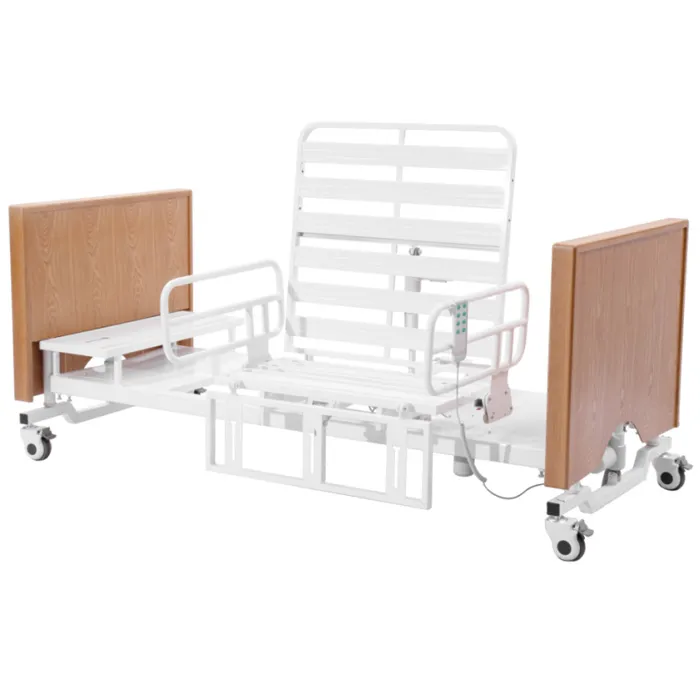
Why is careful selection important when choosing a home care bed for a small bedroom?
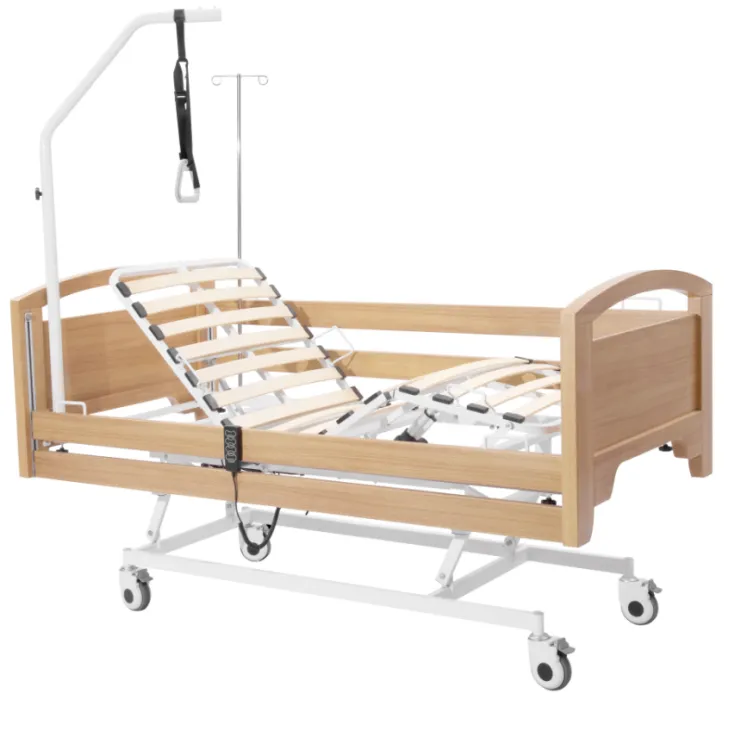
The primary difference between a home care bed and a standard bed is its ability—via manual or electric mechanisms—to adjust the angle of the backrest and leg section, as well as the overall height of the bed surface. Some models even offer features like lateral-tilt assistance. These designs help long-term bedridden individuals adjust their posture and reduce the physical strain on caregivers—such as the need for repeated bending or lifting—during tasks like feeding, cleaning, dressing, and repositioning.
For the elderly, those recovering from surgery, or individuals with limited mobility, a standard bed may not suffice for frequent postural adjustments. While home care beds greatly enhance the convenience of daily care, their frames, side rails, and drive mechanisms are generally more complex and often occupy more space than conventional beds.
Using a home care bed in a small bedroom presents three main challenges:
First, there is the issue of insufficient space. Once installed, the bed may crowd out wardrobes, nightstands, or essential walkways. Second, caregiving tasks may be restricted; caregivers might lack the necessary space to assist the user with turning, personal hygiene, or transferring to a wheelchair. Another issue is a mismatch between the bed’s functionality and the room’s layout—for example, while the bed might fit into the room, the side rails may be impossible to operate, or power cords might obstruct pathways.
Therefore, when selecting a home care bed, one should not focus solely on price or appearance; instead, it is essential to first measure the bedroom before determining the appropriate bed dimensions and required features.
What size home care bed is suitable for a small bedroom?
1. Understanding standard bed dimensions
The dimensions of home care beds vary by brand, model, and configuration. The data below can serve as a reference for initial space planning, though you should always refer to the manufacturer’s official specification drawings for exact measurements.
| Item | Typical Reference Range |
| Mattress width | 80–100 cm |
| Mattress length | 190–200 cm |
| Overall bed width | 90–110 cm |
| Overall bed length | 200–220 cm |
| Compact bedside passage | About 60 cm |
| More convenient care passage | About 75–90 cm |
| Bedroom area for initial assessment | 8–12 m² |
It is important to note that the mattress size is not the same as the overall dimensions of the care bed. Components such as the bed frame, side rails, headboard, footboard, and drive mechanisms can all increase the total width or length. Before purchasing, verify whether the listed dimensions refer to the mattress size or the external (overall) dimensions.
For instance, a home care bed with external dimensions of 100 cm × 210 cm occupies approximately 2.1 square meters. In a 9-square-meter bedroom, the bed alone would take up about 23% of the floor space. However, since the remaining area must also accommodate other furniture, walkways, and caregivers, you cannot determine suitability based on the bed’s footprint alone.
2. Is it feasible to install one in an 8–12 square meter bedroom?
For a bedroom of approximately 8 square meters, a compact home care bed might be suitable, provided the layout is straightforward, there is minimal furniture, and the user primarily requires care from one side. Conversely, if the room contains large wardrobes, narrow doorways, or fixed fixtures, the usable space will be significantly reduced.
Bedrooms ranging from 10 to 12 square meters generally offer more layout flexibility, though it is still crucial to ensure that caregivers have adequate access to the bedside. If the user requires wheelchair transfers, assistance from two people to get up, or the use of a patient lift, additional operating space must be factored in.
Ultimately, determining whether a small bedroom is suitable for a home care bed requires evaluating three key aspects: whether the bed fits, whether primary pathways remain clear, and whether daily caregiving tasks can be performed safely.
How should one choose a home care bed for a small bedroom?
1. Prioritize Compact Bed Designs
For households with limited space, consider home nursing beds with a smaller external width and a compact structure. However, do not sacrifice bed surface width solely to save space; a bed that is too narrow can hinder the user’s ability to turn over or rest, and may also impede the caregiver’s work.
If the user has a smaller build and can adjust their own position, a narrower bed may be suitable—provided this is confirmed through a professional assessment. Conversely, if the user has a larger build, struggles to turn over, or requires assistance from a caregiver to move, prioritize a bed with sufficient surface width.
Additionally, take measurements in advance of your home’s entrance, hallways, bedroom doors, and any corners. Some nursing beds must be disassembled for transport; therefore, before purchasing, verify the dimensions of the packaging, the size of the largest individual component, and the requirements for on-site assembly. This ensures that while the bed might fit inside the bedroom, it can also be successfully maneuvered into the room.
2. Select Nursing Functions Based on Actual Needs
Common features for home nursing beds include backrest adjustment, leg-rest adjustment, overall height adjustment, and lateral-turn (side-tilting) assistance. Different functions address specific care needs, so prioritize features based on how frequently they will be used in daily life.
Backrest adjustment is ideal for users who need to sit semi-upright to eat, read, or rest; leg-rest adjustment helps in fine-tuning one’s resting posture; and overall height adjustment makes it easier for caregivers to perform tasks such as cleaning, dressing, or providing bedside care. For users who are bedridden long-term and unable to turn over independently, consider whether a lateral-turn function is necessary.
A small bedroom does not necessarily require a bed with the maximum number of features. Choosing a configuration that aligns with the user’s specific care needs helps manage your budget while avoiding unnecessary attachments that could clutter the space.
3. Choosing Between Manual and Electric Nursing Beds
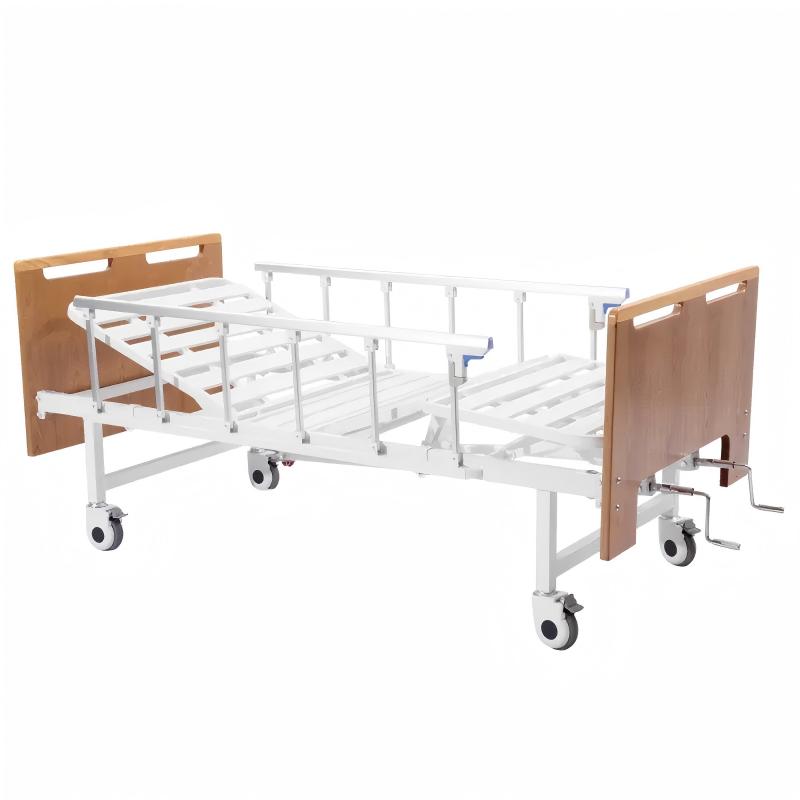
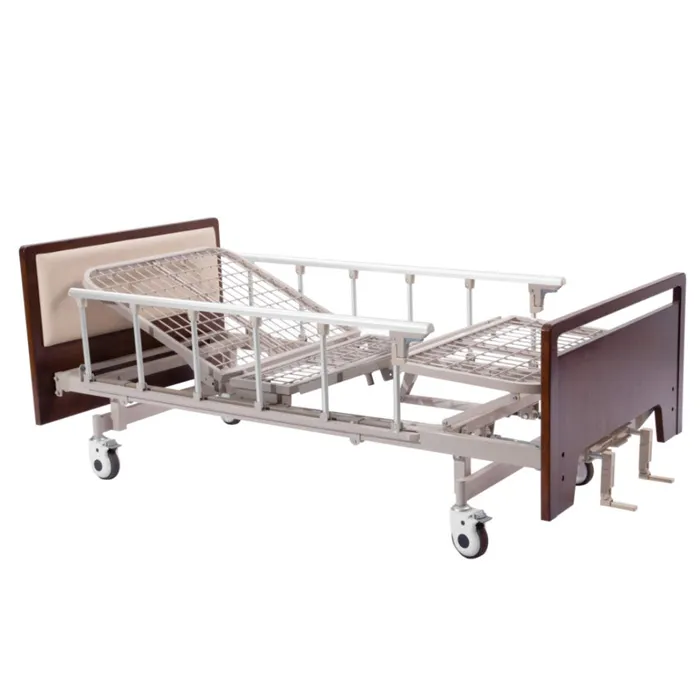
Manual nursing beds are typically adjusted via a hand crank. They feature a simpler design, making them suitable for households with a limited budget or those that require only infrequent adjustments—though they do require some physical effort from the caregiver. Electric nursing beds use motors to adjust the bed’s position, offering greater convenience; these are better suited for users who need to change their posture or the bed’s height frequently.
The amount of space a bed occupies depends primarily on its specific frame design, rather than the mechanism used to adjust it. For electric nursing beds, consider the placement of power outlets and the routing of power cords; for manual nursing beds, ensure that the crank handles are easily accessible and will not be obstructed by walls or other furniture.
If the user requires frequent adjustments to the bed position throughout the day, an electric nursing bed is generally more convenient. If only basic adjustments are needed, a manual nursing bed may suffice.
Layout Strategies for Home Nursing Beds in Small Bedrooms
Once a home nursing bed has been selected, the next step is to arrange the surrounding furniture and care access paths effectively. It is best to determine the bed's position first, then plan the placement of wardrobes, bedside tables, and other items.
1. Positioning the Bed Against a Wall
In a bedroom of approximately 8–9 square meters, you might consider placing one side of the nursing bed against a wall, leaving the opposite side open as the primary access path for caregiving. This layout saves horizontal space and is suitable for situations where care is primarily provided from one side of the bed.
However, a bed should not be placed flush against a wall without prior assessment. Doing so may hinder tasks such as turning the user, cleaning, changing bed linens, or performing equipment maintenance; it may also restrict the operation of side rails. Always adhere to the manufacturer’s specifications regarding required clearance from walls and necessary operating space.
If the user requires care from both sides of the bed, or frequently needs to transfer to a wheelchair, placing the bed flush against a wall—solely to save space—is not advisable.
2. Maintaining Adequate Access Paths for Care
In a bedroom of approximately 9–12 square meters, the nursing bed can be placed near one wall, leaving a wider workspace on the other side. As a general guideline, a passage of about 60 cm is considered a compact walkway, while 75–90 cm is typically more convenient for daily caregiving. If wheelchair transfers or patient-lifting equipment are required, the space should be further expanded based on the dimensions of the equipment and the practical requirements of the transfer process.
These figures serve as layout references rather than mandatory standards for every scenario. For users who require assistance from multiple people for transfers, a professional should evaluate the space based on the specific caregiving methods employed.
3. Reducing Unnecessary Furniture
When space in a small bedroom is limited, consider removing infrequently used items such as extra chairs, vanity tables, or other furniture, and relocating storage needs to other rooms. A standard bedside table can be replaced with a narrower model, and frequently used care supplies can be organized in a spot that does not obstruct access paths. Additionally, ensure that the path from the bedroom doorway to the bedside remains clear, free from furniture, electrical cords, or clutter that could obstruct movement. If the user relies on a wheelchair or a mobility aid, verify that the bedroom door—when opened—does not block the entry of such equipment.
In smaller bedrooms, removing unnecessary furniture is often more effective than opting for a smaller-sized nursing bed. This approach preserves an adequate bed surface area while providing more space for caregivers to maneuver.
What should you check before purchasing a home nursing bed?
Many families focus solely on whether the bed will fit into the bedroom, overlooking critical details related to delivery, the bed’s range of motion, and daily use. Before making a purchase, consider the following points:
First, measure the entire delivery path. Beyond the bedroom itself, measure the narrowest points along the route—including the main entrance, hallways, stairwells, and corners—and confirm with the supplier whether the bed can be disassembled and reassembled on-site.
Second, verify the bed’s range of motion. Adjustments to the backrest or leg section, as well as the movement of side rails, may require extra clearance. Consult the product’s dimension specifications to ensure that the distance between the bed and nearby walls or wardrobes meets the manufacturer’s requirements.
Third, plan for power access and cord management. An electric home nursing bed should be positioned near a suitable power outlet. Ensure that power cords do not cross primary walkways and are not at risk of being crushed by the bed’s casters or moving parts. If an outlet is poorly positioned, consult a qualified electrician to assess potential adjustments.
Fourth, ensure there is sufficient space for wheelchairs and other assistive devices. If the user needs to transfer to a wheelchair, confirm that the chair can be positioned close to the bedside and that there is enough room for a caregiver to assist. If you plan to use a patient lift (hoist), check whether the device’s base can fit underneath the bed.
Fifth, ensure the mattress and side rails are compatible. The mattress must meet the nursing bed’s specific size and thickness requirements; an ill-fitting mattress can create dangerous gaps, increasing the risk of a user becoming trapped. Furthermore, higher side rails are not necessarily safer—the decision to use them should be based on the user’s specific fall risk, mobility level, and care requirements.
How can safety be ensured when using a home nursing bed in a small bedroom?
The home nursing bed should be placed on a level, sturdy floor. For models equipped with casters, ensure the brakes are locked before use. Regularly inspect the casters, bed frame connections, and braking mechanisms to confirm they are in good working order. When caregivers assist a user in getting into or out of bed, or in transferring, they must first verify that the bed is stable.
During caregiving, adjust the bed height according to the specific task at hand. For activities such as cleaning, dressing, or changing bed linens, the bed can be set to a height that facilitates these tasks. When the user is resting, the bed height should be adjusted based on their mobility, fall risk, and the manufacturer’s instructions. For individuals with limited mobility, the use of side rails should be assessed on a case-by-case basis to prevent the risk of entrapment or falls resulting from attempts to climb over them.
Additionally, the bedroom should be well-lit, particularly around the bedside and along the path to the bathroom. Keep the floor free of clutter, ensure electrical cords do not obstruct walkways, and place frequently used items within easy reach. For those who are bedridden for long periods, follow a care plan that includes regular repositioning and skin checks; the use of a home care bed does not entirely eliminate the risk of pressure injuries or similar complications.
Frequently Asked Questions (FAQ)
Q1: Can a home care bed be used in a bedroom that is only 8 square meters?
It may be possible, but this depends on the room's layout, the bed's external dimensions, the space occupied by other furniture, and the specific care requirements. If installing the bed makes it impossible to safely get in or out, or prevents necessary caregiving tasks, it is not advisable to proceed.
Q2: Can a home care bed be placed flush against a wall?
In some cases, yes—but you must adhere to the manufacturer’s specified safety clearance requirements. If the user requires frequent repositioning, bedside cleaning, or transfers to a wheelchair, sufficient space must be left for caregivers to operate; therefore, placing the bed flush against a wall is generally not recommended.
Q3: Should I choose a manual or an electric care bed for a small bedroom?
This primarily depends on the user's care needs. Manual beds are suitable for households with a limited budget or where adjustments are infrequent, while electric beds are better suited for situations requiring frequent changes in body position or bed height. Always compare the external dimensions of specific models before making a purchase.
Q4: Is a narrower home care bed always better?
Not necessarily. A bed surface that is too narrow can hinder turning, compromise sleep comfort, and make caregiving tasks more difficult. Prioritize meeting the user's essential needs first, and look for ways to save space by rearranging other furniture instead.
Q5: What should I keep in mind when using an electric home care bed?
Ensure that the power source is suitably located, that power cords do not cross walkways or get crushed by the bed frame, and familiarize yourself with the emergency power-off procedure for the product.