

Driven by the aging population and the growing need for rehabilitation care and home-based mobility, electric wheelchairs are evolving to become lighter, smarter, and more compact. Smart, compact electric wheelchairs, in particular, are attracting increasing attention from home users due to their small size, agile turning, ease of operation, and features such as folding or detachable designs.
However, a smart compact electric wheelchair is not a "one-size-fits-all" solution. While a smaller size allows for easier access to homes, vehicles, and tight spaces, there may be trade-offs compared to larger electric wheelchairs regarding weight capacity, battery range, seating space, outdoor maneuverability, and postural support. Therefore, when choosing an electric wheelchair, one should not focus solely on "smart" features and "compactness," but rather consider the user's physical condition, range of activity, and intended usage environment.
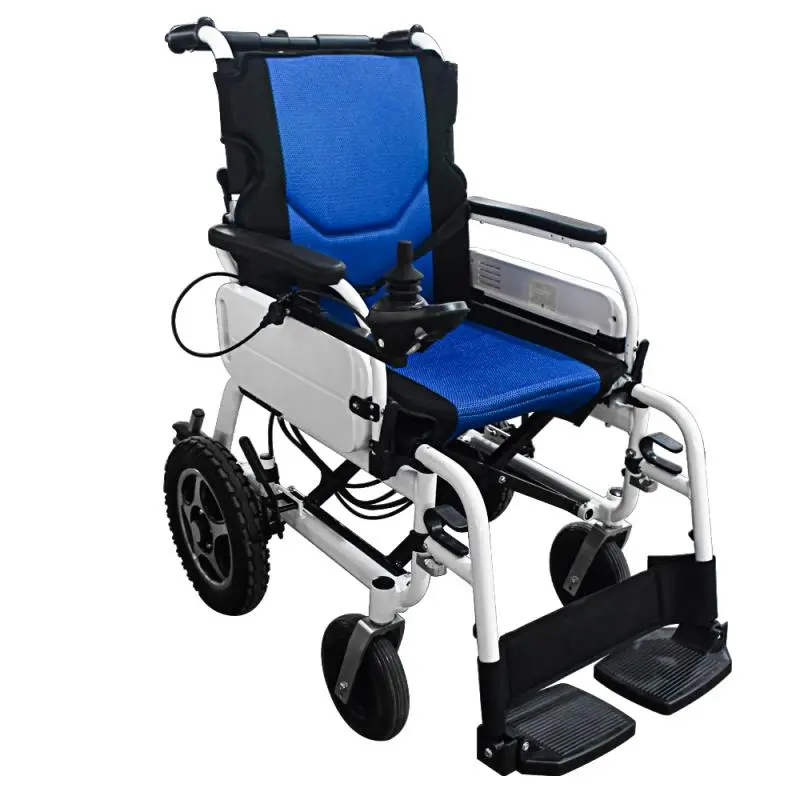
What is a smart compact electric wheelchair?
Smart, compact electric wheelchairs are products that build upon the foundation of traditional electric wheelchairs but place greater emphasis on miniaturization, portability, and maneuverability. Some models feature folding or detachable designs for easy storage in cars or at home, while others are equipped with smart functions such as battery level indicators, speed adjustment, and fault alerts.
Specifications vary significantly across products; some compact models on the market have a width of around 60 centimeters, and the range of portable models can vary from just over ten kilometers to several dozen kilometers. Actual range is influenced by factors such as user weight, speed, incline, road conditions, and battery status, so one should not rely solely on the manufacturer's stated figures.
For compact electric wheelchairs, the primary value of a "small" size is enhanced indoor maneuverability. In typical home environments—such as doorways, hallways, bathrooms, and elevators—space is often limited; if a wheelchair is too wide, the user may struggle to make turns. The ISO 7176 series of standards also identifies wheelchair dimensions, mass, turning ability, and maneuvering space as key evaluation criteria.
What are the advantages of smart, compact electric wheelchairs?
First is indoor maneuverability. For individuals whose activities primarily take place in homes, nursing facilities, hospitals, rehabilitation centers, and shopping malls, a compact frame and a tight turning radius are highly practical. Compared to some larger electric wheelchairs, smart compact models can maneuver more easily in confined spaces.
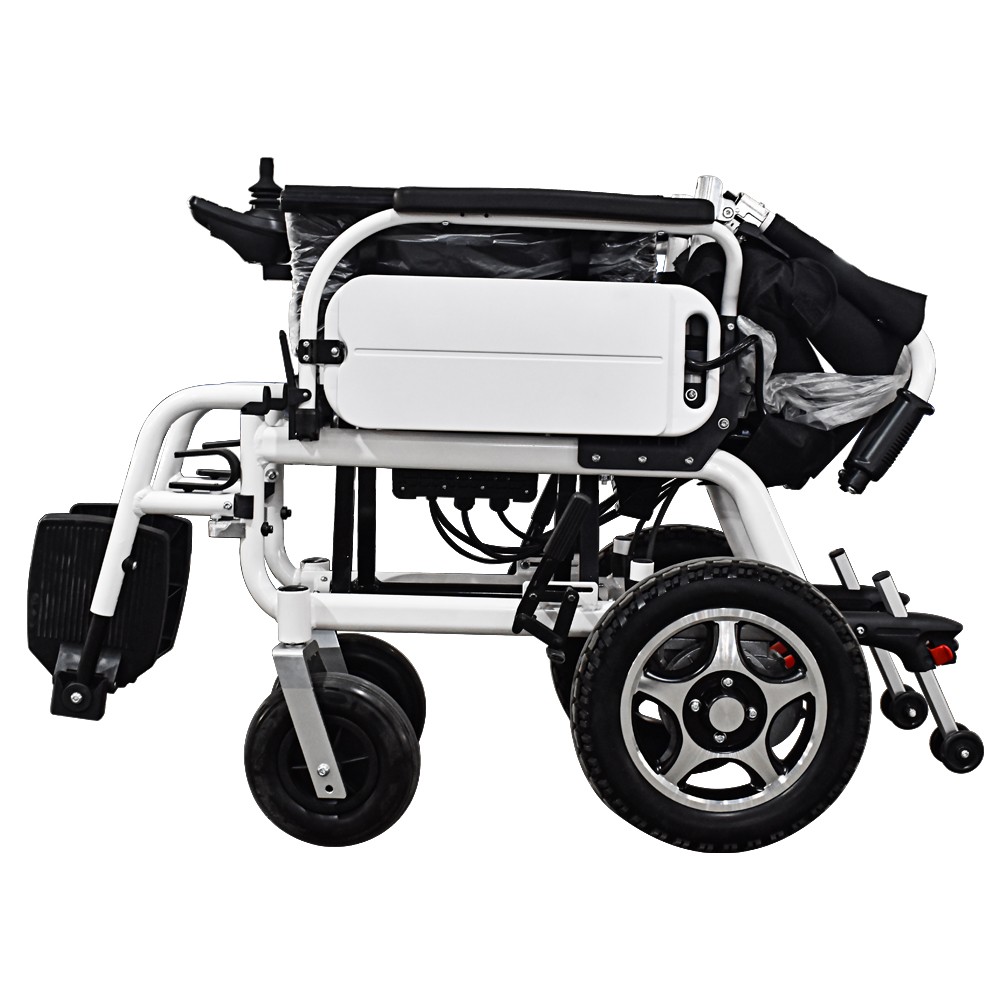
Portability is another key factor. Some power wheelchairs feature foldable or detachable designs, making them easier to transport by car. For those who frequently visit hospitals or rehabilitation centers, or who travel often, both the total weight of the chair and the weight of individual components (when disassembled) are crucial. If a single component is too heavy, the product may prove difficult to handle in practice, even if marketed as "portable."
A third benefit is the reduction of strain on the upper body. For individuals unable to continuously propel a manual wheelchair, electric models allow for movement via a joystick, thereby alleviating strain on the shoulders, wrists, and arms. For those with limited upper-body strength but sufficient hand control, compact power wheelchairs offer greater mobility and independence.
Fourthly, these chairs are well-suited for home environments. A compact frame makes it easier to navigate standard doorways, elevators, and narrow corridors. However, it is important to physically measure the widths of home doorways, hallways, and bathroom entrances before purchasing, rather than relying solely on product specifications.
Who is a good candidate for a smart compact electric wheelchair?
The first group consists of individuals with limited upper-body strength who cannot propel a manual wheelchair for extended periods but possess basic control capabilities. These users can utilize electric propulsion to reduce physical exertion while maintaining a degree of independent mobility.
The second group comprises those whose activities are primarily indoors or involve short-distance travel. If daily routines center around the home, the local community, hospitals, or shopping malls, the priority is often not an ultra-long battery range, but rather a tight turning radius, ease of control, and convenient storage. In these scenarios, the advantages of smart compact power wheelchairs are particularly evident.
The third group includes individuals who frequently require car transport. For users who need to travel often for medical appointments or other outings, foldable, detachable, and lightweight designs make transportation much easier. When selecting a model, it is essential to focus on the folded dimensions and the weight of individual components, rather than just the total weight of the wheelchair. The fourth group consists of individuals wishing to upgrade from a manual to an electric wheelchair without adopting a bulky model. For users capable of operating a joystick but limited by tight living or activity spaces, a compact electric wheelchair offers a practical compromise.
However, even within this group, it is essential to verify that factors such as weight capacity, seat dimensions, battery range, and postural support meet specific needs.
Who might not be a suitable candidate for a smart compact electric wheelchair?
First are individuals whose weight exceeds the product's rated capacity. To minimize size and weight, some compact models have lower weight capacities than larger electric wheelchairs. When selecting a model, one should account for the combined weight of the user and any carried items, while also allowing for a reasonable safety margin.
Second are individuals requiring complex postural support. Standard compact models may lack sufficient adjustability for users with significant pelvic tilt, scoliosis, or poor trunk control, or for those requiring head support, lateral supports, or specialized leg rests. WHO guidelines on wheelchair services emphasize that selection should be based on individual assessment, fitting, training, and follow-up, rather than simply choosing based on product category.
Third are individuals who require long-distance outdoor mobility on a daily basis. While compact models prioritize portability and indoor maneuverability, larger electric wheelchairs often offer advantages in range, tire performance, suspension, and outdoor terrain capability. For those frequently traversing complex surfaces—such as slopes, lawns, or gravel paths—chassis stability and obstacle-clearing ability should be the primary considerations.
Fourth are individuals requiring multiple powered postural adjustment functions. Long-term users may need features like powered tilt, recline, seat elevation, or powered leg rests—capabilities not found in all smart, compact models. For those who remain seated for extended periods, postural adjustability is often more critical than "smart control" features.
Industry Pain Points: Why "Smaller Equals More Convenient" Isn't Always True
A core challenge facing smart compact electric wheelchairs is striking the right balance between miniaturization, comfort, and stability. A more compact frame generally makes indoor maneuvering and transport easier, but it may also limit space for the seat, footrests, backrest, and battery placement. Prioritizing extreme lightness and small size too heavily can compromise load-bearing capacity, driving range, or the ability to make complex postural adjustments.
Therefore, "compactness" is merely a product characteristic, not the sole criterion for quality. For users who primarily stay indoors, a small footprint is crucial; for those who travel long distances outdoors daily, factors like range, stability, tire quality, and chassis clearance may be more important.
Wheelchair stability cannot be judged solely by the size of the frame. While ISO 7176-1 covers static stability testing, a power wheelchair's actual stability is also influenced by factors such as the user's weight, seating posture, the slope of the terrain, and handling style.
Consequently, when purchasing a smart, compact power wheelchair, one should not focus merely on width measurements; it is also essential to consider the maximum safe incline, the presence of anti-tip wheels, the drive wheel configuration, and performance across different road surfaces.
Are more smart features always better?
Many smart power wheelchairs now include features like battery level displays, speed adjustment, fault alerts, remote control, and intelligent control systems. While these features enhance convenience, having more of them isn't necessarily better.
For elderly users, ease of operation, precise control, and reliable braking are often more important than complex smartphone connectivity. For users who frequently go outdoors, battery management and fault notifications are highly practical; for those who remain seated for long periods, the quality of the seat cushion, backrest, and postural adjustment capabilities matters more than entertainment or internet connectivity.
Therefore, determining whether a smart, compact power wheelchair is truly "smart" requires looking beyond the sheer number of features to see whether they genuinely address the user's specific needs.
Professional Solution: Assess Needs Before Choosing a Wheelchair
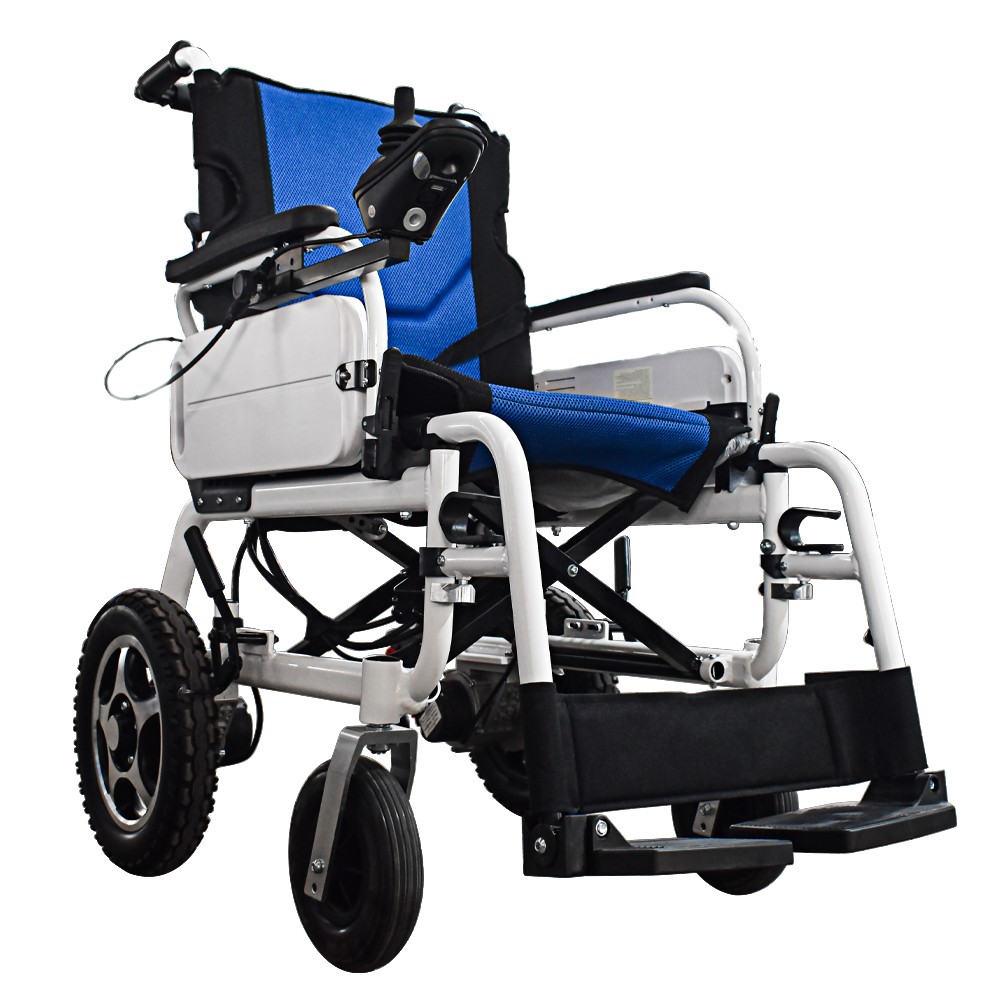
When selecting a smart, compact power wheelchair, it is advisable to first answer a few questions: Where will it be used primarily? What is the daily travel distance? Can the user independently operate the joystick? Is transport by car required? What is the user's weight? Is complex postural support needed? Are doorways and passageways at home wide enough? Will the user frequently need to navigate slopes? If the wheelchair is primarily for indoor use, short-distance travel, or situations where space is limited and electric propulsion is required—and if frequent storage and transport are necessary—then a smart, compact power wheelchair is usually a suitable choice.
However, if the user engages in long-distance outdoor activities daily, or requires superior climbing ability, complex postural support, and a long driving range, one should consider medium-to-large electric wheelchairs rather than simply prioritizing a compact size.
It is best to test-sit in the wheelchair before purchasing. Beyond assessing comfort, you should test its performance in straight-line driving, turning, braking, navigating slopes, and maneuvering through tight spaces. For long-term users, it is advisable to involve a rehabilitation therapist, physical therapist, or professional seating specialist in the selection process. The WHO also emphasizes that proper wheelchair services should include assessment, fitting, training, and follow-up.
FAQ
Q1: Is a smart compact electric wheelchair suitable for everyone?
No. It is better suited for individuals who need electric propulsion for indoor and short-distance activities, have limited space, and require frequent transport or storage. Individuals with higher body weight, those needing complex postural support, or those engaging in extensive outdoor activities should consider other types of electric wheelchairs.
Q2: Is a smart, compact power wheelchair suitable for the elderly?
It can be a suitable option if the user possesses basic operating skills and the product meets their needs regarding weight capacity, seating, and safety features. Elderly users should pay particular attention to the ease of operating the joystick, the reliability of the brakes, and the ease of handling the product in the event of a malfunction.
Q3: What is the typical driving range of a smart, compact electric wheelchair?
This varies significantly between products; some portable electric wheelchairs have a rated range of anywhere from ten to several dozen kilometers. Actual range is influenced by factors such as user weight, speed, incline, road conditions, and battery status.
Q4: Is smaller always better for electric wheelchairs?
No. A smaller frame usually offers better indoor maneuverability but may impose limitations regarding seating space, driving range, obstacle-crossing ability, and postural adjustment. The choice should be based on the actual usage environment.
Q5: What are the most important factors to consider when buying a smart compact power wheelchair?
Focus on load capacity, vehicle width, turning clearance, range, climbing ability, seat dimensions, seat cushioning, overall weight, and safety features. For long-term users, the fit between the seat and body dimensions is crucial.